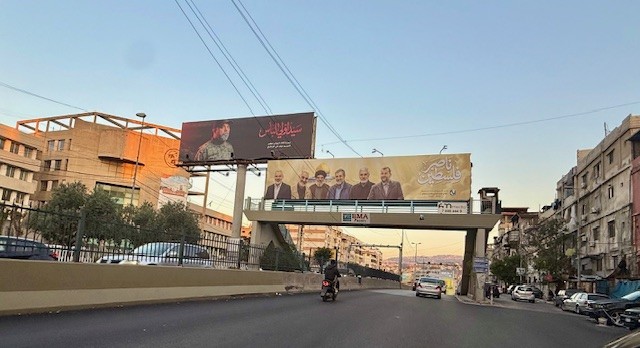
In the Middle East, God’s covenant with Abraham is polysemous. The battle between the gods of Abrahamic monotheism has manifested as a war between the nation of Israel and the Shiite Muslims. The political animosity between the two tribes of Abraham is rooted in the theological complexity and “sacred politics” approach of both groups. Through the contradiction in religious narratives and the merging of theology and politics, their battle has transformed into a political antagonism that has dominated Middle Eastern geopolitics.
By Nadia Ahmad
Historically, both the Jewish and Persian people have been masters of chess. The Persians adopted the game in 600 A.D. during the Sassanid Empire, while Jews have produced numerous world chess champions and theoreticians.
In the front-line arena, Yahweh delivered a decisive blow to the Khomeinists, a checkmate that set the board for the return of the King – Shah - to reclaim his place. Religious figures do not excel in chess; while the mullahs excelled at the fourth-dimensional level, their dramatic failure on the Yahweh war chessboard proved their undoing.
While Yahweh is famous for commanding those aligned with his will and commandments to victory on earth, Allah often defers the reward of his soldiers to the fourth dimension. Promises of rivers of milk and honey, and ethereal, uncorrupted virgins have led the Muslim mind to conflate victory with ultimate victory, i.e. heaven.
In contrast, no promise of heavenly reward tempts Yahweh’s tribe, whose fervent pursuit of tangible victory is an earthly demand, not to be postponed to the afterlife.
Allah, the universal God of Muslims, in his ninety-nine names, does not possess the distinctive qualities of Yahweh. While Yahweh is the tribal God of Israel, Allah, according to Islamic scripture, is the God of all.
Those fighting the nation of Israel who have a zealous, biased God on their side, in the name of a collective universal God, might ask if maybe, Allah, in his universalism, cannot decide whose side he is on? Muslims cannot put Allah on a universal spiritual pedestal, placing him above all terrestrial and material matters, and then expect him to intervene on their behalf in their wars.
As in the Trojan War, the battles of the Middle East are fought both on earth and in heaven. As the tribes of men gather to declare war, so are their Gods expected to fight alongside them.
Do the Mullahs know the Art of War?
The collapse of Iranian deterrence began in 2020, with the assassination of Qassem Soleimani by the Trump administration. The Iranian failure to avenge one of their most fabled officers exposed the regime as Cicero-esque. Just like the Roman orator, the Iranian mullahs have succeeded in marketing their policies and agenda, convincing millions worldwide of their inevitable victory over the “Zionist entity”.
In reality, a conflation of reason, logic, and theological prophecy led them to consult Islamic scripture rather than the more advisable military treatise, Sun Tzu’s “The Art of War.
The ranks of the revolutionary guards are filled with dilettantes, whose dual interest in theological and soldierly matters has rendered them incapable military men. The conflation between men of God, men of knowledge, and men of war within the Islamic Regime is a symptom of a faulty approach to the world. In Islam, religious men are called “ulama”, meaning the knowers, or “those with knowledge”.
This labelling has implications that conflate theological mastery with technical or scientific expertise. The Shiite axis, which openly consulted religious scripture to guide its approach to Israel, was being steered and directed by these so-called “ulama. No non-Islamic country would put a Sheikh as the head of its intelligence apparatus like the Islamic Republic, as though implying gathering intelligence comes via revelation, instead of reconnaissance.
The former deterrence of Hezbollah and Iran held together the fragile pre-October 7th regional peace. The culmination of the breakdown of the deterrence was the fall of the Assad regime in Syria, the rook on the Iranian chessboard. The alliance between the Iranian mullahs and Bashar al-Assad allowed the Shiite axis to maintain its control over the Arab-Israeli narrative, making the fall of the former Syrian regime a primary instigator of the last breath of the ageing Ali Khamenei.
As Yahweh captured Iranian pawns and knights alike, the mullahs continued in their harsh rhetoric and soft war policy, waiting until the Israeli army bombed Tehran itself to respond.
The Iranian approach to warfare was similar to that of the ancient Trojans, who hid behind their high walls and relative geographic isolation until the Greeks were within the gates. Since 1979, the Iranian mullah regime has claimed the defeat of Israel as a primary foreign objective under the umbrella of the unifying “Islamic/Palestinian cause”. Despite their fiery rhetoric, their military planning proved less desirable than their silver-tongued speeches.
The regional collapse of deterrence emboldened Israel, which has adopted a new national security approach; a preemptive and aggressive offensive policy as they police the “New Middle East”. Hezbollah, which once succeeded in warding off Israel, is now unable to respond amid Israeli ceasefire violations, as Israel pushes for total disarmament.
In response to shifting regional dynamics, Iran has adopted a flexible foreign policy approach, allowing the mullahs time to reestablish control over Iran while continuously posturing to influence the regional power balance.
The war in Gaza laid all the political realities bare for the world to see. Those who fought in the name of Allah, including Hassan Nasrallah, were officers in the Iranian soft war machine. Nasrallah proved to be a political propagandist rather than a seasoned general. On October 8th, Nasrallah launched a ‘low-intensity war’ against Israel. His presumption that Israel would adhere to his rules of engagement is absurd.
Hezbollah’s low-intensity war ultimately aided Israel, allowing the Israeli officials time to deal with Hamas while they determined the timing of escalation. The aggressive offensive war policy headed by Benjamin Netanyahu led to the bombing of Shiite regions across Lebanon, while Hezbollah leadership debated whether or not they should strike Tel Aviv.
Ultimately, Nasrallah entered a war he was ill-prepared for, imagining that he was dictating the rules of engagement. While Nasrallah’s ‘low intensity war’ lasted almost a year, Israel extinguished Hezbollah’s capabilities in a swift war, between September and November of 2024.
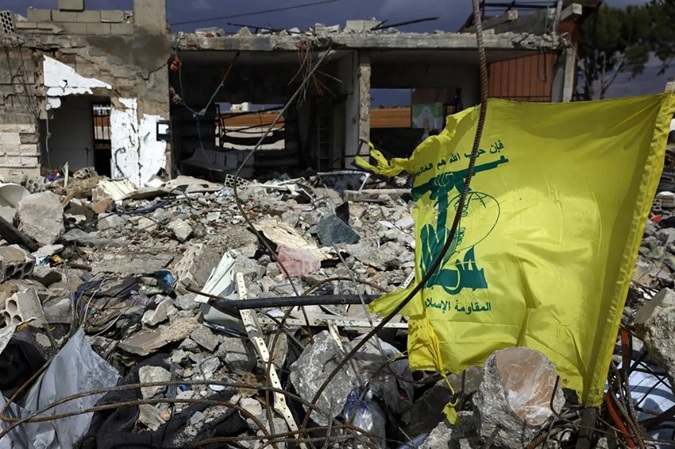
Israel ultimately imposed the ceasefire deal, which Hezbollah begrudgingly accepted on 27 November, forcing them into a humiliating retraction of their declared objectives; to cease fire from Gaza. If the achievement of declared military objectives measures victory, Hezbollah lost.
On Hezbollah, their failure stems not only from the impracticability of asymmetric warfare in the age of F35 jets. Their religiously guided foreign policy has no place in modern international affairs. The errors of the Lebanese mullahs began before October 8th, and can be traced back to the veneration and fixation of 680 A.D. among Shiites.
The bedrock of Twelver Shiites is the Battle of Karbala, from which the group has derived not only its perceptions of justice, righteousness, and morality, but also its conception of warfare. The martyrdom of Imam Hussein and his companions has been elevated to legend within the Shiite collective memory, leading to a reverence which has infiltrated the community’s leaders and lay people.
Karbala’s captivation of Shiites has led to a glorification not only of martyrdom, but of losing. While nations and peoples across the world bury their losses beneath the sand, rarely referencing them to bolster the troops, the battle of Karbala has become a de facto battle cry among Shiites. It is akin to the French using the Battle of Waterloo as motivation to pursue future campaigns.
To the detriment of the Shiite community, the annual commemoration of Ashura and the use of Imam Hussein’s violent death as a central theological and political event has created an ideological prison for Shiites, and a propensity to loss, i.e. a psychological attraction to death.
In a dystopian parallel, Hezbollah’s high command was assassinated in an eerie similarity to Imam Hussein’s companions in Karbala. Both Hassan and Hussein spent the days before their deaths watching their compatriots fall around them, knowing their death was looming.
Both men also knew that their communities would suffer displacement after their fall, a reality which befell the families of Hussein and his companions in 680 A.D., as they were taken from Karbala to Damascus, and one which struck the Shiites in 2024, when they fled their homes after the assassination of Hezbollah’s high command.
The manner in which these assassinations occurred proves that among the most dangerous thoughts the religious world has produced is the inclination towards martyrdom of Shiite Muslims. The antithesis of sound military thinking is the propensity towards death.
The antidote to strategic military thinking is the labelling of all the fallen as “holy martyrs”, their immediate assumption to heaven, reassured by the mullahs, allows leaders to avoid the responsibility for civilian death. When one is considered a martyr, ordained a Prince in heaven, why avenge him?
The provisions Nasrallah promised his Shiite supporters in the event of a total war with Israel never materialised, forcing his community to take shelter on the roads, in schools, and in churches.
Whether or not Hezbollah’s opposition to Israel was advisable for a religious minority and their legitimacy as a movement is debatable. Their unilateral decision to launch a war against a sovereign state from Lebanese territory, without the backing of the Lebanese government, is the subject of common deliberation.
We must ask whether Hassan Nasrallah was the architect of a calamity due to his unpreparedness as a military General, or whether theological certainty in victory clouded his judgment, leading to the conflation of the manifested and the unmanifested.
The Shiites have successfully preserved Karbala in the modern age. Among Nasrallah’s sayings, which have been repeated as a pseudo war cry by Shiites across Lebanon, was “even if you bomb us, burn us, saw us, and cast us out into the wind a thousand times, we are victorious.” The conclusion of “if we win, we win, and if we die, we win” is the most perilous Iranian fatwa to have ever disseminated from Tehran.
Victory, unlike heaven, cannot be communally guaranteed based on theological interpretation, as Allah’s guaranteed victory continues to elude the party of God. At the same time, the continuity of Yahweh’s tribe can be partially credited to centuries of victory, during which the God of Israel stood at the helm as both God and general.
In contrast, the people of Yahweh have no such psychology. The Jewish people, whose covenant is primarily centred on the earth as opposed to the sky, have little motive to die. There is no coordinated narrative among the Jews surrounding martyrdom, and the battles between the Jews and their oppressors are regularly referenced within the context of the ultimate Jewish victory over their persecutors. To the people of Yahweh, “Nitzachon” is victory tied with perseverance, and continuity, two indisputable characteristics of the pre-ad Jews.
The Israeli Paradox
Before the PR crisis, which now dominates the narrative around Israel, the modern Jewish state was founded on nationalist, secular values. In its essence, Zionism is distinctive from both Christianity and Islam in that its nationalism is not religious nationalism, such as the Islamic ummah, but national religiosity.
Secular nationalism is the essence of Zionism, in which Yahweh stands above as a nationalist God. Yahweh, who stands above temporal left and right-wing politics, intervenes on behalf of the people of Israel, unlike the transcendental, universal Allah.
Since 1977, the religionization of Israeli politics has led to Israeli political figures referencing biblical passages to contextualise their wars, such as the labelling of Hamas as “Amalek” by Netanyahu. When Israel’s wars with Arabs were fought on a secular basis, the international repercussions were contained and largely favoured Israel.
The conflation between religion and politics prevalent in the region and central to the Palestinian cause has contributed to the current religiosity of Israeli politics.
The Palestinians, Lebanese, and Iranians have dragged the region back into the age of religious war. The regional mullahs have succeeded in dragging Israel into their religious trap, forcing Israel to fight alongside them on the fourth dimension, leading Israel to fight on the spiritual battlefield alongside the earthly one.
When Palestinians call for all Muslims to defend Al-Aqsa on a religious basis, the Israelis' response is to reference the Temple of Solomon, ushering in an era of theological warfare between the tribes of Abraham in the modern age.
While Israel was successful in its latest religious war, the cost was to Israel’s international image. When the army of Yahweh uses apocalyptic force to vanquish its enemies, it becomes simply another barbaric Middle Eastern nation in the Western mind, losing its distinction, which had previously guaranteed its Western support. Religious victory came at the price of Israel’s international image and the democratic Western values it once represented.
In today’s Middle East, war is powered through an imperceptible theological battery. The rights of nations and peoples have become a battle over religious superiority and theological ancestry.
The Islamisation of the Palestinian cause and spiritual expansionism of the Iranian mullahs on an Islamic basis have reverted the region, which is now operating on its own time continuum. While religious wars are considered irrelevant to the modern world, it is apparent that in the Middle East, the tribes of Abraham base their politics not on modern secular nationalism but on religious hermeneutics and Qur’anic “tafsir”.




This article was a most interesting read. After the author's references to the game of chess, I expected her to next mention backgammon strategy since that ancient game is also played in the Middle East countries discussed.
very interesting article. Does God really desire us to fight? If He's God, he's the victory whenever he wants, he does need us to kill each other.