Top Shiite cleric wants Lebanese elections to purge country of US influence

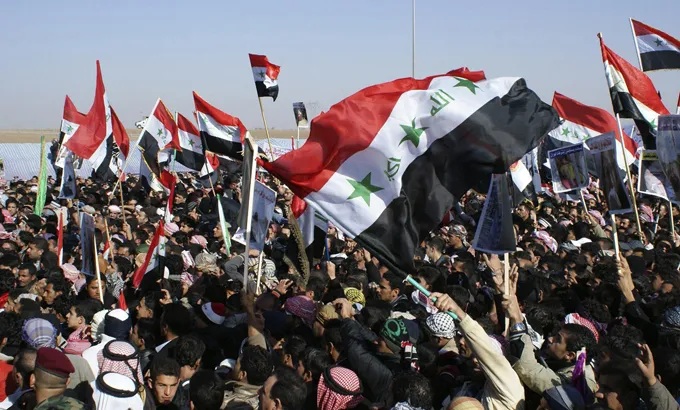
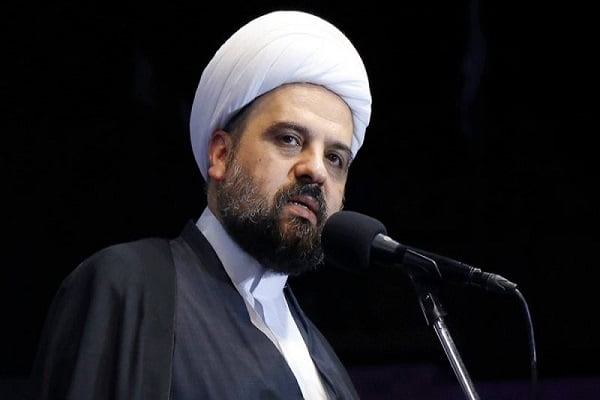
A senior Shiite cleric, Sheikh Ahmed Qabalan, on Tuesday announced that voting in the upcoming parliamentary elections is a “national and religious duty,” as he called for “purging state administrations and institutions of U.S. influence.”

“We reiterate that one of our biggest national and electoral battles must be focused on purging state authorities, administrations and institutions of U.S. influence,” Qabalan said in his Eid al-Fitr sermon.

Addressing “Lebanese in general and Shiites in particular,” Qabalan added: “The electoral juncture is a major act of worship and a crucial national, moral and religious duty. Hesitation is forbidden or rather haram (banned in Islam), leaving the electoral battle is haram and a blank ballot is haram, because God entrusts us with the country and its authorities.”

“Those who abandon the electoral battle would be abandoning God’s biggest acts of worship… The Americans along with a normalizing regional alliance are fighting the battle of exhausting Lebanon and burning everything with the aim of Zionizing Lebanon,” Qabalan warned.

“Neutrality is a grand crime and the battle is crucial,” the cleric added, noting that “fasting and prayer have no value” if not complemented with “political partnership and ballot boxes.”

“Religious and national duties begin at the mosque and are completed in politics, and those who abandon politics would be abandoning the mosque,” Qabalan went on to say.

Source: Naharnet.com

 

The Liberum

The subtitle of The Liberum ("the voice of the people is the voice of God") reflects the concept that the collective opinions and will of the people carry divine importance. They embody truth and wisdom, particularly in a non-partisan arena that profiles itself as a marketplace of free ideas and thoughts.
See full bio >
The Liberum runs on your donation. Fight with us for a free society.
Donation Form (#6)

More articles you might like

- by Nadia Ahmad on 24/04/2026

The “Bad Kid” in the neighbourhood: Hezbollah and the language of conflict

It was a small phrase in a large diplomatic room, the kind of remark that […]

Thank you, even for this

Gratitude is beautiful when life is beautiful, when things arrive on time, when prayers are […]

The ceasefire between Lebanon and Israel does not end the war, but reorganises it

A ceasefire between Lebanon and Israel after forty-five days of war. An interruption of hostilities, […]

Social media, wejbet, and presence

In bad times, in good times, and in all the times in between, there was […]
by Murielle Hebbo on 13/04/2026

The architecture of instant ruin: Lebanon’s 600-second war

Time, in the theatre of war, is traditionally elastic. It stretches through months of tense […]

The sequential strategy: How Iran's regional project reshapes itself through proxies

Iran's proxy network did not emerge by accident — it was built over decades to […]