In my work, I don’t act as a jurist or as a spokesperson for a single victim group. My focus isn’t jurisprudence but moresprudence. In other words, the moral deliberations that precede society, shape, and expose a paradox at the heart of contemporary global governance.
Now, according to global risk assessments published by the World Economic Forum and by data platforms such as Statista, the erosion of human rights and freedom appears to be a short-term concern. That is two years, to be precise. Yet over a ten-year horizon, it fades from the top tier of global priorities.
Climate change, biodiversity loss, technological disruption, artificial intelligence, and cybersecurity remain on the agenda. Human dignity, by contrast, appears to be in retreat. With everything that is going on in the world, this doesn’t add up. And I don’t buy it.
This statistical marginalisation sits alongside mounting testimonies of repression, including accusations of blasphemy in different regions of the world, often ignited on social media. Those have resulted in imprisonment, torture, and extrajudicial killings.
Simultaneously, a transnational movement advocating literalist interpretations of centuries-old religious texts is reshaping legal and social landscapes far beyond any single region. Women’s rights, children’s rights, freedom of belief, and freedom of expression are directly affected. Entire communities face intimidation, expulsion, and worse.
The dilemma is as follows. On one side stands real blasphemy, as well as blasphemy accusations weaponised to silence dissent. On the other side stands a crusading consciousness and tyranny, emboldened by absolutist readings of scripture. Both generate hatred and accelerate polarisation. Both attract actors whose primary currency is hatred rather than justice.
For years, those who warned about this escalation were dismissed as alarmists or accused of exaggeration. Yet the evidence cannot be gaslighted. Homes are burned. Young girls are abducted and assaulted. Individuals are extorted, banished, or murdered. Businesses are closed. To continue minimising these realities isn’t prudence but complicity and wickedness.
Thus, my first challenge is directed at the United Nations. If the UN is to defend human rights credibly, it must ensure that influences that strengthen this dilemma do not corrode its institutional environment.
The moral authority of a body that tolerates ideological extremism within its structures is weakened. Honesty is not hostility. It’s a responsibility. An institution that speaks of rights externally must embody them internally.
My second argument is that blasphemy laws and extremist literalism are not local anomalies but global governance challenges. The lesson of history is unambiguous. When religious law fuses with state power, freedom of expression is the first casualty, followed by women and minorities.
Secular governance, properly understood, is not anti-religion. It is the only framework that reliably protects pluralism by preventing any single doctrine from monopolising state authority.
Let me highlight, in a provocative extension of this principle, the growing targeting of dogs in certain religious and ideological contexts where they are labelled impure. I refer to political rhetoric in New York calling for restrictions on pet dogs. (Besides, off topic, the brutal killing of Orelha in Brazil is a symbol of how dehumanisation often begins with the vulnerable, whether human or animal). The point isn’t sentimentalism but pattern recognition. Societies that normalise cruelty in one domain rarely confine it to that domain.
My third emphasis is on solidarity, particularly among women across borders. If women refuse to participate in systems of oppression justified by blasphemy claims or extremist literalism, they can form a stabilising moral anchor that transcends national and ideological divides. This is where I propose my framework of Humanecy to enter the discussion.
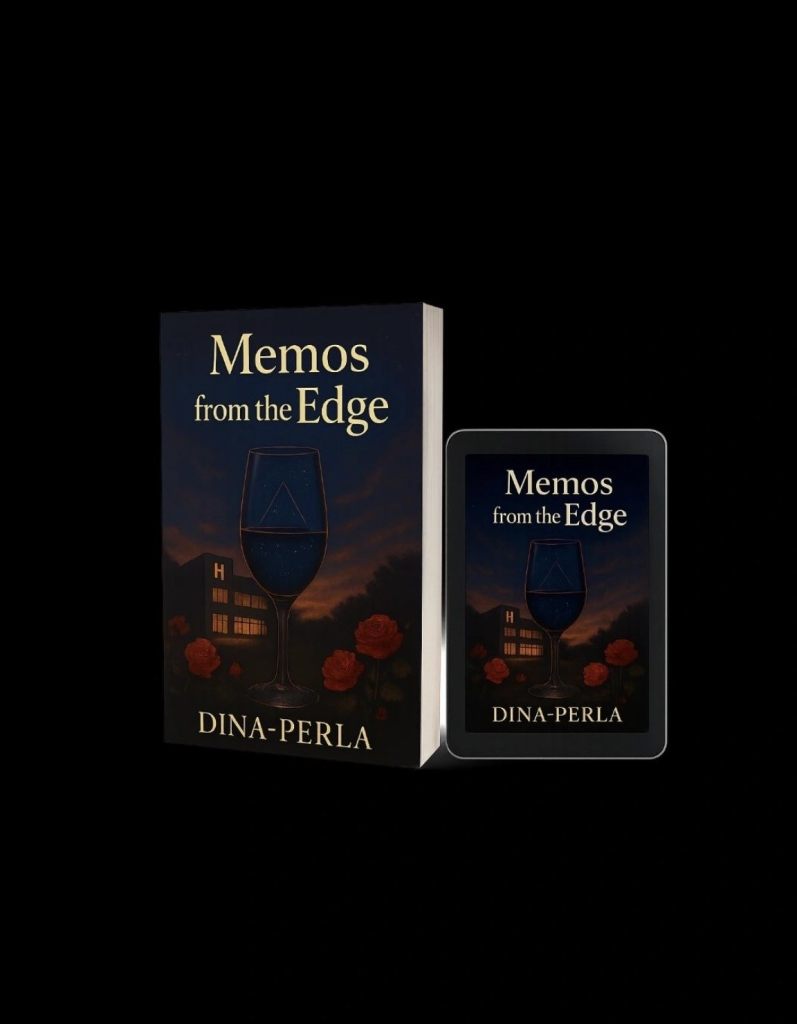
Humanecy, as put in the novel Memos from the Edge, is neither religion nor ideology. It rests on three structural pillars. Namely:
It doesn’t seek to replace belief systems but to establish a procedural ethical baseline that prevents belief from mutating into coercion.
The historical contrast is sobering. In humanity’s better chapters, we achieved constitutional democracy and the rule of law. In its darkest, we witnessed totalitarianism and fascism. The question is whether we can move beyond mere coexistence toward a shared responsibility – values and stories – that prevents catastrophic moral failure rather than reacting to it after the fact.
So, we need a new heart. I’m not indulging in rhetoric. I’m calling for a recalibration of moral priorities at a time when technological acceleration outpaces ethical reflection. A new heart refuses blindness and rejects the inversion of the roles of victim and perpetrator. It recognises that minorities are being targeted in real time. A new heart doesn’t let the erosion of human rights and freedom ‘magically’ disappear from the global risk landscape.
Let me even become mystical. I’ll profess belief in God beyond religion and beyond ideology, rejecting tribalism in favour of pluralism anchored in human dignity. A God who belongs to one group and sanctions the eradication of another isn’t divine but a projection of hatred. In that sense, the defence of human dignity isn’t merely a political project but a spiritual imperative.
Whether we embrace the language of Humanecy or not, the underlying challenge cannot be ignored. If human rights continue to slide down global risk rankings while authoritarian and extremist forces gain coherence, we will discover too late that prosperity without principle is fragile. Zero hour, as I put it in my novel Memos from the Edge, is a recognition that moral drift, left unchecked, becomes moral collapse.
The choice is: we either abandon our humanity in the name of doctrine, power, or expediency, or we rise to the challenge of constructing a framework that protects every group without exception. We need a new heart. The future of pluralism may well depend on which path we choose.