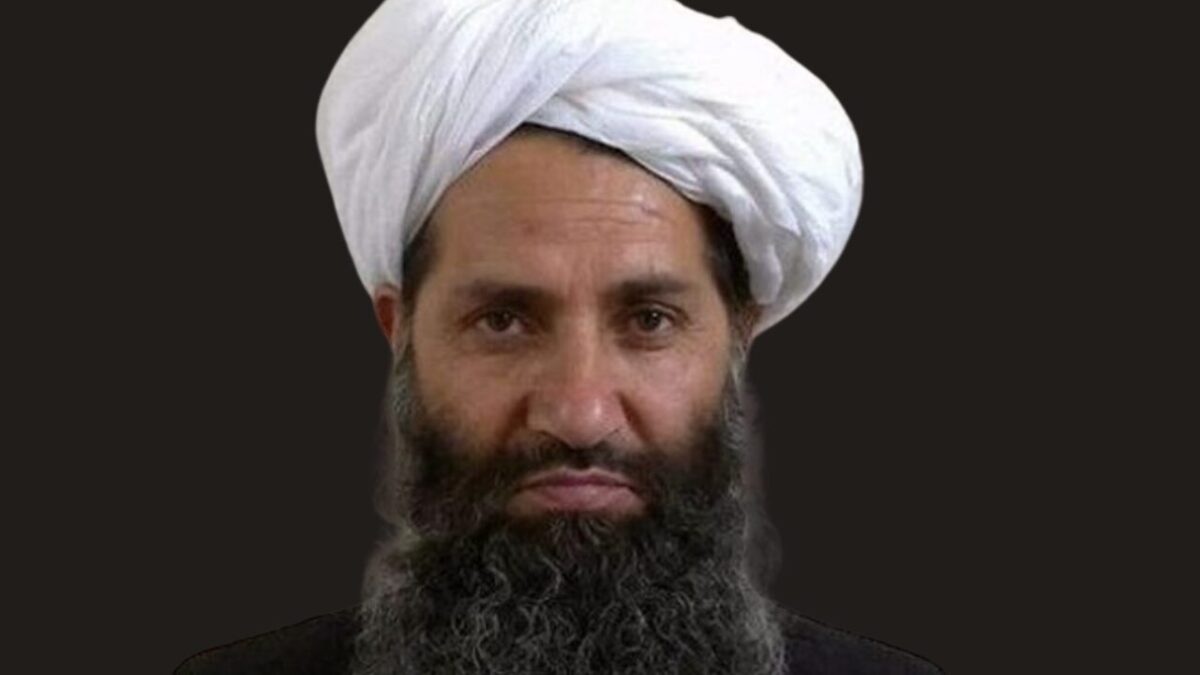
The graveyard of empires oversaw the crumbling of its democratic government on 15th August 2021 at the hurls of extremism at the doors of Kabul. Former President Ashraf Ghani left the country in a helicopter, changing the course of Afghan society, history, and the future forever.
By Ahsan Ali
The US and their allies invaded the country to dismantle the Islamist extremist regime of the Taliban, build democratic institutions, and promote human rights. The US project of nation-building and statecraft came with high hopes and a huge financial cost of $36.2 billion.
The fall of the Afghan government astonished the whole region with rising extremist insurgency and ideology. While the oath-takers took responsibility, they also shifted the message of state failure onto Pakistan's shoulders. Where Pakistan received the message of unwelcoming treatment and unfairness, it also highlighted the indicative failure of the Afghan state itself.
The 2004 Afghan Constitution immensely centralised executive power in Kabul and sidelined essential local customary governance. With no decentralised governance in the regions and all decision-making centralised in Kabul, the government's domestic legitimacy fell because regional capitals had no power.
The state was gripped by systematic corruption, with foreign aid and military spending creating a patronage economy. Decades of unmonitored, unchecked flows of $145 billion in foreign aid money fostered weak public institutions, endemic corruption, and a failed economy that could not deliver basic services.
The scepticism was confirmed by the infamous 2009 napkin incident, when soon-to-be sworn-in vice-president Joe Biden warned then-President Hamid Karzai about losing US support over corruption, hinting that Karzai’s brother was causing friction.
While the incident sowed permanent discord, it also shaped the understanding of inherent corruption. This also shaped the future geopolitical reality, as then-US President Joe Biden faced the challenge of building a self-sustaining, established democracy.
Patronage and over-reliance on the US were not limited to the economy; they were evident in the military too. Although the Afghan National Army (ANA) was heavily funded with complex Western military hardware and at a high financial cost, it turned out to be a “Fabergé egg.” The Afghan National Army struggled with structural, systematic, and leadership weaknesses.
The ANA looks like a formidable force in the papers but was factionalised with ethnic alienation, institutional weakness and lacked structural resilience when air support was withdrawn. The US air support withdrawal cracked military morale significantly and made the army collapse rapidly and significantly. Patronage–based leadership, ghost soldiers, and a highly centralised command structure fractured and weakened the security architecture.
On the one hand, where state institutions were shaped by clientelist, patronage-based politics, this undermined institutions and state-building. The state itself suffered from deep-seated ethnic alienation, where Pashtun-dominated leadership frequently sidelined other ethnic communities.
One issue originates from the US and their partners, who failed to understand how to create a democratic system in Afghanistan. They imposed a centralised presidential system with a weak parliament and the president appointing regional governors. It was a combination of institutional ignorance and a fundamental misunderstanding of local culture, as a democratic system should be decentralised and grounded in tribal traditions.
US policymakers lacked foundational knowledge of Afghan society, tribal dynamics, and local politics, which made them a “system” alienated from reality. Throughout history, the country has traditionally resisted strong federal control and embraced local autonomous governance.
Asymmetrical Afghan politics hampered internal development, and Afghanistan’s complex relationship with Pakistan indirectly affected its relations. The former Kabul government's failure to acknowledge the Durand Line as an official border deteriorated relations, with later accusations of instability toward Islamabad.
Pakistan cannot be directly implicated in the fall of the Afghan democratic government. The former Afghan state achieved civil rights, minority rights, and women’s emancipation. But it lacked proper leadership and direction in addressing domestic issues and foreign policy, and it saw heavy power centralisation from politics to the military.
Moreover, before any state-building, understanding the local dynamics is crucial. For the US, studying the socio-economic and local culture should have been a priority to build a long-standing democracy in the region. This should never have created a generic centralised democracy in the region, as Afghanistan never functioned peacefully under such methods.
Henceforth, it is essential to understand that a heavily centralised government, endemic political and military corruption, ethnic alienation, weak government institutions, and over-reliance on foreign support and funding were among the main pillars of the Afghan government's fall. Rather than scathing criticism and scapegoating, placing complete blame towards Pakistan.