
Constitutions often begin with elevated and carefully chosen words. They speak of dignity, freedom, democracy, history, faith, or shared values. These introductory texts—preambles—are intended to inspire citizens, to express a collective identity, and to articulate the moral foundations of a political community. Yet precisely because of their lofty tone, they tend to avoid the most fundamental political question of all: who actually governs?
By Paul Cliteur
This essay examines that silence. It argues that modern constitutional preambles, particularly in Europe, systematically omit the central issue of sovereignty. They celebrate values but conceal a deep and growing conflict over legal and political authority among nation-states, supranational institutions, and international courts.
This omission is not accidental. It is structural, and it has far-reaching consequences for democracy, legitimacy, and constitutional self-understanding.
A preamble is the opening statement of a constitution. It explains why the constitution exists and what values underpin the political order. Some preambles are brief and restrained, others expansive and poetic. They may refer to God, national history, cultural traditions, or universal ideals such as human rights and equality. What they never contain, however, are concrete, enforceable legal rules.
A preamble does not allocate competences, establish institutions, or determine who has the final word in legal disputes. Its function is symbolic and interpretive rather than operational.
This distinction is crucial. Preambles create an image of constitutional reality, but they do not necessarily reflect how power is exercised in practice. The distance between constitutional self-presentation and constitutional practice is precisely where the “silence of the preamble” begins.
European constitutional preambles roughly fall into three broad categories: minimalist, maximalist, and universalist.
The Dutch Constitution exemplifies minimalism. Its preamble consists of a single sentence: “The Constitution safeguards fundamental rights and the democratic rule of law.” The sentence is elegant and reassuring, yet it conveys the impression of a constitutional order far more autonomous and self-contained than reality permits.
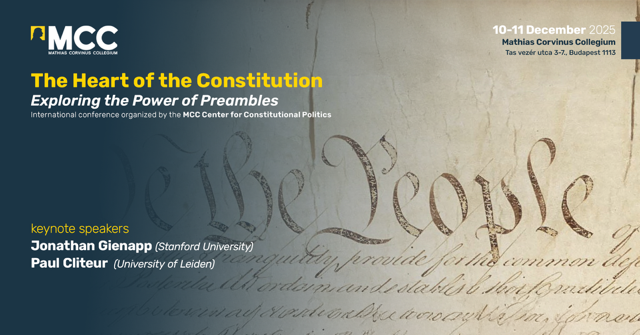
At the opposite end of the spectrum stands the Hungarian Fundamental Law. Its preamble opens with the words “God bless the Hungarians” and unfolds as a rich narrative of national history, Christianity, cultural continuity, and responsibility for future generations. It reads like a declaration of identity rather than a legal introduction, emphasising rootedness, tradition, and moral commitment.
A third model can be found at the European level. Article 2 of the Treaty on European Union, while not formally a preamble, functions like one. It lists values such as human dignity, freedom, democracy, equality, the rule of law, human rights, pluralism, tolerance, justice, solidarity, and equality between women and men.
It deliberately avoids references to religion, nationhood, or shared historical experience. This is a universalist text, oriented toward abstract values rather than collective identity.
Despite their stylistic differences, all three models share a striking omission. None of them addresses the question of sovereignty. None explains who ultimately governs, who decides conflicts between legal orders, or where final authority resides. Yet this question lies at the very heart of constitutional reality in contemporary Europe.
Sovereignty has been a defining concept of the modern state since the seventeenth century. Following the Peace of Westphalia in 1648, states asserted supreme authority over their territories and populations. Philosophers such as Thomas Hobbes provided the theoretical foundations for this idea. However, sovereignty is not an all-or-nothing concept. It exists in degrees, and it can be pooled, limited, or transferred.
Over the past seventy-five years, many European states have gradually transferred significant elements of their sovereignty to supranational institutions. Sometimes this occurred deliberately, through treaties ratified by national parliaments or referendums.
At other times, it happened incrementally, through judicial interpretation or political practice. Often, citizens were only dimly aware of the cumulative effect of these changes.
Two institutions in particular have reshaped the European constitutional landscape: the European Union and the European Court of Human Rights.
The European Union is a constitutional anomaly. It is neither a federal state nor a mere international organisation. It is a hybrid system whose powers have steadily expanded. In many fields, EU law has primacy over national law. EU institutions can impose regulations, levy fines, influence national budgets, and shape economic, social, and environmental policy.
The Court of Justice of the European Union ensures the uniform application of EU law, often limiting the discretion of national legislatures and courts.
Political responses to this development vary widely. Some leaders welcome the EU as a necessary framework for economic integration and global influence. Others see it as a threat to democratic self-government and national autonomy.
These disagreements are not merely symbolic; they concern the actual functioning of national constitutions and democratic accountability. Yet constitutional preambles remain silent about this profound transformation of political authority.
Alongside the EU stands another powerful institution: the European Court of Human Rights in Strasbourg. All member states of the Council of Europe have accepted its jurisdiction. This means that citizens can challenge their own governments before an international court, and that national laws and policies may be declared incompatible with the European Convention on Human Rights.
Human rights are a cornerstone of modern constitutionalism. Yet their interpretation is never politically neutral. Judgments of the European Court of Human Rights shape policies on migration, asylum, criminal justice, security, family law, and cultural questions. In recent years, frustration with the Court’s expansive interpretations has grown among European governments.
In May 2025, this tension became explicit when the leaders of nine European countries published an open letter criticising the Court’s jurisprudence on asylum and migration. They reaffirmed their commitment to human rights, but warned that current interpretations had become politically untenable.
This was an extraordinary moment: democratically elected leaders openly questioning the authority of an international court whose judgments directly affect domestic policy.
Migration and asylum have become the epicentre of the sovereignty debate. Once treated as technical matters, they are now among the most politically charged issues in Europe. Large-scale migration places significant pressure on welfare systems, housing, education, and healthcare. Even affluent states struggle to sustain these systems under continuous strain.
Migration also raises sensitive questions of cultural compatibility. European societies have confronted radical Islamist ideology through events such as the attacks of 11 September 2001, the Danish cartoons controversy, the fatwa against Salman Rushdie, and the murder of Samuel Paty.
These events highlight tensions between Western constitutional values—particularly freedom of expression—and movements that reject them. Migration brings these tensions into the heart of European societies.
National governments seek to respond through legislation and policy. Supranational courts, invoking human rights norms, often limit their room for manoeuvre. The resulting conflict concerns not only policy outcomes, but constitutional authority itself. Yet preambles remain silent about this struggle.
To understand how these tensions arose, it is helpful to recall four historical layers of constitutional development. The first is the emergence of the sovereign state in the seventeenth century. The second is the rule of law, articulated in the eighteenth century by thinkers such as Montesquieu, who emphasised the separation of powers and the subordination of government to law. The third is democracy, which gained momentum in the nineteenth century, particularly after the revolutions of 1848. The fourth is the institutionalisation of human rights after 1945, culminating in international treaties and courts.
Together, these elements form the modern constitutional state. But they also generate tensions. Democracy may conflict with judicial review, equality with liberty, and human rights with national sovereignty. These tensions define constitutional reality far more than the aspirational language of preambles.
The Dutch Constitution illustrates this gap particularly clearly. Its preamble claims that the Constitution safeguards fundamental rights and the democratic rule of law. In practice, Dutch courts are prohibited from reviewing Acts of Parliament against the Constitution. As a result, constitutional rights cannot be directly enforced. They exist symbolically rather than juridically.
Democratic self-government is also constrained. EU law takes precedence over national law, and European courts exert significant influence on policy, particularly in the areas of migration and asylum. The Netherlands remains a democracy, but one with limited autonomy. None of this is acknowledged in the preamble.
European constitutional discourse often treats democracy, the rule of law, and human rights as harmonious values. In reality, they frequently collide. Democracy requires that elected governments can govern. The rule of law limits majority power. Human rights, as interpreted by courts, may override democratic decisions. This tension is known as the countermajoritarian dilemma.
In Europe, the dilemma is intensified by supranational review. Not only national judges, but also international judges assess national policies. Democratic accountability becomes fragmented and opaque. The confrontation between European governments and the European Court of Human Rights in 2025 exemplifies this conflict.
Preambles undoubtedly have value. They inspire, articulate ideals, and express collective identity. But they are not the heart of the Constitution. In contemporary Europe, constitutional reality is shaped by the flow of sovereignty between national institutions and supranational bodies.
The true heart of the constitution lies in the allocation of authority: who decides, who has the final word, and who is accountable. The silence of the preamble conceals these questions. Making that silence audible is an essential task for scholars, citizens, and constitutional democracies themselves.






uitstekende analyse van de huidige hybride, onduidelijke, machtssituatie waarbij de nationale souvereiniteit (en demicratie) sluipend overvloeit naar de EU(Commissie) en de afstand van de respectievelijke natuonale burgers met de regeerders steeds groter wordt. De agenda van de niet-(direct)gekozen politieke beslissers is vaak tegengesteld aan die van de respectievelijke burgers. “Over ons, niet namens ons”. Vervreemding. irritatie over vaak essentiële besluiten die de toekomst in de EU bepalen, zonder dat de burger zich in eigen land (want ondergeschikt aan EU) of in de EU zich daarbij betrokken voelt. De burger, het volk, de natie, is immers de basis van de democratie, de eindconsument …
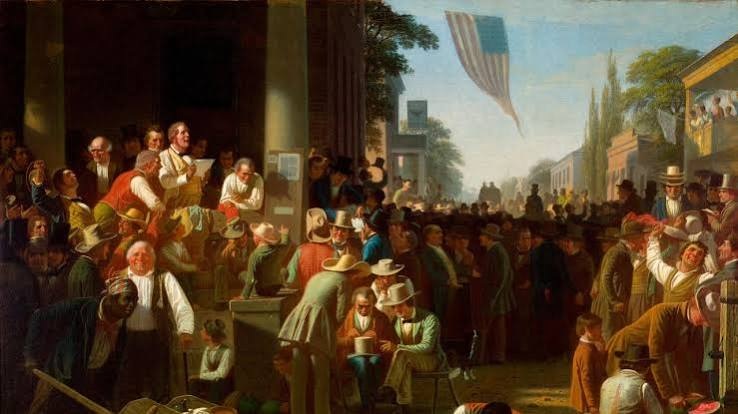
“We The People” waarmee het 1ste Amendement van de VS begint maakt duidelijk dat alle politiek ten dienste van The People dient te zijn.
Een duidelijker pre ambule voor de overkoepelende nationale politiek in de VS.
Zoals de zaken in de EU nu gaan waarbij de EU zich linkt aan de NAVO, en zonder democratisch mandaat vérstrekkende strategieën en besluiten maakt zoals mbt Oekraïne, is kritiek op het democratisch gehalte door Vance (VS) niet weerlegbaar.
Ja, heel goed punt, Paula. Mijn punt tijdens die bijeenkomst in Boedapest was ook: de VS heeft een preambule bij een constitutie die nog echt uitgaat van de natiestaat. Dat doen die preambules in midden-Europese staten vaak ook. Maar in West-Europese staten gaat het vaak om preambules die de natiestaat helemaal niet meer al model hebben. Dat zijn enigszins globalistische preambules.
Inderdaad, Paula. Er is een verschil tussen preambules bij constituties die nog een echte natiestaat willen zijn, zoals de VS en preambules die deze ambitie stilletjes hebben opgegeven, zoals Nederland.