I want an international law implementing the immediate death penalty for people, young and old, no difference, who abuse, torture, and kill animals, and I want it now. Enough is enough! It’s about time that we end the madness after centuries of horrors. What people do to each other is one thing, but what people do to animals should lead to direct death. No compromises. No second changes. End of story. I will never change my opinion about this.
Civilisations erode through tolerated violations that gradually redraw the boundary of what counts as morally real. Extreme cruelty towards animals belongs to this category, but it also goes beyond, as it is the lowest of the lowest that can exist, and it has been going on for thousands of years. In other words, it may be the biggest problem civilisations choose to ignore. It reveals a structural vacancy in ethical governance, a lacuna in our collective moral imagination and laws and legislation.
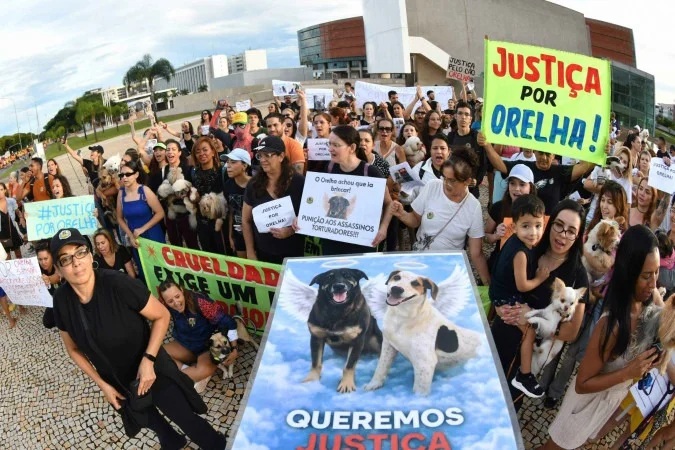
Recent events in Brazil, such as the brutal attack on a community dog known as Orelha in Florianópolis in January 2026 by a group of young adults, have rekindled international outrage and impassioned debate. But I’m done with all that “talk”. It’s time for massive action like we never had before. I demand that all governments of the world unite to enact a law that ends these diabolical tendencies.
Orelha had been a familiar and cherished presence in his neighbourhood for so long, nurtured and cared for by residents. In January 2026, he became the victim of an unprovoked and brutal assault by a group of teenagers, sustaining injuries so severe that euthanasia was necessary. This tragedy rightly captured public attention. The incident sparked widespread discussion on social media and elicited commentary from journalists, public figures, and international voices alike.
Orelha was subjected to this violent attack by young adults who reportedly are the offspring of affluent and influential families in the region. Brazilian media report that their parents are proprietors of luxury enterprises, including hotels and high-end retail establishments.
The assault was extraordinarily violent and bloody. Orelha was transported to a veterinary clinic, but the severity of his injuries and the extent of his suffering left the veterinarians with no alternative but euthanasia. Those who treated him described themselves as shocked by the condition in which he arrived. Shocked is to put it mildly, as you can imagine.
Rather than being held accountable, these young adults were allegedly sent by their parents to Disney World in Florida, United States, as a form of so-called “punishment” intended to mitigate public outrage. There are no words to describe the insanity and evil of complicity. The case has provoked nationwide indignation across Brazil.
Leading television networks, newspapers, artists, activists, law enforcement, and animal rights organisations have all spoken out, demanding justice. Now, the world is starting to know about this.
Even more alarming, witnesses and activists involved in the case are reportedly being threatened and intimidated, some allegedly at gunpoint. One of the accused teenagers’ relatives is said to be a police officer, raising serious concerns about abuse of power and obstruction of justice. Activists have also received threats from the parents of those involved, as is the case with the worst evil of humanity.
Brazil has witnessed other acts of grievous cruelty in the past decade, such as the Sansão case of 2020, in which a dog had both hind legs severed by a sickle. That case prompted legislative reform, raising penalties for animal mistreatment. Civil society organisations have exposed criminal networks marketing videos of animal abuse in conjunction with the Federal Police. On a smaller but still significant scale, incidents of abandonment and neglect continue to be recorded with depressing regularity.
If we are to grasp the ethical significance of these patterns, we need a perspective that is neither sentimental (difficult) nor procedural (should be easy, so why the hell is it still hard?). We need to inquire not only into what happened, but into what the pattern reveals about the conditions of moral recognition in contemporary life. We need to remember how humanity has been responsible for animal horrors for thousands of years, no matter what religion, education, income, culture, mentality, race, nationality, political stance, you name it!
Leonard Nelson offers an unnervingly rigorous vantage point. He insisted that ethical obligation isn’t tethered to emotion. It arises from rational consistency. If a being can suffer, then the responsibility to prevent gratuitous suffering follows necessarily. To suspend that obligation in practice while affirming it in theory produces a contradiction that law cannot sustain indefinitely. A society that treats suffering as contingent invites incoherence. If cruelty is something we say should be wrong but we don’t act to prevent it in its starkest forms, then the very claim that cruelty matters is hollow.
Edith Stein provides further illumination through her analysis of perception and empathy. She shows that moral failure frequently involves a narrowing of the field of ethical visibility. Certain beings cease to appear as subjects within the moral world and are treated instead as objects without legitimate claims. When law mirrors this absence, focusing on technicalities rather than responsibility, it does so because the moral presence of the victim has already been diminished. The cruelty isn’t merely enacted on the body of the animal. It is passed on to the social imagination.
The political significance of these patterns lies in their predictive force. Jurists who examine societies shaped by histories of impunity note that tolerated brutality functions as a rehearsal. Juridical hesitation, minimisation and procedural sheltering teach citizens which harms are serious and which are merely rhetorical. When cruelty toward animals is met with cautious language rather than decisive action, the same logic migrates to other domains of life.
Philosophers such as Hans Jonas have emphasised that responsibility grows in proportion to vulnerability. Power over defenceless life generates an obligation that cannot be delegated to sentiment or postponed through procedure. Where that obligation is ignored, governance loses its moral coherence and becomes a mechanism of management rather than protection.
Georges Bataille observed that societies often preserve their sense of order by designating zones where violence is permitted or ignored. Animals frequently inhabit these zones. Their suffering stabilises a hierarchy by absorbing cruelty that would otherwise threaten social cohesion. What looks like a compartmentalised problem is in fact a symptom of a deeper moral deficit.
Rilke’s reflections on animal existence offer a quieter yet equally profound insight. Animals inhabit the world without protective abstraction. Their exposure is complete. To violate that exposure isn’t merely to cause pain but to exploit a mode of being that has no defence against calculation or distance. When law fails to respond decisively to that exploitation, it endorses domination as a legitimate expression of power.
Viewed from this perspective, incremental reform is insufficient. Procedural delay and symbolic condemnation without structural consequences have led to thousands of years of blood on our hands. They communicate that specific harms matter rhetorically but not operationally. What is required is clarity embedded in law and in practice. What is necessary is a drastic change to atone for the evil humanity has inflicted on animals to date.
Extreme cruelty towards animals should trigger automatic and non-discretionary prosecution, leading to euthanasia for those perpetrators. It should be treated as a marker of the most severe moral impairment with consequences that reflect the gravity of the act. This is a call for coherence between ethical principles and legal consequences. It’s about bloody time. Justice for Orelha. Justice for all the animals. May justice finally prevail, and may this stop.
Political leaders often invoke values, yet values exist only where they constrain action under pressure. Leadership is tested by the willingness to bind law to moral reality even when the victim has no voice, no constituency, no strategic value, and sometimes no monetary contribution. The global response to such acts is therefore not peripheral. It’s a measure of whether contemporary governance still understands what its foundations should be. Silence isn’t restraint but authorisation. Let’s unite. Now. Euthanasia for animal abusers and killers on each continent of the world.
Americas
Argentina: Javier Milei
Bolivia: Luis Arce
Brazil: Luiz Inácio Lula da Silva
Chile: Gabriel Boric
Colombia: Gustavo Petro
Costa Rica: Rodrigo Chaves
Cuba: Miguel Díaz Canel
Dominican Republic: Luis Abinader
Ecuador: Daniel Noboa
El Salvador: Nayib Bukele
Guatemala: Bernardo Arévalo
Haiti: Presidential Council
Honduras: Xiomara Castro
Mexico: Claudia Sheinbaum
Panama: José Raúl Mulino
Paraguay: Santiago Peña
Peru: Dina Boluarte
Uruguay: Luis Lacalle Pou
Venezuela: Delcy Rodríguez
Europe
Albania: Bajram Begaj
Austria: Alexander Van der Bellen
Armenia: Vahagn Khachaturyan
Belgium: King Philippe (monarch)
Bulgaria: Rumen Radev
Croatia: Zoran Milanović
Czech Republic: Petr Pavel
Estonia: Alar Karis
Finland: Alexander Stubb
France: Emmanuel Macron
Germany: Frank‑Walter Steinmeier
Greece: Katerina Sakellaropoulou
Hungary: Tamás Sulyok
Iceland: Halla Tómasdóttir
Ireland: Michael D Higgins
Italy: Sergio Mattarella
Latvia: Edgars Rinkēvičs
Lithuania: Gitanas Nausėda
Malta: Myriam Spiteri Debono
Moldova: Maia Sandu
Montenegro: Jakov Milatović
North Macedonia: Gordana Siljanovska‑Davkova
Poland: Andrzej Duda
Portugal: Marcelo Rebelo de Sousa
Romania: Klaus Iohannis
Serbia: Aleksandar Vučić
Slovakia: Peter Pellegrini
Slovenia: Nataša Pirc Musar
Spain: King Felipe (monarch)
The Netherlands: Willem-Alexander
Ukraine: Volodymyr Zelenskyy
Africa
Algeria: Abdelmadjid Tebboune
Angola: João Lourenço
Benin: Patrice Talon
Botswana: Duma Boko
Burkina Faso: Ibrahim Traoré
Burundi: Évariste Ndayishimiye
Cameroon: Paul Biya
Central African Republic: Faustin Archange Touadéra
Chad: Mahamat Déby
Comoros: Azali Assoumani
Congo Republic: Denis Sassou Nguesso
Côte d’Ivoire: Alassane Ouattara
Djibouti: Ismaïl Omar Guelleh
Egypt: Abdel Fattah el Sisi
Equatorial Guinea: Teodoro Obiang
Eritrea: Isaias Afwerki
Gambia: Adama Barrow
Ghana: John Mahama
Guinea: Mamady Doumbouya
Kenya: William Ruto
Liberia: Joseph Boakai
Libya: Presidential Council
Madagascar: Andry Rajoelina
Malawi: Lazarus Chakwera
Mali: Assimi Goïta
Mauritania: Mohamed Ould Ghazouani
Mozambique: Filipe Nyusi
Namibia: Netumbo Nandi-Ndaitwah
Niger: Abdourahamane Tchiani
Nigeria: Bola Tinubu
Rwanda: Paul Kagame
Senegal: Bassirou Diomaye Faye
Sierra Leone: Julius Maada Bio
Somalia: Hassan Sheikh Mohamud
South Africa: Cyril Ramaphosa
South Sudan: Salva Kiir
Sudan: Sovereignty Council
Tanzania: Samia Suluhu Hassan
Togo: Jean‑Lucien Savi de Tové
Tunisia: Kais Saied
Uganda: Yoweri Museveni
Zambia: Hakainde Hichilema
Zimbabwe: Emmerson Mnangagwa
Asia
Afghanistan: Hibatullah Akhundzada
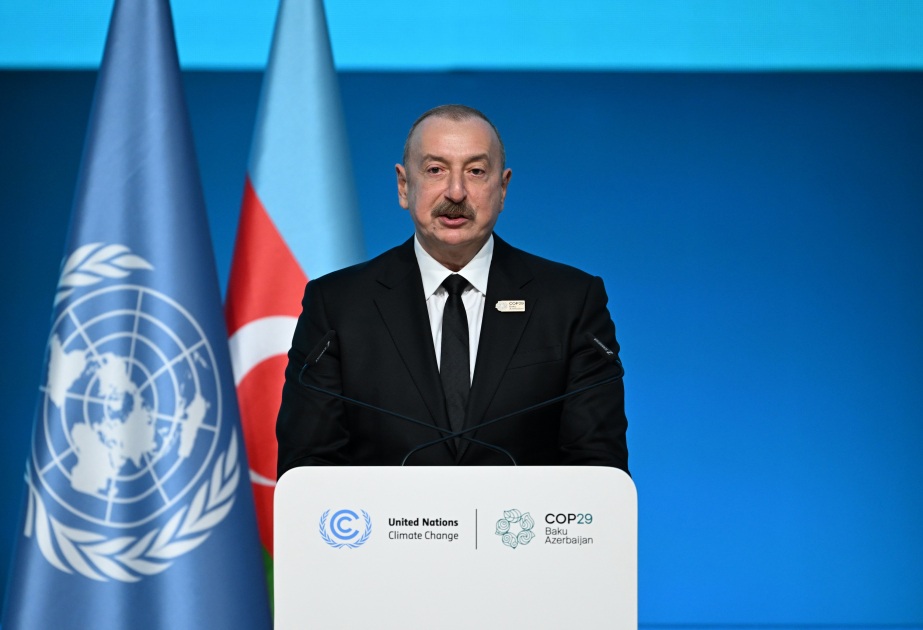
Azerbaijan: Ilham Aliyev
Bangladesh: Mohammed Shahabuddin
China: Xi Jinping
Cyprus: Nikos Christodoulides
East Timor: José Ramos Horta
Georgia: Salome Zourabichvili
India: Droupadi Murmu
Indonesia: Prabowo Subianto
Iran: Masoud Pezeshkian
Iraq: Abdul Latif Rashid
Israel: Isaac Herzog
Japan: Emperor Naruhito
Kazakhstan: Kassym‑Jomart Tokayev
Kyrgyzstan: Sadyr Japarov
Laos: Thongloun Sisoulith
Lebanon: Joseph Aoun
Maldives: Mohamed Muizzu
Mongolia: Ukhnaagiin Khürelsükh
Nepal: Ram Chandra Poudel
North Korea: Kim Jong Un
Pakistan: Asif Ali Zardari
Philippines: Ferdinand Marcos Jr
Singapore: Tharman Shanmugaratnam
South Korea: Yoon Suk-yeol
Sri Lanka: Ranil Wickremesinghe
Syria: Ahmad al-Sharaa
Tajikistan: Emomali Rahmon
Thailand: King Maha Vajiralongkorn
Turkmenistan: Serdar Berdimuhamedow
Uzbekistan: Shavkat Mirziyoyev
Vietnam: Tô Lâm
Oceania
Fiji: Ratu Naiqama Lalabalavu
Kiribati: Taneti Maamau
Marshall Islands: David Kabua
Micronesia: Wesley Simina
Nauru: David Adeang
Palau: Surangel Whipps Jr
Papua New Guinea: King Charles III
Samoa: Tuimalealiifano Vaʻaletoa Sualauvi II
Solomon Islands: King Charles III
Tonga: King Tupou VI
Vanuatu: Nikenike Vurobaravu