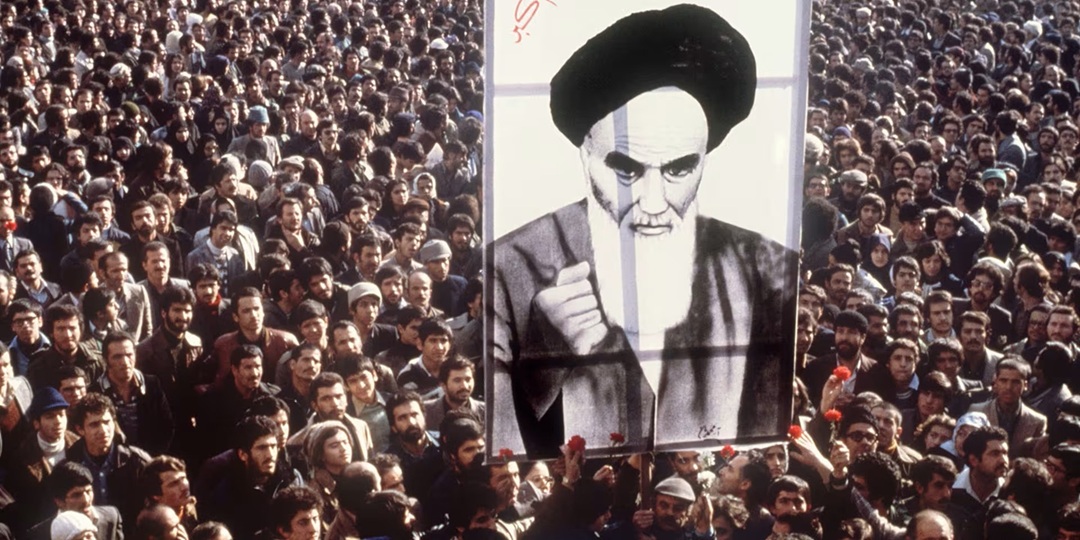
The Islamic Revolution in 1979, led by Ayatollah Ruhollah Khomeini, overthrew the Shah's regime and established the Islamic Republic. At the time, the revolution was greeted with considerable enthusiasm among certain circles of Western intellectuals. Many believed that the fall of the Shah marked the beginning of a new and more just political order.
By Paul Cliteur
Among those who initially viewed the revolution sympathetically were prominent thinkers such as the American international law scholar Richard Falk and the French philosopher Michel Foucault. To them, the revolution appeared to represent a form of political and cultural liberation from authoritarian rule and Western domination.
Yet from the very beginning, there were also critical voices. Some observers warned that the new regime would not usher in freedom, but rather replace one form of authoritarianism with another. One of the most perceptive critics was the American jurist Anthony Lewis. In a remarkably prescient article published in The New York Times in 1979, Lewis argued that the new Islamic Republic showed clear signs of becoming a theocratic dictatorship.
History has largely vindicated his concerns.
A theocratic dictatorship
Iran did indeed evolve into a theocratic dictatorship. Khomeini and, later, his successor, Ali Khamenei, became the ultimate political authorities in the country. But their rule was not merely authoritarian in the conventional sense. What distinguished the Iranian system was the way political power was justified.
The legitimacy of the regime rested on theology.
Political decisions were framed as expressions of divine will. The state claimed not merely to govern but to execute God’s commands. This theological framework had far‑reaching consequences. Anyone who opposed the political leadership was, by definition, opposing God.
And what should be done with someone who opposes God?
Within the logic of the regime, such a person becomes an enemy not only of the state but of the divine order itself. The result was repression on a massive scale. Political dissidents were imprisoned, tortured, and executed. Strict social policies were introduced in the name of religious authority, including the compulsory veiling of women.
When politics speaks in the name of God
The central difficulty with a political system grounded in divine authority is that it becomes extraordinarily difficult to challenge. Political decisions that can normally be debated in terms of reason, justice, or human rights are transformed into matters of religious obedience.
Consider torture. In most moral frameworks, torture is extremely difficult to justify. Yet if a government claims that God’s will requires torture, the usual ethical arguments lose their force within that system.
The same applies to policies such as the compulsory veiling of women. Critics may present strong arguments about individual liberty or gender equality. But if the regime insists that God commands the practice, the debate is effectively closed.
This moral logic reflects a well‑known ethical theory: the divine command theory of morality. According to this view, an action is morally right simply because God commands it, and wrong because God forbids it. Moral reasoning becomes secondary to obedience.
Khomeini and Khamenei both operated within this framework. Morality, in their political philosophy, was not an independent sphere of reasoning but the execution of divine instructions.
The political role of the religious jurist
Khomeini developed this theory of governance most explicitly in a series of lectures delivered in Najaf, Iraq, in 1970. These lectures were later published under the title Islamic Government (Hokumat‑e Islami).
In them, Khomeini outlined the doctrine known as Wilayat al‑Faqih, usually translated as “Guardianship of the Jurist.” According to this doctrine, Islamic jurists must exercise ultimate authority over the state because they are uniquely qualified to interpret God’s law.
The result is a political system in which theological interpretation becomes the foundation of political authority. Governance is not merely influenced by religion; it is directly administered by religious scholars who claim to act on behalf of divine law.
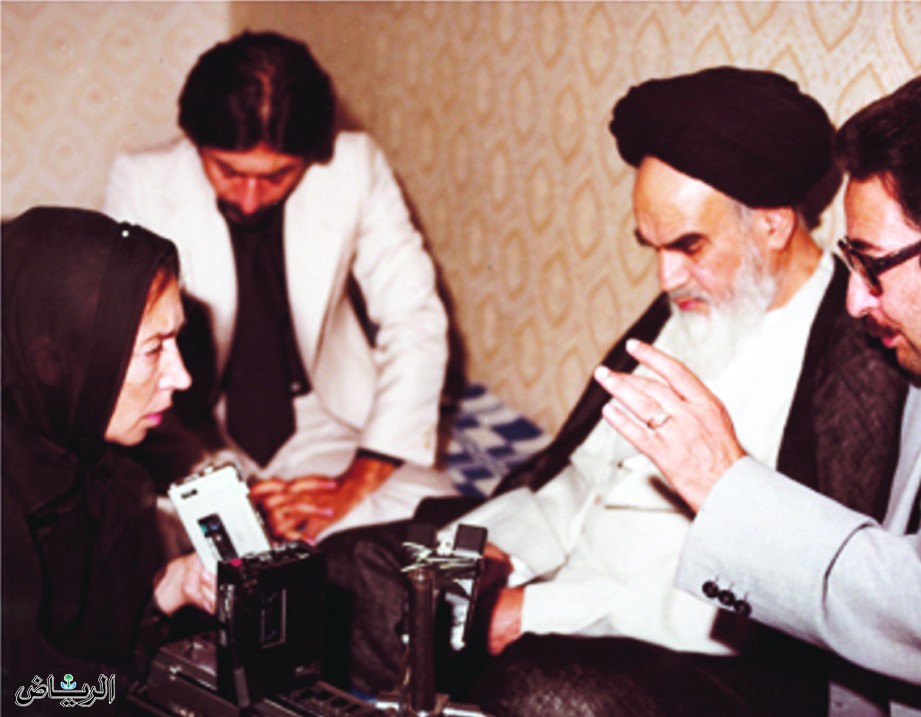
Such a system creates a unique political risk. Decisions of enormous political consequence may be justified not by strategic calculation or democratic deliberation but by religious conviction.
Divine command and nuclear weapons
In everyday life, the divine command theory may seem relatively harmless. If someone says, “I do not eat pork because God forbids it,” the appropriate response is simple: then do not eat pork.
But imagine a different situation. Suppose someone were to say: “God commands me to launch a nuclear strike against your country.”
In that case, the implications are radically different.
A political system that interprets moral obligations as direct divine commands raises difficult questions when it acquires access to extremely destructive weapons. The issue is no longer a private matter of religious practice; it becomes a matter of international security.
Should a state guided by a theological interpretation of morality possess nuclear weapons?
This question lies at the heart of current geopolitical tensions.
Self-Defence and International Law
Israel and the United States have justified military action against Iran partly because Iran has been developing nuclear weapons capabilities. Critics argue that such an attack constitutes an unlawful war of aggression.
Under international law, the use of force against another state is generally prohibited. The United Nations Charter allows two main exceptions: authorisation by the Security Council and the inherent right of self-defence.
Article 51 of the Charter traditionally interprets self-defence as a response to an armed attack. The International Court of Justice has reaffirmed this principle in several cases, including the Nicaragua and Oil Platforms cases.
Preventive self-defence—striking a state because it might pose a threat in the future—is widely regarded as incompatible with the existing legal framework.
However, international law has sometimes acknowledged a narrower concept: the pre‑emptive strike. This refers to military action taken when an attack is not merely possible but imminent and unavoidable.
The question, therefore, is whether Iran’s actions could reasonably be interpreted as creating such an imminent threat.
Iran’s regional strategy
The argument for pre‑emption gains additional weight when Iran’s broader regional strategy is taken into account.
Iran has for many years supported and financed armed movements that conduct attacks against Israel. Among these groups are Hamas, Hezbollah, and the Houthis in Yemen. Through these organisations, Iran exercises influence across the Middle East while maintaining a degree of indirect involvement.
This strategy already places Iran in a state of persistent conflict with Israel.
If a state that sponsors such armed groups were also to acquire nuclear weapons, the strategic balance of the region would change dramatically.
The Rushdie Fatwa as a warning
Historical precedent also plays a role in assessing the Iranian regime's intentions.
One striking example is the fatwa issued by Ayatollah Khomeini in 1989 against the novelist Salman Rushdie. Rushdie’s novel The Satanic Verses was deemed blasphemous by the Iranian leadership. In response, Khomeini publicly called for the author’s assassination.
This fatwa was not simply a symbolic gesture. It effectively declared that a writer living in another country could be executed for expressing ideas considered offensive to Islam.
The implications extended far beyond a single book. The fatwa represented a direct challenge to the principle of freedom of expression—a core value in liberal democratic societies.
In effect, it signalled that the Iranian regime regarded certain cultural and intellectual practices in the West as punishable offences deserving death.
From this perspective, the fatwa can be interpreted as an early example of the regime’s willingness to project religiously justified violence beyond its borders.
Missed Opportunities
Looking back, one might ask whether the international community underestimated the ideological character of the Iranian regime. The fatwa against Rushdie demonstrated how theological reasoning could be used to justify actions that directly threatened fundamental freedoms.
Yet the West largely responded with diplomatic protest rather than decisive political action.
Over the decades that followed, Iran continued to expand its regional influence while maintaining its revolutionary ideological framework.
Humanitarian and Strategic Arguments
There are also humanitarian arguments for confronting the Iranian regime. The government has repeatedly been accused of severe human rights violations, including the repression of political dissent and the violent suppression of domestic protests.
Some observers, therefore, argue for humanitarian intervention—action taken to prevent a state from committing large‑scale abuses against its own population.
Yet the strategic argument remains central. If a theocratic state guided by the logic of divine command were to acquire nuclear weapons, the consequences could be catastrophic.
The Core Question
Ultimately, the debate returns to a fundamental question.
Should the international community allow a state governed by religious authorities—authorities who claim to act in the name of divine commands—to obtain nuclear weapons?
For critics of military action, the answer must remain within the strict framework of international law. For others, the unprecedented risks posed by a nuclear‑armed theocracy justify more flexible interpretations of self-defence.
The dilemma is therefore not merely legal but philosophical and political.
If the stability of the international order depends on preventing certain regimes from acquiring the most destructive weapons ever invented, then the question arises whether the law itself must adapt to that reality.
Should international law also require the strongest powers to act when a regime threatens to undermine the entire system on which that law depends?