Joint US-Israeli strikes that resulted in the death of Iran’s Supreme Leader Ayatollah Ali Khamenei, followed by the behind-the-scenes election of his son Mojtaba as the new Rahbar of the Islamic Republic (under decisive pressure from the Islamic Revolutionary Guard Corps). Predictably, not endorsed by US President Donald Trump. In these circumstances, the publicly declared objectives of the American-Israeli coalition — ranging from the “destruction of Iran’s nuclear programme” to the “liberation of Iran” — are in direct conflict with the balance of forces on the ground and with the logic of the Islamic Republic’s internal resilience.
By Alihuseyn Gulu-Zada
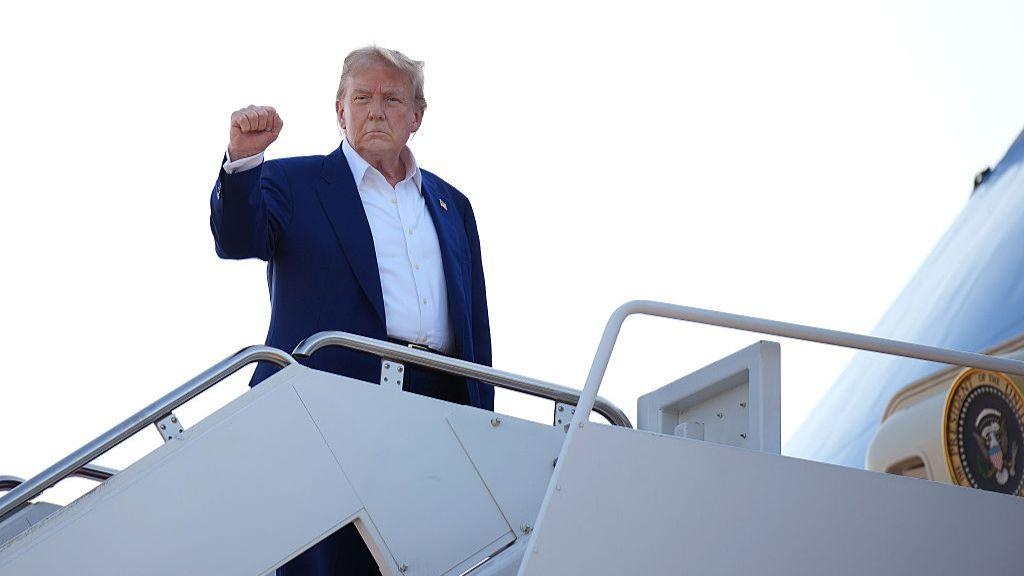
Since the US withdrawal from the JCPOA and the return to the policy of “maximum pressure,” Donald Trump has consistently favoured limited but symbolically powerful military and sanctions measures that can be converted into domestic political capital. His central task is to demonstrate to the American electorate the destruction of Iran’s nuclear infrastructure and critical defence and energy logistics without becoming entangled in a protracted occupation or an open campaign for regime change.
The precedent is the 2020 assassination of Qasem Soleimani. The operation was presented to the American public as a decisive blow against the “chief architect of terror,” yet in practice it triggered a surge of anti-American mobilisation inside Iran and across the region, without bringing the Tehran regime any closer to collapse.
Mass funeral processions, rhetoric of “cruel revenge,” and the consolidation of Iranian elites around the symbol of the “martyr of resistance” demonstrated that targeted eliminations tend to strengthen rather than undermine the legitimacy of Tehran’s hard-line stance.
Against this backdrop, the most probable scenario under present realities is the conclusion of the military campaign against Iran with the formula “mission accomplished” after a demonstrative dismantling of nuclear and military targets — without any genuine transformation of the Iranian political regime.
Why Netanyahu’s appeals are unlikely to succeed
On the other side, Israeli Prime Minister Benjamin Netanyahu has consistently built a narrative in which Israel acts as an ally of the Iranian people against the “tyranny of the mullahs,” regularly addressing Iranians through direct video messages and calls for uprising and “liberation of Iran.”
In the course of the present war, he has again stated that the Jewish state possesses an “organised plan with many surprises” to destabilise the regime. The “moment of truth” for Iranians is already near, effectively urging them to overthrow the government.
However, the historical reaction of Iranian society to external pressure and the targeted killings of key figures — from Soleimani to nuclear scientist Mohsen Fakhrizadeh — shows that, in wartime conditions, the dominant logic is one of national defence and consolidation against an external enemy, rather than readiness to follow appeals from foreign leaders.
Consequently, the likelihood that Netanyahu’s external addresses will become a catalyst for a sustained pro-Israeli protest movement remains low.
Inevitable friction between the US and Israel over campaign objectives
Even within an unprecedentedly close military alliance, American and Israeli strategies towards Iran are already diverging. Washington, judging by official statements, seeks to combine forceful containment with controlled diplomacy. In contrast, the Jewish state insists on a more radical dismantling of Iran’s military-nuclear potential and a change in the regional status quo.
Similar contradictions emerged earlier over the JCPOA, when Israel categorically rejected the very idea of the deal. At the same time, the United States viewed the agreement as a tool for temporarily “freezing” the Iranian programme.
Translating this dynamic to the current coalition war against Iran, as the campaign deepens, disputes are likely to arise over whether the United States should risk escalation to confrontation for the sake of maximalist objectives promoted by parts of the Israeli establishment. Nevertheless, given the importance of the bilateral alliance, these frictions will primarily be managed through back-channel diplomacy.
Furthermore, if, following a possible American withdrawal, Israel finds itself alone in the task of “finishing off” Hezbollah and other pro-Iranian proxies without achieving a swift and convincing victory (or a negotiated ceasefire), political pressure on Netanyahu’s cabinet and growing opposition within the Knesset will become virtually inevitable.
Assassination attempt on Mojtaba Khamenei. Betting on chaos (or radicalisation?)
Several publications in both Western and Iranian media already emphasise that Mojtaba Khamenei’s election resulted from intense lobbying by the IRGC, which is determined to retain control over the regime’s security and financial core.
Against this background, any hypothetical elimination of M. Khamenei by the American-Israeli coalition would most likely replicate — on an even larger scale — the effect of the assassinations of Soleimani or the previous Rahbar Ali Khamenei. Instead of regime collapse, there would be the sacralisation of a new “martyr” figure and a further radicalisation of Iran.
In other words, given that Trump now bears personal responsibility not only for Soleimani’s death but also for the killing of Ali Khamenei himself, the pressure of “blood revenge” on the next Supreme Leader and the IRGC power bloc would merely intensify the motivation for continued conflict rather than compromise. This would simultaneously heighten the risk of radicalisation among Shiite communities across the region — from Iraq to Lebanon — and generate a new wave of proxy attacks on American and Israeli targets.
The totality of facts, media assessments, and open-source information points to the limited effectiveness of military instruments in achieving regime change in Iran. A far more realistic scenario is one in which Trump, having secured the destruction of a significant portion of Iran’s nuclear and military infrastructure, declares strategic victory and winds down the military campaign.
In that scenario, he lets Israel and the region confront, on their own, the question of what to do with pro-Iranian proxies and a radicalised but unbroken Iranian state.
In these conditions, any attempts to resolve the problem through further escalation, including a possible assassination attempt on Mojtaba Khamenei, carry a high risk of the opposite effect: consolidation of the regime, strengthening of the IRGC, and the spread of violence throughout the Middle East.
The political cost of such a course for both Trump himself and Netanyahu’s government is likely to exceed any possible dividends, leaving them to explain simultaneously to their respective publics the absence of the promised “regime change” and to manage the long-term consequences of their own forceful policy.
Alihuseyn Gulu-Zada is an independent analyst and researcher specialising in geopolitical processes, risk dynamics and security, as well as the history of the South Caucasus and Iran. His research interests include the peace process between Armenia and Azerbaijan, domestic and foreign policy trends in Iran with implications for the Middle East, and Russia's and Turkey's external vectors in the South Caucasus. His previous contribution to The Liberum can be found here.