It has been evident that the diplomatic track long used to manage tensions between Washington and Tehran had reached its functional end. The Geneva talks were less a genuine negotiation than a final stress test—an attempt to determine whether escalation could still be frozen. When the United States presented terms demanding the complete dismantlement of Iran’s nuclear infrastructure, zero enrichment, and the destruction of centrifuges in exchange for only partial and temporary sanctions relief, the strategic message was unmistakable: capitulation or confrontation.
By Rafic Taleb
Tehran’s rejection, delivered after a one-hour ultimatum, marked the moment when the countdown shifted from rhetorical brinkmanship to operational planning. What followed was not the sudden outbreak of war but the activation of scenarios already drafted.
Within the Pentagon, estimates reportedly fluctuated between a campaign lasting several months and one measured in weeks. When the shorter timeline—roughly six weeks to critically destabilise the Iranian system—regained dominance, military posture shifted accordingly.
U.S. forces were repositioned, certain Gulf bases were partially evacuated, naval deployments intensified, and Israel entered a heightened state of readiness. The reported deployment of strategic bombers against underground missile infrastructure signalled that the objective had moved beyond deterrence toward the systematic degradation of Iran’s strategic backbone.
Initial battlefield indicators suggest that the early phase of the campaign has focused heavily on suppressing Iran’s missile and drone launch capabilities. Reports claim that U.S. strikes destroyed a significant number of launch platforms and drone storage facilities, leading to a sharp decline in the volume of attacks—from roughly two hundred missiles on the first day to only a small fraction of that number in subsequent days. The reduction in drone activity appears to mirror this trend.
Yet even as the military dimension intensifies, a parallel diplomatic channel appears to be unfolding in the shadows. According to circulating reports, communications have taken place between senior figures within the Iranian regime and American officials.
The outline of the alleged proposal is striking: the current governing structure would remain intact to preserve internal control and allow the leadership to present survival as a victory to its population. In exchange, Iran would dismantle its nuclear and missile programs and open the country’s vast energy and mineral resources to American strategic control.
Such an arrangement would effectively transform Tehran into a covert strategic partner of Washington while publicly maintaining the appearance of ideological continuity after the era of Ali Khamenei. Notably, Israel is reported to have rejected this proposal, reflecting a deeper divergence over the desired end state of the conflict.
For Washington, a controlled transformation of Iran may suffice. For Israel, structural weakening—or even fragmentation—may be viewed as the more durable security outcome.
Beyond the immediate battlefield, the war’s geopolitical geometry is rapidly expanding. Reports indicate that a large Chinese naval presence may be moving toward the region. However, its mission remains unclear—whether to secure oil shipments, to assert strategic signalling, or to prepare for a broader contingency.
At the same time, China is alleged to have seized tens of millions of barrels of Iranian oil from tankers under its protection near Singapore. This move illustrates how economic warfare is unfolding alongside military confrontation.
Russia’s posture also appears to be shifting. Some reports suggest Moscow has reduced its commitment to Tehran in exchange for concessions related to Ukraine—potentially allowing Russia greater control over eastern Ukrainian territories while Western attention and military resources pivot toward the Iranian theatre.
If accurate, such an arrangement would represent a dramatic reordering of strategic priorities across two major conflict zones.
Paradoxically, even while stepping back politically, Russia and China are reportedly assisting Iran through intelligence sharing—providing coordinates of American naval assets, bases, and troop movements. The emerging picture is one of indirect great-power competition unfolding through layered channels rather than overt confrontation.
Within the Gulf itself, the military performance of regional states has drawn considerable attention. Air defence systems across the region reportedly achieved remarkably high interception rates against incoming missiles and drones, with Qatar, the United Arab Emirates, Kuwait, and Bahrain demonstrating significant defensive effectiveness.
Gulf governments have also taken a calculated decision not to retaliate directly against Iran, denying Tehran the justification to escalate attacks on civilian infrastructure such as oil terminals, desalination plants, and airports.
This restraint reflects a deeper strategic understanding: Iran’s war doctrine relies heavily on expanding the battlefield. By striking Gulf energy infrastructure, Tehran seeks to internationalise the cost of war through the disruption of global energy markets. Avoiding escalation helps prevent the conflict from transforming into a full regional economic crisis.
Yet the Levant remains a volatile secondary theatre. Israeli planning reportedly includes options for a ground incursion into southern Lebanon, potentially extending toward the Bekaa Valley and the Damascus–Beirut corridor.
Some scenarios envision simultaneous pressure on southern Syria, restructuring the northern strategic environment around Israel. Syria, however, stands at a moment of profound internal fragility, making any direct entanglement a potentially destabilising gamble.
Additional reports suggest that regional actors have attempted to mobilise irregular fighters for these fronts. Proposals to deploy jihadist groups into Lebanon have reportedly encountered widespread refusal among those factions, revealing limits to the ability of local authorities to command such networks.
At the same time, allegations circulate of covert campaigns targeting former militant leaders through assassination or poisoning, underscoring the degree of intelligence penetration and internal contestation across Syria’s fragmented landscape.
Meanwhile, broader regional dynamics are beginning to shift in less visible ways. There are growing indications that Turkey could face mounting strategic pressure from multiple directions—from NATO deployments in Cyprus to Kurdish dynamics in Syria, Iraq, and potentially western Iran, as well as tensions along its Caucasus frontier involving Armenia and Azerbaijan.
Whether these developments are coordinated or merely coincidental remains unclear, but together they hint at a wider restructuring of the regional balance.
The internal political landscape of key Gulf monarchies may also be under strain. Reports suggest that Saudi Arabia’s leadership is facing significant tensions within the royal family, potentially complicating Riyadh’s ability to navigate the conflict while maintaining domestic cohesion.
At the operational level, the war is also exposing new technological asymmetries. Drone warfare has proven particularly difficult to counter due to its low cost and mass deployment.
Defensive missile systems remain expensive and in limited supply, and there are growing complaints that the surge in demand is enabling defence contractors to raise prices while slowing production timelines.
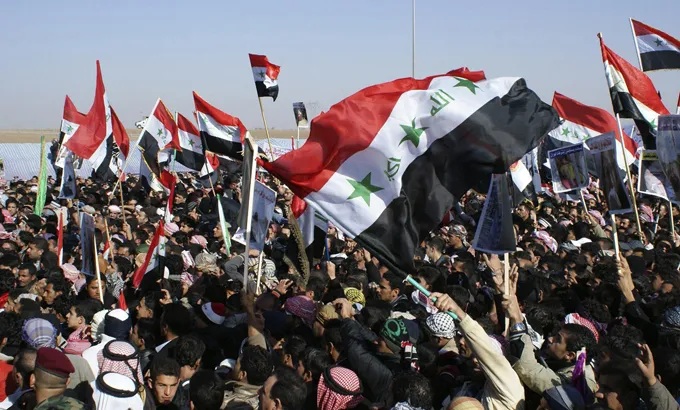
Finally, the risk of escalation through proxy networks remains acute. Iranian-aligned militias in Iraq, particularly the Popular Mobilisation Forces, are reportedly preparing contingency plans that could involve infiltration into neighbouring countries such as Jordan or Saudi Arabia should Iran become strategically cornered. U.S. airborne operations in southern Iraq are believed to be aimed partly at monitoring and pre-empting such movements.
All these developments reinforce a single conclusion: the conflict is entering a phase in which battlefield outcomes and geopolitical negotiations unfold simultaneously. War is no longer simply a bilateral confrontation between Israel, the United States, and Iran. It is evolving into a multidimensional contest involving global energy flows, great-power rivalries, regional proxy networks, and internal political transformations.
The enduring question remains whether sustained air power and economic pressure can force systemic change inside Iran. History suggests that regimes rarely collapse from external attack alone. Yet when military attrition converges with economic exhaustion, elite fragmentation, and geopolitical isolation, the probability of rapid internal rupture rises sharply.
The phrase reportedly attributed to the U.S. Secretary of Defence - “We have just begun” - captures the emerging reality. What began as a crisis of nuclear diplomacy has transformed into a strategic confrontation whose outcome may reshape the Middle East for decades.
The coming weeks may determine whether Iran absorbs the shock and consolidates power, or whether the region enters a cascade of transformations whose consequences extend far beyond the Gulf.