When Washington and Tehran announced their framework agreement this week, most attention focused on the ceasefire itself. Oil markets reacted immediately, shipping companies welcomed the reopening of the Strait of Hormuz, and European governments praised what appeared to be a rare moment of de-escalation in one of the world's most volatile regions.
By Nadia Ahmad
Yet the most important consequence of the agreement may have little to do with shipping lanes, energy prices, or even diplomacy. It may have revealed something about Iran itself.
For decades, the Islamic Republic has been viewed through the figure of its Supreme Leader. Whether the issue was the nuclear program, regional alliances, or relations with the West, discussion almost always returned to the same point: what did the Supreme Leader want?
That perspective made sense. The Islamic Republic emerged from a revolution and built its legitimacy around religious authority and revolutionary ideals. To many outside observers, Iran often appeared frozen in the political atmosphere of 1979, permanently defined by the men who brought the Shah's rule to an end.
But countries change, even when their symbols do not.
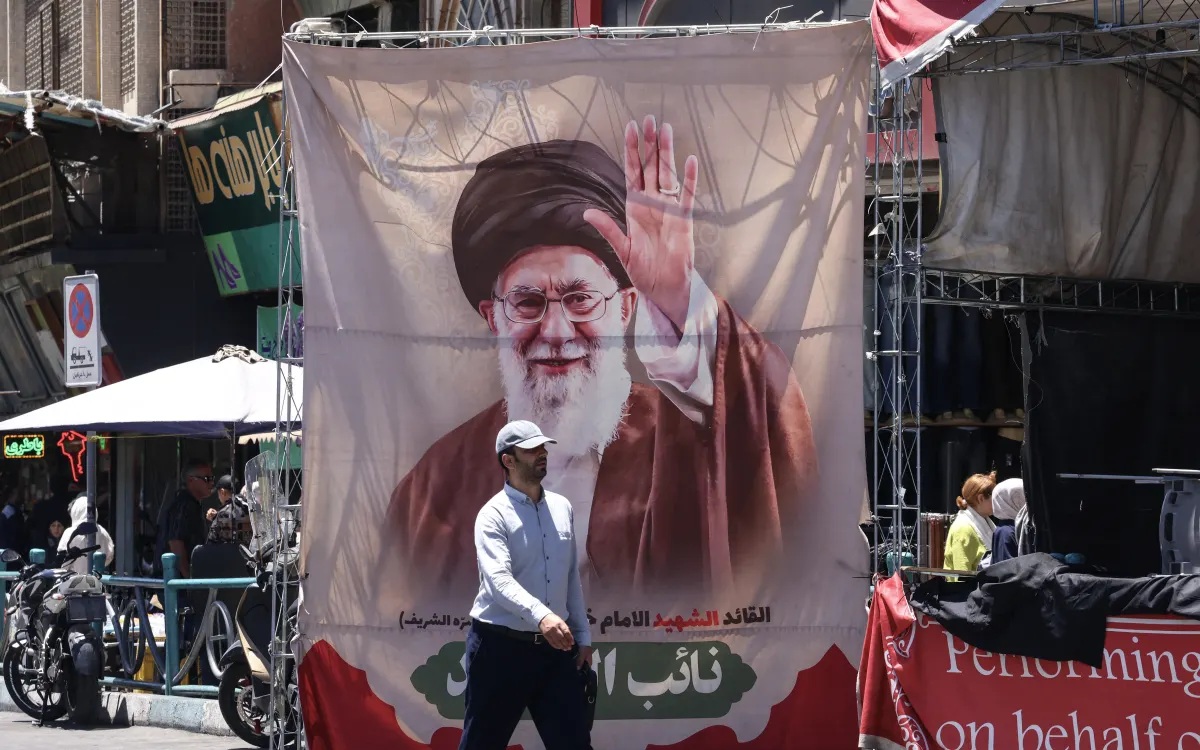
Walk through Tehran today, and the picture is more complicated than the one often presented abroad. The revolutionary slogans remain. Portraits of the founders of the Islamic Republic still dominate public spaces. Yet behind those familiar images stands a country transformed by sanctions, technology, urbanisation, and decades of geopolitical pressure.
The Iran of cassette tapes and revolutionary rallies has gradually become an Iran of drone engineers, cyber specialists, logistics managers, and officials tasked with keeping a complex state functioning under extraordinary circumstances.
The agreement with Washington offers a glimpse of that evolution.
What is striking about the deal is not its ideological content but its practicality. Rather than attempting to solve every dispute between the two countries, it focuses on reducing immediate tensions, restoring commercial stability, and creating room for further negotiations. It looks less like a revolutionary manifesto than the work of officials calculating risks, costs, and strategic priorities.
That does not mean ideology has disappeared from Iranian politics. Far from it. It does, however, suggest that a generation shaped by governance may be gaining influence alongside the generation shaped by revolution.
The men who built the Islamic Republic were products of a unique historical moment. They lived through the fall of the Shah, the turmoil of the revolution, and the devastation of the Iran-Iraq War. Their worldview was forged in struggle. Their legitimacy came from sacrifice and survival.
The generation rising today inherited a different reality.
Many entered public life long after the revolution had ended. Their careers were shaped by sanctions, economic management, technological competition, regional conflicts, and the daily challenge of keeping the state functioning under pressure. They inherited institutions rather than creating them.
That difference matters, as a revolutionary generation focuses on transforming a system. A managerial generation focuses on preserving it.
Nowhere is this shift more visible than within the institutions that have become central to Iranian power. The Revolutionary Guard is still viewed abroad primarily as a military force, but over time it has developed deep roots in construction, telecommunications, logistics, energy, and strategic planning. It has become far more than a military organisation. It has become one of the pillars of the modern Iranian state.
The result is the emergence of a class of officials whose concerns are often intensely practical. They think about sanctions, cyberattacks, supply chains, energy exports, infrastructure resilience, and economic stability. Their language may still contain the vocabulary of revolution, but their daily work resembles that of administrators managing a nation under constant pressure.
Recent events only reinforced that trend.
Wars have a habit of exposing where real power lies. During crises, speeches matter less than logistics. Symbolism matters less than communications networks, supply routes, intelligence assessments, and the ability to keep critical infrastructure operating.
As missiles crossed borders and global markets reacted, Tehran's immediate challenge was not ideological purity but state survival. Officials had to protect infrastructure, maintain communications, manage economic disruptions, and prevent a wider regional escalation.
Behind the headlines, countless decisions were being made by people studying shipping routes, missile inventories, air-defence coverage, and economic vulnerabilities. Crises often reveal which institutions truly matter. In Iran's case, they highlighted the growing importance of those responsible for keeping the state functioning under extraordinary circumstances.
The officials who performed those tasks are unlikely to fade into the background once the crisis ends. If anything, they may emerge stronger.
History offers examples of similar transitions. Revolutionary systems often outlive their founders, but they rarely remain unchanged. China after Mao retained its political structure while gradually becoming more pragmatic in its governance. The Soviet Union after Stalin continued to speak the language of revolution even as power increasingly flowed through bureaucratic and institutional channels.
Iran is neither China nor the Soviet Union, but the comparison illustrates a broader point. Revolutionary states frequently evolve without abandoning their founding narratives.
The succession question illustrates this dynamic perfectly.
Following Ali Khamenei, much attention has focused on his son, Mojtaba Khamenei, who is widely viewed as a central figure in discussions about Iran's future leadership. Many observers assume that if Mojtaba ultimately succeeds his father, continuity will automatically follow.
That assumption may prove too simplistic.
Ali Khamenei was shaped by revolution, war, and the formative struggles of the Islamic Republic. Mojtaba Khamenei, even if he inherits the highest office in the state, would inherit a very different country. He would govern an Iran transformed by decades of sanctions, technological change, demographic shifts, and the growing influence of institutions that have accumulated power and expertise over time.
The next Supreme Leader may carry the same name. He will not govern the same Iran.
That is why the agreement with Washington matters.
Israel, however, is likely to view these developments through a different lens. While the ceasefire reduces the immediate risk of regional escalation, many Israeli strategists are less concerned with the agreement itself than with what may emerge from it. Their concern is that Iran could use the breathing space created by diplomacy to absorb lessons from the recent conflict, strengthen vulnerable institutions, and improve its long-term resilience.
This concern extends beyond Iran's borders. In Jerusalem, policymakers will also be watching how any post-conflict adjustment in Tehran affects Iran's regional network, particularly in Lebanon, where Hezbollah remains one of the most important pillars of Iranian influence despite the setbacks and pressures it has faced in recent years.
From Israel's perspective, the question is not simply whether Tehran has been weakened by confrontation, but whether it has adapted. States often emerge from crises with a clearer understanding of their strengths and weaknesses, and some Israeli observers fear that the recent conflict may ultimately reinforce the very institutions that make the Islamic Republic durable.
If the agreement helps consolidate a more experienced and more pragmatic governing elite, Israel may find itself dealing with an adversary that is not necessarily more moderate, but potentially more effective.
The significance of the deal may extend far beyond the ceasefire itself. It suggests that the centre of gravity inside Iran could be shifting. The revolutionary generation remains influential, but it increasingly shares the stage with officials whose priorities are stability, resilience, and state management.
For Europe, this carries important implications. For years, debates about Iran have often swung between two extremes: the expectation of inevitable moderation or the expectation of permanent confrontation.
Reality may be more complicated.
The emerging Iran may be neither more liberal nor more revolutionary. It may simply be more institutional.
Such an Iran could be easier to negotiate with because its decision-making process would be more predictable. At the same time, stronger institutions often make states more resilient and more resistant to external pressure.
That paradox is likely to shape relations between Europe and Iran in the years ahead.
Future historians may eventually conclude that the framework agreement with Washington was significant for reasons that went far beyond diplomacy. They may see it as one of the first moments when the outside world began to notice a transformation that had already been underway for years.
Not the end of the Islamic Republic. Not the abandonment of the revolution. But the gradual rise of a new generation operating within the state the revolution created.
The question facing Europe today is therefore larger than whether the current ceasefire survives. It is whether power inside Iran is slowly passing from the generation that made the revolution to the generation responsible for preserving it.
If that is indeed the case, then the most consequential figure in Iran's future may not be the next Supreme Leader alone. It may be the growing network of strategists, commanders, technocrats, and administrators already shaping the country's direction behind the scenes.