The United Kingdom made a promise to the Jewish people. Its subsequent history is a lesson in how readily British principle yields to its interest. Britain possesses a peculiar talent for making history and then forgetting that it made it.
By Oscar Hammerstein
The evidence is scattered across the globe: in borders drawn in London, in peoples governed, divided and eventually left to live with the consequences. At its height, the British Empire ruled almost a quarter of the world’s land and a quarter of its people. The sun famously never set upon it. The British memory, apparently, did. Nowhere is that historical amnesia more uncomfortable than in Britain’s relationship with the Jewish state.
Britain promised the Jewish people a national home. Britain helped give that promise international legal form. And Britain, whenever the consequences of its own undertaking became inconvenient, repeatedly found reasons to retreat from them.
First the promise was reduced. Then it was restricted. Eventually, when Jews needed it most desperately, the door was all but closed. Ministers changed. Governments fell. The Empire disappeared. Whitehall remained.
Now, another British Foreign Secretary rises to lecture Israel. His name is Ed Miliband. He announces sanctions and chooses, conspicuously, to place his own Jewish ancestry and family history at the beginning of his case. As though ancestry could substitute for historical memory. As though Britain were merely a spectator to a history in which it was, in fact, one of the principal authors.
Israel has acquired enough enemies in its short existence. It hardly needed a friend that made the promise, qualified it when it became inconvenient, and a century later appointed itself moral arbiter of those to whom the promise had been made. With friends like these, a small country needs few enemies.
This week brought another chapter. In the House of Commons, Miliband announced a ban on imports from Israeli settlements and further restrictions on military exports. He began in strikingly personal terms. He spoke, deliberately, as “a proud British Jew”.
He recalled how his grandmother had found a home in Israel after the Nazis murdered her husband and 60 other members of her family. Israel, he said, had given her a home and security. Then he announced measures against that same state. It would be difficult to devise a neater metaphor for Britain’s relationship with Israel.
The story begins not with Miliband but with Arthur James Balfour. On November 2, 1917, the Foreign Secretary wrote his celebrated letter to Lord Rothschild. His Majesty’s Government viewed with favour “the establishment in Palestine of a national home for the Jewish people”.
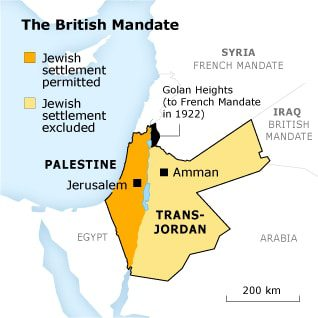
Five years later, the League of Nations Mandate for Palestine incorporated that undertaking. Its preamble expressly recognised the Jewish people's historical connection with Palestine. As Mandatory power, Britain assumed responsibility for creating the conditions for establishing the Jewish national home.
Balfour was therefore no drawing-room expression of sympathy by an English aristocrat. It became part of the international settlement that followed the First World War. Yet the promise had scarcely acquired international form before London began reducing its reach.
Under Winston Churchill, then Colonial Secretary, the vast territory east of the Jordan was excluded from the provisions intended to facilitate the Jewish national home. Article 25 of the Mandate provided the legal mechanism; the League of Nations consented.
Britain placed Transjordan under Emir Abdullah of the Hashemite dynasty. From it eventually emerged the Hashemite Kingdom of Jordan. It was lawful. But its political significance was unmistakable. Before Britain had properly discharged its undertaking to the Jewish people, most of the original Mandate territory had been removed from the operation of the provisions intended to fulfil it.
The ink was scarcely dry before London had begun to make the promise smaller. Worse was to come. In 1939 Hitler had been in power for six years. The Nuremberg Laws had been in force since 1935. The synagogues had been burned on Kristallnacht.
European Jews had been dispossessed, beaten, arrested, excluded from public life and driven into flight. No one in Whitehall could plausibly claim ignorance of their desperate need for refuge. And it was at precisely that moment that Britain drastically restricted Jewish immigration into Palestine.
The 1939 White Paper permitted approximately 75,000 Jewish immigrants over the following five years. Thereafter, further Jewish immigration would effectively depend upon Arab consent. The cruelty of the policy lay partly in the fact that the British government itself acknowledged the desperate predicament of European Jewry.
Europe was closing in upon the Jews. Six million would be murdered. Britain kept the door to Palestine largely shut. Nor did the end of the war immediately produce the moral reckoning one might have expected. Survivors of Auschwitz, Bergen-Belsen and other camps attempted to reach Palestine. British warships intercepted them.
Between 1946 and 1948 more than 50,000 Jewish refugees were interned in camps in Cyprus. Consider the image. Europe had imprisoned them because they were Jews. They survived. They left the continent that had murdered their families and sailed towards the country in which, according to a British promise, a Jewish national home was to be established.
The Royal Navy stopped them. Britain put them behind barbed wire again. In November 1947 the United Nations voted to partition Palestine into Jewish and Arab states. Britain, author of Balfour and holder of the Mandate, did not vote in favour. It abstained.
After 30 years of British responsibility for Palestine, abstention was Whitehall’s final answer. Israel declared independence on May 14, 1948. The following day Arab armies invaded. And Britain reappears in the story.
Transjordan’s Arab Legion was no improvised militia. It was probably the most effective Arab fighting force in the war. Britain organised it on British lines, built and equipped it with British assistance, and placed British officers in key commands. A British general, Sir John Bagot Glubb (Glubb Pasha), commanded it.
The Legion fought Israel, notably around Jerusalem and Latrun. The symbolism hardly requires embellishment. In 1917, a British Foreign Secretary promised a Jewish national home. In 1922, Britain helped make that promise part of international law.
In 1939, it restricted access to that home when European Jews needed it most. After 1945, it interned survivors trying to reach it. And in 1948, three of six British officers served in the army fighting the newborn Jewish state. Thirty years after Balfour, Glubb Pasha stood opposite Balfour’s heirs.
There is, admittedly, one apparent exception. In 1956, Britain, France and Israel fought together against Nasser during the Suez crisis. But Suez does not disprove the rule. It reveals it. Britain was not governed for a century by some single, immutable hostility towards Israel. Nor was it governed by friendship.
Britain governed Britain.
When Israel served British interests, Israel could be an ally. When oil, relations with the Arab world or the regional balance of power mattered more, the alliance could be discarded with remarkably little sentiment.
Promises were useful while they served British interests. Principles endured while they were inexpensive. Allies mattered only as long as they were useful. It is the ancient reputation of Perfidious Albion: not treachery born necessarily of passion, but fidelity made conditional by calculation.
No eternal friends. No eternal enemies. Only eternal interests. For Israel, this amounted to a British friendship it could rely on, provided it never had to rely on it. In 1956 London needed Israel. Israel was therefore an ally. When London’s interests changed, so did the friendship: elegantly packaged, solemnly presented and revocable whenever Whitehall found advantage in revoking it.
The pattern resurfaced in 1973. During the Yom Kippur War, Britain imposed an embargo on the countries directly engaged in the fighting. Formally, this was neutrality. In practice, Israel was denied British ammunition and spare parts for its Centurion tanks that had already been ordered and paid for, while supplies to Arab states not classified as direct belligerents could continue.
The neutrality was formal. Its consequences were not.
After Israel invaded Lebanon in 1982, Britain again imposed sweeping restrictions on military exports to Israel. In 2024, the Labour government suspended around 30 military export licences. And now there is Miliband. His intervention deserves particular scrutiny precisely because he himself made his Jewish identity part of his political statement. He chose to introduce these measures by invoking his grandmother and the 60 relatives she lost to the Nazis.
There is nothing improper in a Jew criticising Israel. Of course there is not. Jewish ancestry confers no obligation to support an Israeli government. But neither does Jewish ancestry confer some special moral authority to impose measures upon Israel, nor does it render those measures immune from criticism.
If a politician chooses to introduce his ancestry into a political argument, others are entitled to point out that the history he invokes extends beyond his family. It includes the history of the country he speaks for.
Who promised the Jews a national home and then restricted access to it while they fled Hitler? Britain.
Who intercepted Holocaust survivors at sea? Britain.
Who confined them behind barbed wire in Cyprus? Britain.
Who built the Arab Legion in which British officers fought against Israel in 1948? Britain.
Who in 2026, once again, stands prominently among those imposing sanctions upon the Jewish state? Britain.
None of this places Israel above the law. History does not excuse every act of an Israeli government. Benjamin Netanyahu may be condemned; settlement policy may be opposed; settlers who attack Palestinians should be prosecuted and punished. Criticism of Israel is not antisemitism.
But history should at least impose a certain modesty upon those who presume to judge. Britain is fond of speaking with the authority of an old power, as though its role in the Middle East were that of a wise outsider standing above the quarrel, international law in hand. It possesses no such privilege.
Britain is not an outsider to this history. Britain is one of its authors. It wrote Balfour. It accepted the Mandate. It excluded Transjordan. It restricted Jewish immigration in 1939 while European Jews desperately sought escape. It intercepted Holocaust survivors.
British officers served in the army that fought Israel in 1948. And on more than one occasion since, Britain has restricted military supplies to Israel at moments of war. This is not retrospective mythology. British government papers, international instruments, and the historical record record it.
It does not invalidate every British criticism of Israel. It does not release Israel from international law. It gives no Israeli government carte blanche. But it might teach Britain one virtue conspicuously absent from much of its dealings with the Jewish state: humility.
And it might have taught Ed Miliband caution before he invoked his Jewish grandmother in the House of Commons. The state that gave her refuge after the Nazis murdered her husband and 60 members of her family does not exist because history was naturally benevolent towards Jews.
Israel exists because, after centuries of persecution, Jews concluded that their safety could no longer be entrusted entirely to the promises, guarantees and good intentions of others. Not even those of Great Britain. That is Balfour’s bitter lesson. Britain made the promise. Britain reduced it. Britain restricted it.
Britain closed the door when European Jews were fighting for their lives. Britain interned survivors who sailed towards Palestine. British officers served in the army that fought the newborn Jewish state. And whenever British interests later required it, embargoes, restrictions, and admonitions followed. Britain governed Britain.
More than a century after Balfour, London once again confronts Jerusalem. The language has changed. The ministers have changed. The Empire has vanished. Perfidious Albion has lost its empire. It has not lost its self-assurance.
And so the familiar tableau returns. The finger raised. The sanctions prepared. The history forgotten. That Ed Miliband participates in this as a British minister is politics. That he chooses to invoke his Jewish ancestry and his grandmother’s murdered family while doing so makes it bitterly ironic.
That Britain, of all countries, should once again assume the role of moral judge over the Jewish state is something else. It is shameful. Shame on Miliband. And shame on a British government so eager to pass judgment on history while remaining so wilfully forgetful of its own.