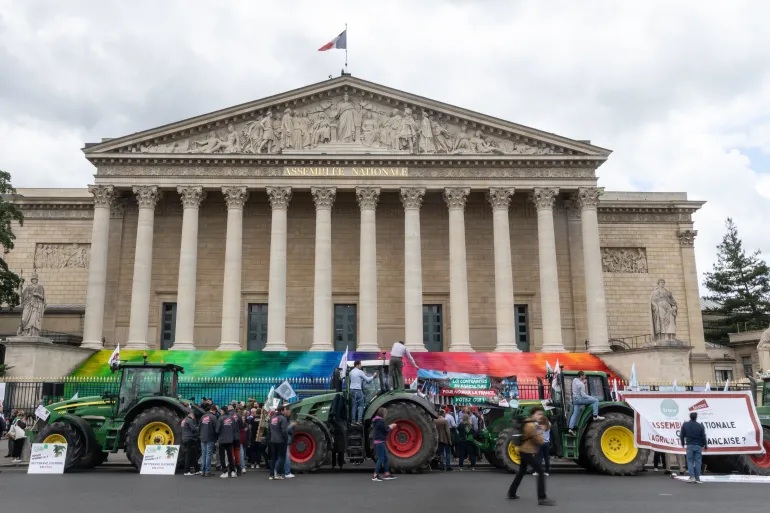
France has a reputation to uphold. When the elite do not listen, political debate moves from the boardroom to the streets, formerly with pitchforks and guillotines; nowadays with yellow vests, tractors, and dumped manure.
The next European revolution will therefore come from France once again. Not from the salons of Paris, where administrators tell each other that their policies are working excellently, but from the rural regions where people experience the cost of those policies.
There, doctors, shops, schools, bus lines, and farms are disappearing. Fuel is becoming more expensive, regulations are becoming thicker, and Brussels knows exactly how a farmer must manage his land. Only how he is supposed to make a living from it is still missing from the protocol.
The French farmer understands that in speeches he is a national hero, but on paper, he is primarily an environmental problem. He must produce food, manage nature, compete with cheap imports, comply with European regulations, and preferably go bankrupt with a smile. When he protests, a minister understands and then continues the same policy.
In France, that is usually when the tractor starts.
Meanwhile, the state is cracking. The debt amounts to well over 115 per cent of the gross domestic product, the budget deficit is above five per cent, and the economy is growing like a snail in retirement. Cabinets fall, majorities are lacking, and budgets are forced through parliament with a constitutional crowbar. The government calls it stability. The population recognises it mainly as stagnation during a press conference.
The Netherlands and Europe need to take a good look. Here, too, the countryside is treated as a resource-rich region and an open-air museum. Amenities disappear, housing fails to materialise, farmers are forced to leave, and the Randstad is told the region “feels” unheard as if that feeling is the problem, and not the policy that preceded it.
Brussels adds fuel to the fire. Every crisis calls for more European guidance, every failed program for a larger fund, and every civil uprising for better communication. The European administrator never sees a limit to his power, only a lack of understanding among the population.
But revolutions rarely begin with people who have nothing. They begin with people who realise something is being taken from them: security of existence, agency, dignity, and the right to shape their environment.
France is the warning shot. There, financial exhaustion, political paralysis, and regional anger meet, not in an academic report, but at the roundabout.
A drumroll will not announce the revolution. It will come down the provincial road, with flashing lights on the roof and mud on the tyres.
And when Paris sees it coming, Brussels has just decided to ban the tractor.