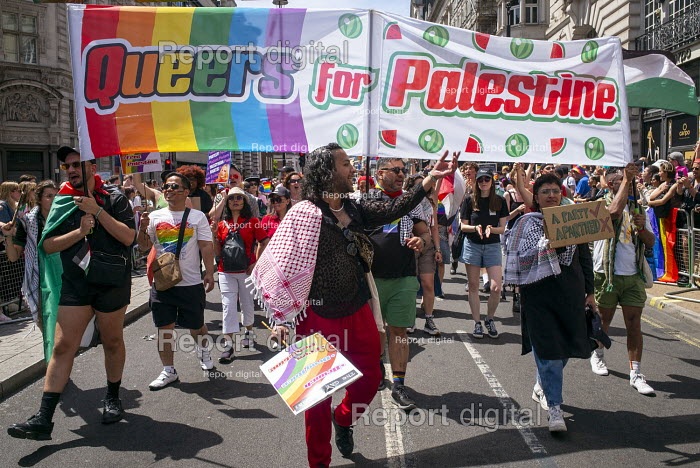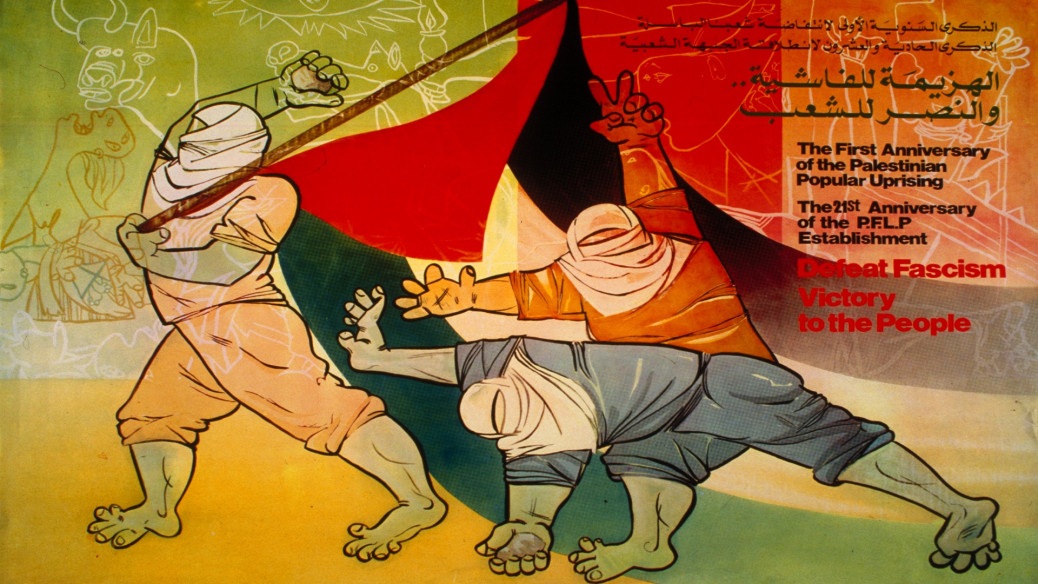
Historical misinformation, weaponised against Israel, ranks among one of the most potent tools in the modern struggle over the Jewish state's legitimacy. Through false narratives, Jewish national liberation gets flipped upside down and recast as 'colonial aggression'. Many of the historical facts that surround Israel’s history are deliberately kept hidden from anti-semitic narratives. The falsification of historical facts is an often-used weapon by Palestinians and (radical) pro-Palestine groups to discredit Israel.
By Debora Daly
A fundamental dishonesty sits at the very core of most campaigns against Israel. Not just animosity toward the Jewish state, not even the selective outrage over Middle Eastern conflicts, but a willingness to twist history into a political narrative where Israel is automatically blamed for almost everything.
Not many consider the historical fact that Britain promised the land under the British Mandate (1920 to 1948) to both the Jews and the Arabs, for its own personal gains. The blame for all the mess seems to always fall into the lap of Israel.
Within influential international 'pro-Palestine' circles, Jewish historical continuity gets brushed aside, and Zionism becomes synonymous with an insult. The creation of Israel is somehow compared to European colonial aspirations in the minds of those who failed to study history.
The danger is not only the growth and normalisation of antisemitism, but the rewriting of history, and the construction of dangerous ideologies based entirely on misinformation. Such narratives tend to work because they all revolve around a ‘simple’ core belief: Israel is the bad guy, and Palestinians are the poor and defenceless victims.
Effective propaganda? Sure. But historical records and evidence can no longer be ignored by the mainstream media, or by anyone else who propagates such lies.
The first casualty of this misinformation crusade is the Jewish people's link to their ancient homeland. Depicting Jews as 'foreign occupiers' in the land of Jewish civilisation isn't mere ignorance, but a genuinely dishonest attempt to rewrite the past.
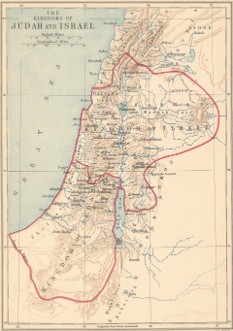
The kingdoms of Israel and Judah predate Islam by many centuries, existing at least 1,000 years BCE.[1] Jerusalem back then already served as the spiritual and national hub of the Jewish people for hundreds of years before the Arab caliphates arose in the 7th century.
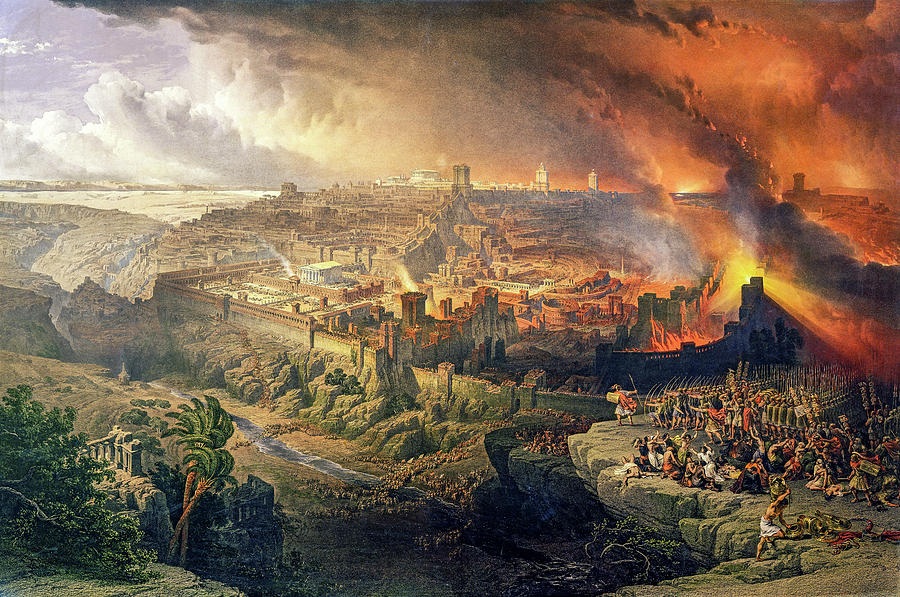
Jewish historical and religious ties to the land survived Roman conquest and diaspora, nearly two millennia of persecution and exile, with Jewish communities maintaining continuous presence over the land throughout Ottoman rule.
Numerous archaeological findings, ancient inscriptions and maps, religious writings such as Biblical scriptures, and historical records in Israel's museums confirm these facts. Some contemporary activists enjoy repeating the completely incorrect idea that Jewish history begins with European immigration in the 19th century.
What liberals, left-wingers, and Muslims brand as the ‘all evil’ Zionist movement is simply the modern political expression of an ancient group of people's long-burning desire to reclaim their national identity.
It arose in reaction to heavy European antisemitism during Nazi Germany, and the recognition that Jewish survival could no longer depend upon foreign governments' charity. The Holocaust finally made it undeniably clear that the need for a Jewish state was paramount.
But Israel is not simply a European Jewish creation, either. Mizrahi Jews from the Middle East and North Africa became essential to Israeli society during its foundation and modern times, many fleeing persecution, discrimination, and insecurity in countries where Jewish communities had existed for centuries.
The claim that Israelis are merely Europeans seizing somebody else's ancestral homeland is highly inaccurate and completely ignores a large portion of Jewish society. Jewish self-determination in Israel isn't some invented attachment to unfamiliar ground, but a modern nation-building project with an extraordinarily long historical record.
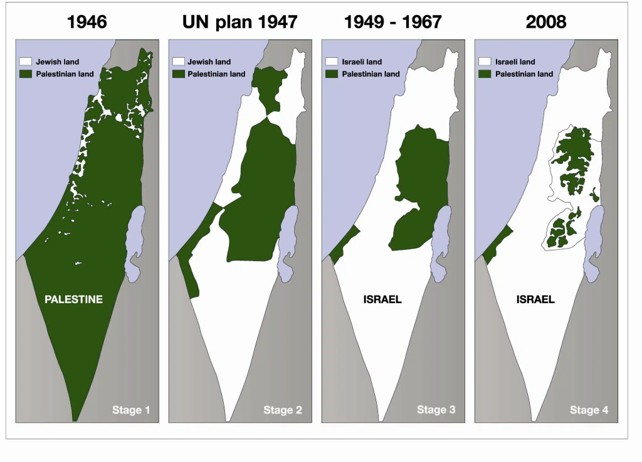
Another common feature of anti-Israel rhetoric is the depiction of 1948 as the destruction of an established Palestinian state. No such state ever existed. This historical falsehood appears clearly in the "Disappearing Palestine"[2] map series, created by the British Palestinian group Palestine Campaign, first published in 2002.
A highly inaccurate propaganda campaign, it was later spread by mainstream outlets like The New York Times, bus ads in New York and Vancouver, and social media channels throughout the 2010's. Built on lies, this map series worked because it employed effective propaganda strategies: simplicity, clear narrative, convincing maps that looked authentic, support from established authorities, and constant repetition.
Before the British Mandate, the area belonged to the Ottoman Empire, with no specific names. After the First World War, Britain administered the land under an international mandate called Palestine. Though Arab communities already existed for generations on that land, an independent Palestinian state did not.
This distinction matters; today's rhetoric often implies Israel displaced an already existing Palestinian nation-state. This narrative also ignores that 77% of the original British Mandate land promised to Jews went instead to Arabs, creating Transjordan (modern-day Jordan).
In November 1947, the United Nations General Assembly voted to recommend partitioning Palestine into Jewish and Arab states. The Jewish state accepted partition in principle, and yet Arab leaders rejected it.
Therefore, the possibility of coexistence between an Arab and a Jewish nation was rejected by Arab leadership - not Jewish. This historical fact is often left unspoken by those campaigning for a ‘free Palestine’.
Immediately following Israel's founding in May 1948, neighbouring Arab countries decided to send over their armies to invade this brand new state. Known as the 1948 Arab-Israeli War (or in Israel as the War of Independence), it was conducted by Egypt, Transjordan (Jordan), Iraq, Syria, and Lebanon - with support received from Yemen and Saudi Arabia.
Yet in some contemporary narratives, the Arab military campaign seems to vanish. No one really brings it up; no one talks about it. What remains is a sanitised version where Israel emerges as the unchallenged aggressor with no apparent cause, and Palestinian displacement is contextually separated from the war in which it occurred.
After all, roughly 700,000 Palestinian Arabs left or were expelled during this conflict. Such displacement happened amid a war triggered by rejection of a two-state solution, inter-communal violence, and a desire for influence by Arab states who couldn’t accept Israel’s control over an already small portion of the original British Mandate land.
Historical responsibility cannot be credibly assigned without considering causes and circumstances. The effort to present the war of 1948 solely as Jewish aggression also overlooks the war's consequences for Jewish communities throughout the Arab world.
Over decades leading up to Israel's birth, hundreds of thousands of Jews left or were expelled from countries across the Middle East and North Africa, amid varying degrees of persecution, political pressure, discrimination, violence, and insecurity.
It is also worth noting that Jews had been barred from migrating to their own land under British rule, leading to Jewish internment camps in Cyprus where many were kept to be prevented from entering what was then the British Mandate. Their experiences remain notably absent from many contemporary activists' refugee narratives.
Why should one population's displacement victimise an entire group, while another's goes largely unremarked? An honest historical account must deal with both.
Perhaps the most politically successful weapon against Israel in current times is the branding of the nation with ‘settler colonialism’. A label carrying immense negative weight, it casts Israel within the same apparent framework of European conquest, dispossession, and foreign rule.
Nevertheless, for anyone with basic knowledge of world history, there's a clear distinction between European powers colonising poorer countries over multiple continents, and the return of the Jewish people solely to their ancestral homeland.
Traditional European colonial enterprises involved states extending political and economic control over multiple countries and territories for the benefit of an imperial centre. The Zionist movement, by contrast, had no equivalent European parent nation directing such a project for its own gain. It aimed to create a Jewish national state in a land with which the Jewish people had long-standing historical, religious, and cultural associations.
The political aims of this forged colonial narrative are clear - if Israel can be defined exclusively as an alien colonial presence, its very existence becomes a ‘historical wrong’ rather than the legitimate national aspiration of the Jewish people. This isn't merely criticism of Israeli governments and policies, but an attack on the legitimacy of Jewish sovereignty.
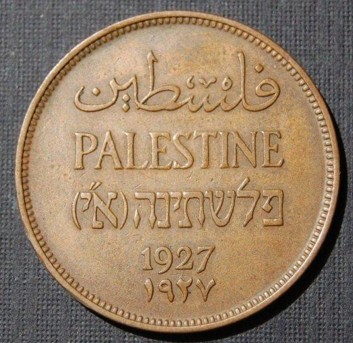
A more recent propaganda strategy by the Palestinian movement involves the use of a real historical coin to distort reality and push forward a false narrative. Minted in 1927[3]The coin displays the word Palestine, thus being used as evidence of Palestinian rights over the land before the creation of the state of Israel.
But here are two important facts such propaganda strategy omits: first, these coins were issued during the British Mandate for Palestine, which began in 1920 and lasted until 1948. Second, the Hebrew inscription clearly states Eretz Yisrael, meaning "Land of Israel," along with Arabic and English inscriptions.
The problem with using these coins as anti-semitic 'evidence' isn't that the coins are a forgery, or that the name Palestine didn't exist. The problem is that the viewer is only presented with part of the historical evidence - a half-truth, all to shape public opinion towards a misguided direction.
This exemplifies how selective historical presentation can negatively shape public perception. Showing English and Arabic inscriptions while ignoring Hebrew words gives the audience an incomplete picture of what the coins actually say and the historical circumstances of their issuance. A reader who can’t read Hebrew will therefore assume the characters say the same word as they do in the other two languages.
The silver lining over this never-ending wave of historical misinformation is that Israel’s legitimacy doesn't depend upon contemporary political movements' approval, nor does Jewish history require validation from those seeking to deny it. Over a millennium of historical evidence supports the Jewish people's connection to the land of Israel.
The modern Jewish state emerged from a national movement shaped by persecution, political aspiration, and determination to achieve self-government. That history includes conflict, of course, but it cannot be reduced to a caricature of foreign colonisers arriving in a land to which they possessed no connection.
The greatest intellectual weakness of existing anti-Israel activism is its assumption that historical legitimacy can be manufactured by denying inconvenient facts. Those who insist Israel's very existence constitutes an illegitimate historical intrusion must confront the reality that no propaganda campaign can overturn: the Jewish people did not simply acquire their history in 1948; they recovered political sovereignty in a land central to that history.
[1] Ancient Israel and Judah. 2nd millennium BC – 1st millennium BCThe Kingdoms of Judah and Israel, produced by Edward Weller c. 1890
[2] https://palestinecampaign.org/resources/factsheets/psc-disappearing-palestine-maps-2008/
[3] https://commons.wikimedia.org/wiki/File:Mill_%28British_Mandate_for_Palestine_currency,_1927%29.jpg