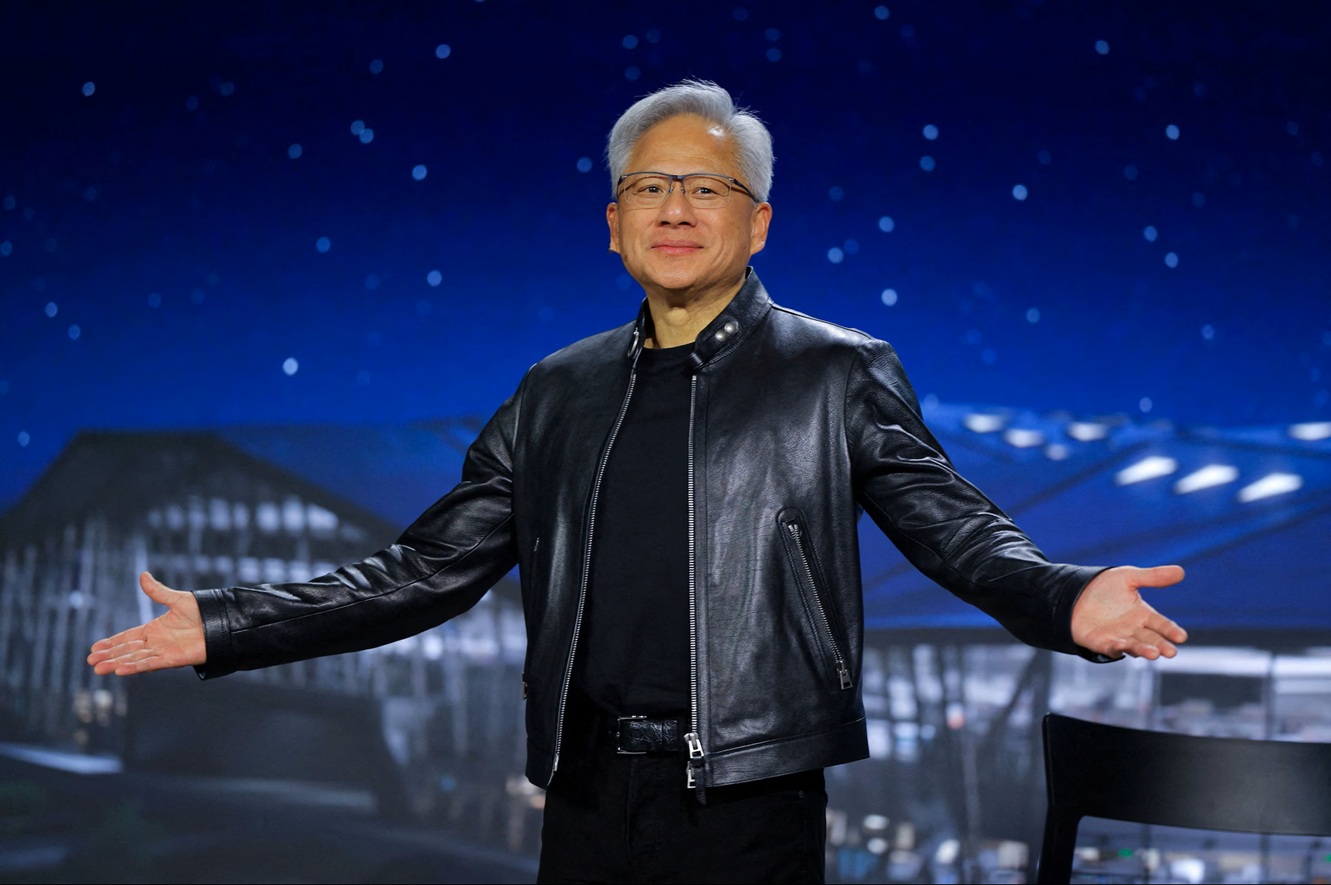
Jensen Huang returned earlier this week as Nvidia’s president and chief executive, eleven days after resigning amid revelations about his private relationships and national-security questions. The board unanimously reinstated him after consulting him and senior American officials. It said his return posed no national-security risk and investigations would continue. President Donald Trump claimed credit, and Nvidia shares surged by roughly a third. Who governs capitalism when a corporation becomes too strategically important to remain ordinarily private?
By Rami Audi
The name Epstein now symbolises immense wealth, privileged access and institutions struggling to hold the powerful accountable. There is no equivalence between Epstein’s crimes and the allegations about Huang; they are entirely different matters. The connection is the question it left behind: when does proximity to power make accountability negotiable?
Silicon Valley’s own Epstein moment concerns the concentration of economic, technological and political influence in few hands. Who controls systems shaping everyone else’s future?
Nvidia is no longer simply a successful technology company. Its processors power much of artificial intelligence’s infrastructure. Governments, research institutions, technology companies and militaries compete for them. Its strategic importance resembles that of twentieth-century oil producers and industrial giants, so its leadership carries consequences far beyond shareholders and quarterly earnings.
Huang’s return reveals the changing relationship between entrepreneurial power and the state. Trump presented his intervention as protecting an American technological champion, yet it raises questions about corporate independence, board accountability and political influence.
Government assurances cannot replace investigations, and allegations about Huang’s relationships or possible foreign-intelligence ties must not be treated as established findings. A civilisation governed by law cannot let suspicion or political convenience substitute for evidence.
America’s most successful private enterprises can become instruments of national strategy. The state needs their innovation, capital and technical leadership; they need markets, infrastructure, legal protection and favourable decisions. The boundary between private enterprise and national interest is blurring.
This is clearest in the semiconductor rivalry between Washington and Beijing. Advanced chips shape artificial intelligence, military capability, productivity and technological independence. American export controls restrict China’s access to leading technologies, while Beijing pursues self-sufficiency. Both understand that technological dependence becomes geopolitical vulnerability.
China’s system is commonly described as state capitalism: private enterprise and competition operating alongside party-state direction, industrial planning and strategic investment. It is neither a command economy nor an unrestricted market. The state identifies sectors essential to national development and mobilises capital, regulation and institutions accordingly.
The American tradition emphasises private initiative, competition and individual achievement. Yet the belief that American capitalism developed independently of government is misleading.
Public research, military procurement, infrastructure and state-supported scientific institutions laid the foundations on which private technology companies prospered. Silicon Valley did not emerge from a political vacuum.
The philosophical distinction is not between a state that intervenes and a market that never does. It concerns how economic freedom, political authority and national purpose relate. China places the state and its strategic objectives at the centre.
America has generally granted private initiative greater autonomy, even when public action proved indispensable. The danger begins when either system forgets what its economic power is meant to serve.
Max Weber’s account of the Protestant ethic illuminates the cultural foundations of Western entrepreneurship. He did not argue that Protestantism invented capitalism, but examined how religious and cultural ideas cultivated disciplined labour, vocational responsibility, rational organisation and reinvestment.
Diligence, restraint and a sense of calling could give economic activity moral significance. The entrepreneur was not merely an accumulator of money; work itself could be a vocation.
That tradition deserves reconsideration when contemporary capitalism celebrates the billionaire as celebrity. Fortune, visibility and spectacular consumption become measures of achievement. The founder’s personality overshadows the institution, and the corporation risks becoming an extension of personal fame.
Huang’s achievement is not this caricature: building Nvidia into a central force in computing required extraordinary technical judgement and organisational discipline. Yet his return exposes the fragility of a system in which a corporation’s future appears inseparable from one individual.
History offers another understanding of wealth and responsibility. The Rothschilds, a Jewish banking family from Frankfurt, built an international network influential in European finance; their legacy extended into philanthropy, cultural patronage and enduring institutions.
The Warburgs, also prominent in Jewish finance, contributed to scholarship and cultural life. In America, Baptist industrialist John D. Rockefeller built Standard Oil, whose monopolistic practices became a defining controversy; the family’s later philanthropy helped establish institutions including the Rockefeller Foundation.
None of these families should be romanticised. Their fortunes emerged amid unequal power and practices that sometimes attracted justified opposition. Philanthropy cannot erase the consequences of concentrated wealth.
Yet their histories distinguish possessing a fortune from creating institutions that outlive it. Wealth can remain private accumulation, or become long-term institutional responsibility.
The contrast is not simply old money versus new. Inherited wealth guarantees neither wisdom nor virtue, and each generation produces entrepreneurs who transform established structures.
The deeper distinction is between accumulation as an end and wealth directed towards lasting purpose. A fortune gains historical significance when it creates enduring knowledge, institutions and opportunities. Can economic power recognise obligations beyond its own preservation?
This becomes urgent when we consider Taiwan. Huang was born there but built his career in America. Nvidia’s success is inseparable from an international ecosystem in which Taiwan’s semiconductor industry is pivotal. Taiwan Semiconductor Manufacturing Company (TSMC) produces some of the world’s most advanced chips and sits at the centre of the global technology supply chain.
The Taiwanese “silicon shield” idea suggests that global dependence on the island’s semiconductor industry may discourage military aggression. It is a powerful argument, not a guarantee. Dependence can deter conflict while making Taiwan a focal point.
Taiwan is not merely a valuable factory between Washington and Beijing; it is a society with its own identity, political choices and future. Its technological importance should strengthen its agency, not reduce it to a function for other powers.
Huang’s reinstatement brings together entrepreneurial freedom, state authority, supply-chain security and the future of technological centres such as Taiwan. Trump’s intervention may have reassured investors, but it cannot settle how a free society should govern companies affecting national security.
If government intervenes whenever a company becomes indispensable, American and state-directed capitalism converge. If it never intervenes, national security depends on private calculations alone.
Neither extreme offers a satisfactory philosophy. What is missing is a capitalism that recognises the civilisational responsibilities of economic power without destroying the freedom that makes innovation possible.
Here I propose Civilisational Capitalism.
Civilisational Capitalism begins with recognition: capital is a means of human development, not its measure. Private property, competition, entrepreneurship, investment and profit remain essential, rewarding innovation and letting individuals build without political permission. Economic freedom gains deeper significance when wealth contributes to the society that makes its creation possible.
The entrepreneur is neither a servant of the state nor an isolated owner whose obligations end with shareholders; the entrepreneur creates productive capacity within a civilisation. The greater an enterprise’s strategic influence, the greater its responsibility to protect the institutions, knowledge systems and public conditions its success depends on. That responsibility must operate through transparent laws and independent oversight, never personal favours or arbitrary commands.
Civilisational Capitalism is not Chinese state capitalism. It neither subordinates enterprise to a ruling party nor defends inherited privilege. It preserves market dynamism while giving capital a longer horizon than quarterly returns, celebrity or private luxury. Its measure is what wealth enables society to build, protect and sustain.
It distinguishes the power to create from the responsibility to preserve. Entrepreneurs may revolutionise industries, but societies must prevent private domination. Markets create possibilities, institutions establish boundaries, and cultural and moral traditions give direction. Without markets, societies stagnate; without institutions, power escapes accountability; without moral direction, prosperity becomes purposeless accumulation.
Huang’s story makes this immediate. Nvidia’s importance emerged from private vision, but its future is tied to public security, international stability, scientific institutions and American strategy. Its board must remain accountable, investigations must conclude, and leaders must not confuse national interest with a favoured individual’s fortunes. Yet a country aspiring to technological leadership must encourage those capable of creating what does not yet exist.
The next era will be defined not by artificial intelligence alone but by the economic philosophies governing it. China is organising capital around national strategy. America is discovering that markets alone cannot secure technological leadership, yet it must not be surrendered to political discretion. Taiwan shows how a society’s future can become bound to global production.
One final question emerges, given the historical presence of Jewish families in Western finance. What if Jensen Huang were Jewish? Would the scandal acquire another dimension? Would questions about foreign connections, wealth and influence become entangled with accusations of divided loyalty? Would suspicion attach to a whole community rather than one individual’s conduct?
We cannot know how this would unfold, and not every criticism of a Jewish entrepreneur is antisemitic. But history makes the question legitimate: Jewish influence has repeatedly been distorted into collective accusations of manipulation and disloyalty, as the Rothschilds know well.
A free society must scrutinise powerful individuals without turning ancestry into evidence. Accountability must be universal; inherited suspicion must not.
The Epstein affair exposed institutional vulnerability when wealth and influence converge beyond ordinary scrutiny. The Nvidia episode raises a related question: what happens when technological and economic power becomes so indispensable that authorities feel compelled to protect those who command it?
The answer will help determine whether the coming age belongs to private empires, state-directed systems or societies placing both under institutional responsibility.
The real question is what kind of civilisation these systems will serve. Capital can purchase technological supremacy; only civilisation can give it enduring purpose. No civilisation is free if its most powerful individuals stand beyond accountability, or if identity determines whose conduct is scrutinised and whose is excused.