After a lot of internal debate, I forced myself to watch Avatar: Fire and Aash (2025). Despite all the naysayers who said it was just a rerun of the second movie and was boring as hell.
By Emad Aysha
You know what, they were wrong. It’s a rerun of both the second and first movies, and is as dull as hell, except for the first third of the film. So they were ‘half’ right!
The story picks up from the previous instalment, with Sully (Sam Worthington) and his army of brats among the water tribes. Sully then makes an undemocratic decision to get Spider (Jack Champion) out of harm’s way, sending him on a caravan of flying merchants. They tag along as protection against raiders.
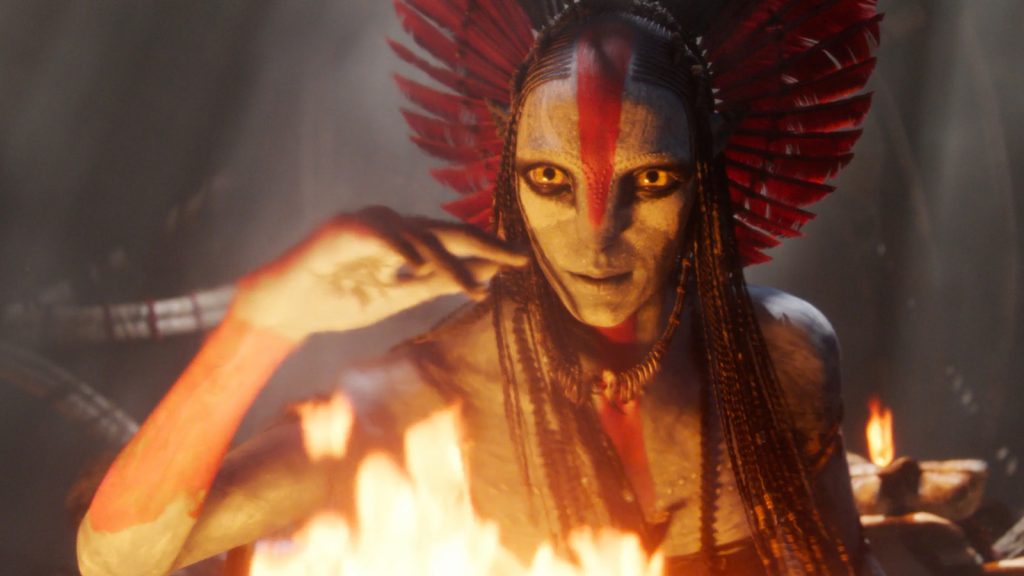
ANTS ON FIRE: I have a sneaking suspicion that the Ash queen is modelled on the queen alien in Cameron's classic 'Aliens' (1986). She literally turns his soldiers into cannon fodder.
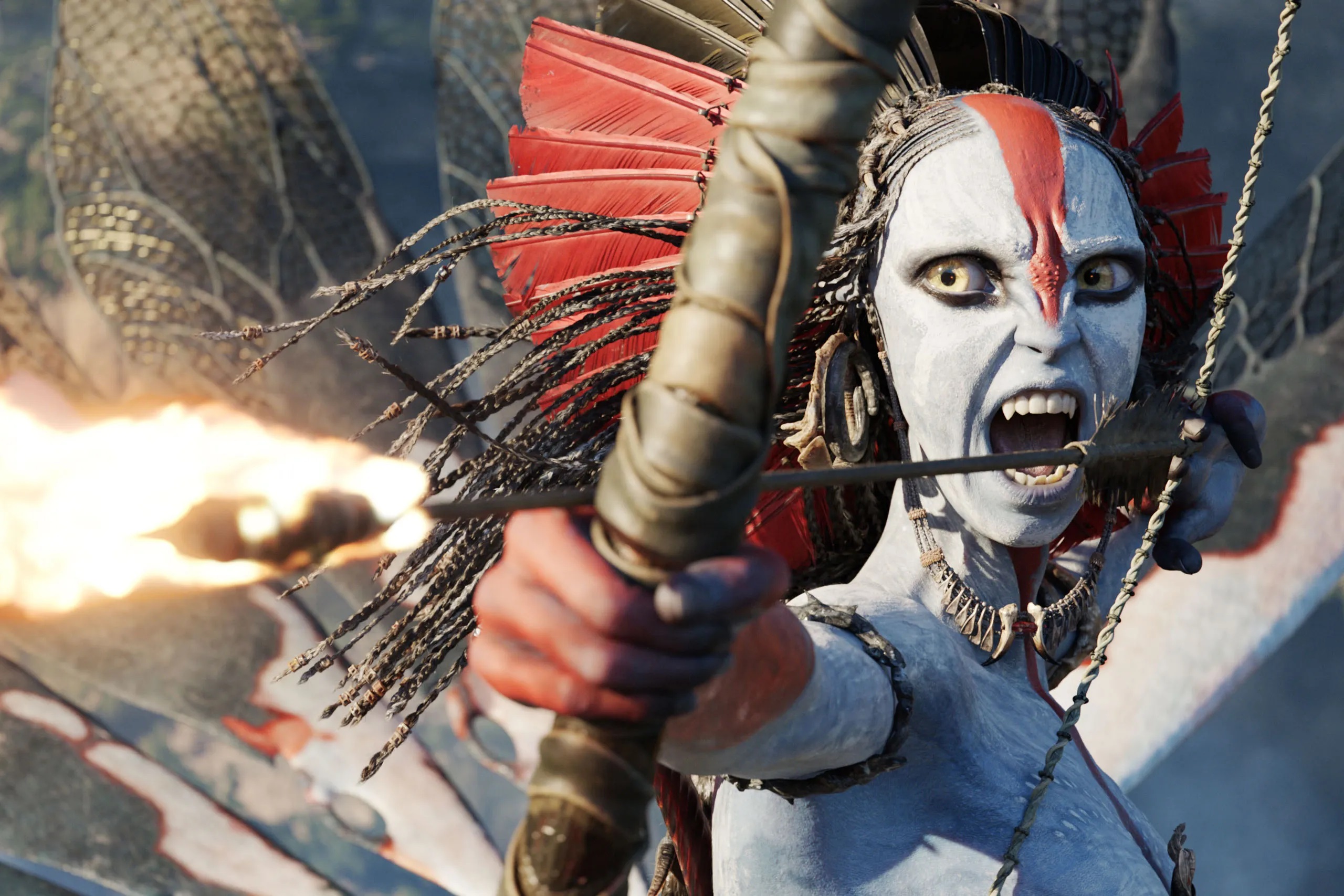
This is the high point of the movie, if you ask me. New world-building with new tribes and new organisms, flying leathery balloonish ‘things’ that can hold up their sizeable reed ships. This is some of the James Cameron magic. Then a tribe of raiders, the Ash people, attack in a cool aerial battle led by their scary-looking tribal chief. It feels like a WWII dogfight!
So far, so good. Then things get even better as Spider begins to suffocate – his ventilator battery dies – and Kiri (Sigourney Weaver) intervenes, making the earth grow into Spider at the cellular level. Now he can breathe, being a perfect symbiosis of alien and Navi.
Alas, the Ash tribe are hot on their tails, as is the antagonist from the two previous movies, Quaritch (Stephen Lang). The Ash queen takes them captive, played very appropriately by Oona Chaplin, but Kiri uses her nature-communicating powers to get them out.
Trouble is, now Quaritch needs Spider so that all humans can breathe in this new world and finally take over. Then things turn dull and repetitive with the whale from the previous movie being banned, for fighting back at the slaughtering humans; Sully’s surviving son also goes AWOL.
There are some good moments from that point on, such as Quaritch going to the Ash queen, Sully almost killing Spider, and Sully being portrayed as a traitor in a red jumpsuit (like prisoners at Guantanamo Bay). But everything else is on 'repeat' apart from that.
You have another whale battle with underwater antics, on a bigger scale and with some new organisms, but it's essentially the same as before. You have a lot of sacrifice, with essential characters dying, but that’s what happened in the first movie.
Worst of all, you have an ambiguous ending. Quaritch jumps to his death, into a fiery vortex, but you don’t know for certain he’s dead. The Ash queen is also left alive, for some reason, with Kiri defeating her with the power of her mind.
The closing sequence is a rerun of the previous movie, just with some extra creatures and a really dull, cheesy song. And you know the next film, if they ever make one, will be a rerun of a rerun. My God, what were they thinking?
An additional criticism is that they clearly imitated other movies in this one. The only one I’ve been able to identify is The Emerald Forest (1985). When the Ash queen bites on a bullet, there’s an identical scene in that older and similarly themed movie, with a cannibal chieftain biting on a bullet.
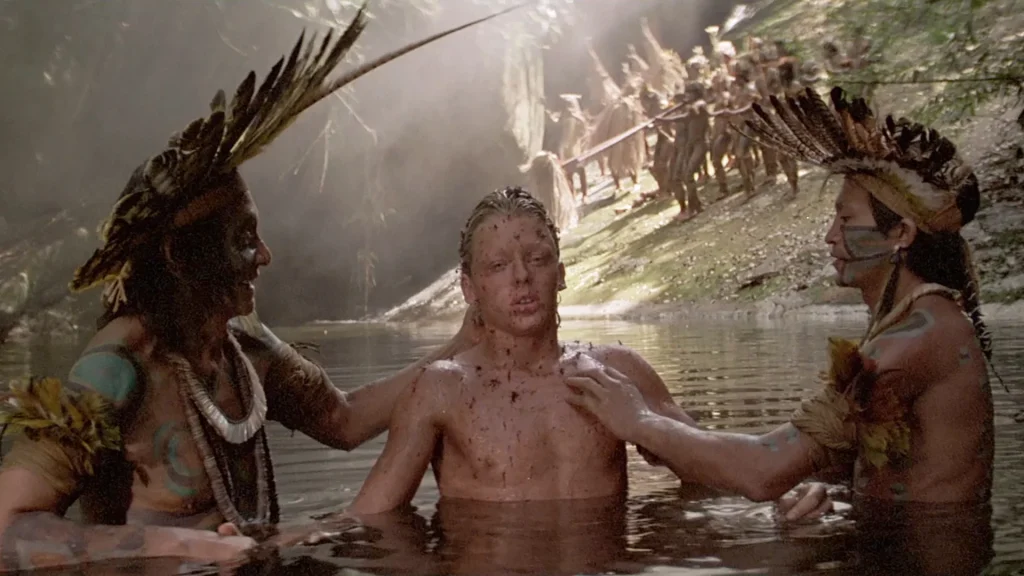
RERUN TIMES: Was Tomme (Charley Boorman) in 'The Emerald Forest' the Spider of his era? The native son trope, back by popular demand apparently.
Well, the first movie had a scene from The Last of the Mohicans (1992), in which they hunt a deer and apologise to it. And the whole film is Dances with Wolves (1990) in outer space.
Even the big, fiery vortex scene at the end here feels like a rip-off from the Mustafar sequence in Revenge of the Sith (2005). The marine biologist (Jemaine Clement) who helps Sully escape is a good moral vibe, but a loose end in the story.
Another oddity is the Ash tribe, which is clearly being compared to Native Americans. Scalping is mentioned, and they make the same battle cries as they do. Weird and hardly politically correct.
On the plus side, the performances by Zoe Saldaña and the Ash Queen are great. Their faces are more detailed and expressive, as is their body language. The cinematography is really lovely, especially the light on faces, and a different aesthetic governs the visuals than before.
The emphasis is on the colour red. At the level of themes, the budding romance between Spider and Kiri is meant to show how humans and the Navi can live in peace. Spider himself is an embodiment of that. (The talk of peace and cycles of revenge from the whales also seems to be a veiled criticism of America’s war on terror).
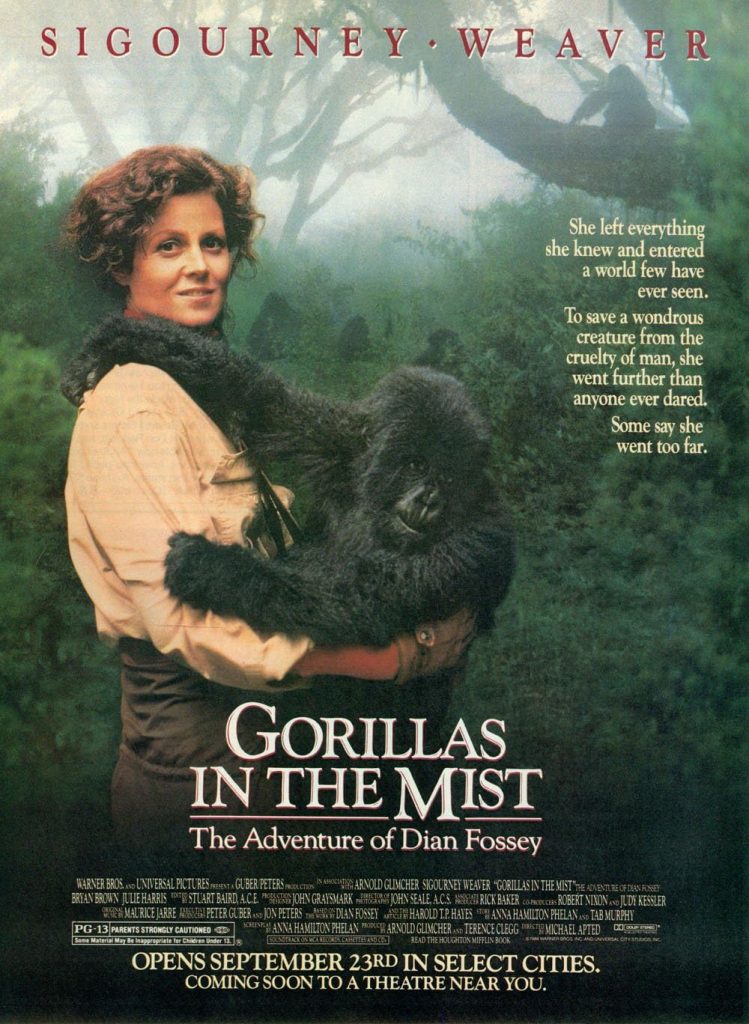
GORILLA WARFARE: The still lovely Sigourney Weaver is no stranger to flower power cinema, stealing Sully's thunder here for the third time in a row.
There’s also some tongue-in-cheek jibes at feminism. There’s female power all over the place in the form of the Ash queen and the matriarch whales, and Kate Winslet’s overbearing character and her baby girl.
But, at the same time, you have Quaritch facing down the Ash queen and telling her what she really wants more than anything – without even knowing it – is an equal. All her underlings are men, and they’d eagerly die for her, like suicide fanatics.
As for the whales, the matriarchs learn to fight from the very male they’d banished. So there’s a balancing of male and female energies here. Zoe Saldaña also uses human technology to free Sully and fight the badguys in the final battle.
Initially, all metal weapons were seen as cursed by the Navi. So technology is here to stay, just in the service of nature. Something she learns from her husband.
James Cameron has clearly grown weary of this franchise and is probably also frustrated that Disney has taken it over and over-feminised it. (Serves him right. He sold out to Disney, just like George Lucas.)
Everybody who works for them ends up frustrated. Just look at the most anti-feminist director you can think of, Ron Howard, who also wussed out with Solo: A Star Wars Story (2018).
J.J. Abrams got befuddled as well. Similar complaints have been heard about Alien Earth, full of anxiety-ridden teenagers like Avatar. The reign of the mouse has clearly gone too far.
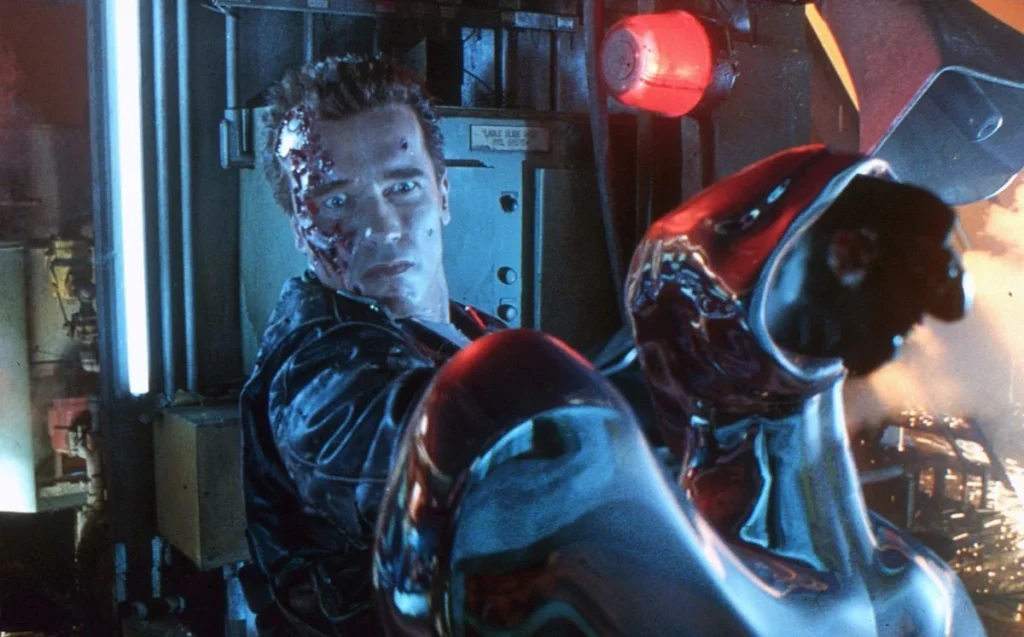
TALL ORDER: Getting hard-hitting, impactful art out of Disney is as difficult as punching the liquid metal T-1000 in 'T2: Judgement Day' (1991)!
I shudder to think what they’d do to a franchise like The Terminator, which might actually happen if James Cameron regains control.
May God have mercy on us all!!