When the United States and Israel struck Iran on Saturday, 28 February, they did not act under a UN Security Council mandate. Under their Charter, the use of force is lawful only in self-defence against an armed attack or with Security Council authorisation. This was not a collective international action authorised by the UN. It was a joint military intervention by the United States and Israel outside that framework. What is this war meant to achieve?
By Farinaz Aryanfar
U.S. President Donald Trump framed the strike almost exclusively as an act of self-defence. In his first address, for more than six minutes, he laid out American security arguments: the 1979 hostage crisis, the bombing of the Marines in Beirut, the USS Cole, American casualties in Iraq, support for Hamas, and the nuclear program.
The message was clear: this war is necessary to protect the United States and its allies.
Only in the final portion did he address the Iranian people. “This is your moment,” he said. “When we are done, take over your government.” In doing so, he shifted the political outcome of the military operation onto the Iranians themselves. This creates a profound asymmetry between decision-making and accountability.
He thus transfers responsibility for what happens next to the Iranian population, even though they have not been part of the strategic planning of the war or any post-war transition. This makes it, to put it mildly, somewhat weird.
In the hours and days after, the messaging suggested that eliminating Islamic Republic leaders would open space for Iranians to “free themselves.” At other moments, officials stressed that this was not about regime change, only about degrading military capability.
These are not the same objectives.
If the goal is degrading military capacity, the benchmark is strategic weakening.
If the goal is enabling internal political change, that implies a political transition.
The messaging has moved between both frames without clearly committing to either — and without presenting a defined political end-state.
The Illusion of Momentum
The war has unfolded in an information environment saturated with symbolism.
During the December 2025–January 2026 protests, Iranian television signals were reportedly interrupted and briefly replaced with a message by Reza Pahlavi. After the war began, there were reports of signal disruptions during which Netanyahu’s image appeared on Iranian broadcasts. At the same time, AI-generated videos have circulated online showing crowds allegedly chanting support for Netanyahu, calling “Bibi Joon.”
But inside Iran, people are not filling the streets. Under bombardment and intensified security, public mobilisation is dangerous.
Security for America?
If the objective was purely American security, another question arises: does destabilising a large, complex country of more than eighty million people make the region — and therefore the United States — safer?
Within days of the strikes, the immediate effects were visible across the region. Multiple countries closed their airspace. Major international airlines suspended or rerouted flights, and governments began organising repatriation operations as large numbers of travellers were left stranded at Middle Eastern hubs.
Reuters reported widespread cancellations and diversions following the escalation, while AP noted the difficulty of even calculating how many civilians were affected by the airspace shutdowns.
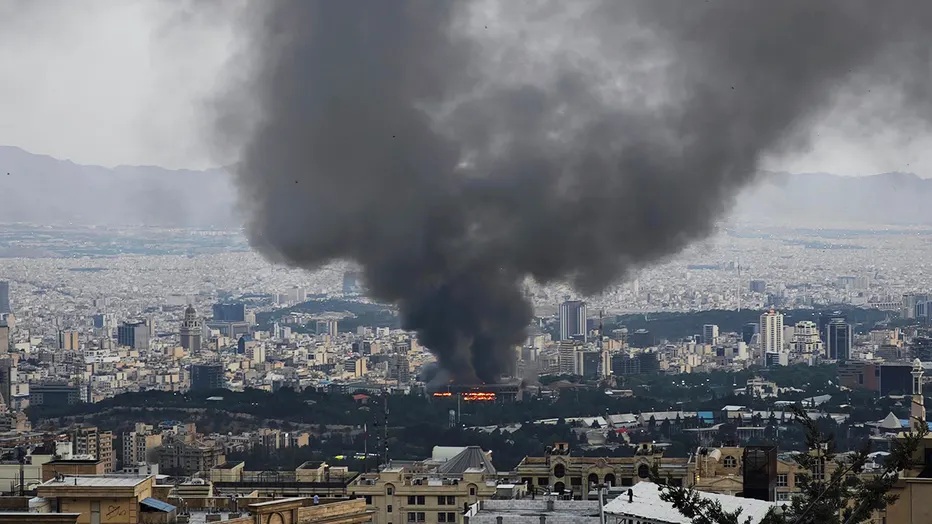
The medical infrastructure inside Iran was also impacted. The World Health Organisation confirmed that a hospital in Tehran was evacuated after explosions nearby caused damage, and Reuters reported severe damage to a hospital in the Gandhi Street area following Israeli strikes.
In Tehran itself, residents described deserted streets, intensified security presence, and widespread fear as bombardments continued. A security policy that removes leadership without a defined political end-state risks confusing tactical success with strategic stability.
At the same time, weakening a regime’s external military capability may reduce certain immediate threats. But prolonged instability can lead to fragmentation or internal power struggles within Iran, posing new risks to the region and the United States.
Removing leadership without a defined political end-state risks confusing tactical success with strategic stability.
Does Removing Leaders Create Democracy?
This does not contradict the fact that some Iranians have welcomed the strikes. Many inside Iran initially received the war with hope for freedom, though the longer it continues, the more anxiety may grow. For many Iranians, welcoming the strikes is not about ideology.
It is about exhaustion, and their happiness is understandable. They have been desperate to get rid of an authoritarian and repressive regime that has stripped them of basic rights, from what to wear and what to say to how to live with dignity.
After decades of protest cycles met with lethal repression — including the recent December–January protests in which thousands were reportedly killed — many felt that internal resistance alone was no longer working.
Therefore, the idea that external force could finally break the regime’s grip is emotionally powerful. But democracy does not fall from the sky. In Iraq after 2003, the dismantling of state institutions created a vacuum that fueled insurgency and sectarian fragmentation rather than a stable democracy.
In Libya after 2011, the fall of Gaddafi was followed by militia proliferation and parallel governments, despite initial civilian-protection mandates. In Afghanistan, two decades of externally supported state-building collapsed rapidly once military backing was withdrawn.
These cases differ in context, but they illustrate a recurring pattern: institutional collapse and power vacuums often empower the most organised armed actors before civilian democratic structures can consolidate.
But this rests on a dangerous oversimplification: that removing individuals at the top dismantles the system below.
Iran’s political structure is not a pyramid balanced on one person. It is a layered network of clerical authority, Revolutionary Guard command structures, intelligence services, economic patronage systems, and localised enforcement units.
Some IRGC facilities and command centres have reportedly been struck. Senior figures have reportedly been killed. Yet the apparatus of repression is institutional, distributed and redundant, and cannot be bombed into non-existence from the sky.
Street-level control does not rely on long-range missiles or naval fleets. It relies on local Basij units, police commands, intelligence officers, detention networks and surveillance systems embedded across provinces. Bombing headquarters does not automatically dissolve those networks.
Modern conflicts show that authoritarian systems can consolidate after an external attack. During the Iran–Iraq War (1980-1988), the Islamic Republic strengthened its internal security institutions and expanded the power of the Revolutionary Guard under wartime conditions (Ervand Abrahamian, A History of Modern Iran; Ali Ansari, Modern Iran Since 1921).
After Russia annexed Crimea in 2014 and the imposition of Western sanctions, President Vladimir Putin’s domestic approval ratings surged, and the Kremlin used external pressure to justify further restrictions on dissent (Pew Research Centre, Putin Remains Popular in Russia, 2015; Freedom House Report, 2017).
In Syria, as the conflict internationalised after 2011, the Assad regime consolidated around its security apparatus while opposition forces fragmented (International Crisis Group, Syria reports (2012–2018), UN Commission of Inquiry on Syria, Carnegie Middle East Centre analyses).
These cases do not suggest that change is impossible. But they illustrate a recurring dynamic: external military pressure can tighten institutional loyalty, empower hardline factions, and reduce space for internal dissent. The most organised armed actors often gain leverage in moments of external threat.
Some external reporting has suggested that discussions are underway between U.S. intelligence agencies and Kurdish armed groups about possible cooperation inside Iran. However, leaders of one of the main Kurdish opposition parties, the Democratic Party of Iranian Kurdistan, have publicly denied that there is any current plan for Kurdish forces to enter Iran to fight in coordination with U.S. or allied military operations (BBC Persian broadcast, Safhe 2, March 2, 2026) — underscoring the complexity of interpreting these reports and the gap between strategic speculation and stated political intent.
However, even if armed opposition groups were to enter the conflict, that would not automatically translate into a democratic transition. Armed mobilisation can stretch a regime’s security capacity, but it can also shift the centre of gravity from civilian politics to military actors.
In a multi-ethnic society like Iran, a Kurdish-led armed front risks being framed as separatism rather than national liberation, potentially fragmenting rather than uniting opposition forces. Without a unified political platform and a clear civilian transition framework, the introduction of additional armed actors may increase volatility rather than create democratic space.
It could ultimately strengthen hardline narratives of territorial threat.
Democracy requires institutions, trust, civic coordination, and a viable political alternative. It does not emerge automatically from military disruption.
What is worrying is the lack of transparency in Iran's political planning. Not tactical details — those are understandably confidential — but the absence of any publicly articulated transition framework. Multilateral coalitions usually bring heads together to find the best, low-risk solution.
That is why it is important to note that the strikes were not carried out under a UN mandate, nor as part of a broad multilateral coalition. Other European governments likewise made clear they were not participants in the strikes.
Leaders from France, Germany and the United Kingdom explicitly stated that they did not take part in the US–Israeli military action and instead called for diplomacy and restraint. At the same time, EU institutions emphasised the protection of civilians and respect for international law.
Spain publicly refused to allow its bases to be used for the strikes and condemned the escalation as a “disaster”. There is no evidence of a collective international roadmap for Iran’s political future.
It is also unclear why no broad spectrum of Iranian political groups — inside or outside the country — were visibly incorporated into strategic discussions about transition. Iranians are not a single bloc. But plurality is not an argument against inclusion. Political diversity is the starting point of democracy, not a barrier to it.
If this operation had been in preparation for years, why was there no parallel investment in building a coordinated civilian transition framework?
President Trump has suggested on multiple occasions a preference for leadership emerging from within Iran. Suppose that means leadership from within the existing Islamic Republic structure, which raises further questions. Public chants in recent protests — including calls against the Islamic Republic itself and the burning of its flag — suggest that large segments of the population are demanding systemic change, not internal reshuffling.
That does not mean that every potential transitional figure must come from outside the system. Figures such as former Foreign Minister Mohammad Javad Zarif, who retained significant popularity among reform-minded constituencies and was associated with diplomatic engagement and the nuclear agreement, illustrate that internal political actors can command public legitimacy beyond hardline circles.
Even in such cases, legitimacy would depend on a willingness to fundamentally reform constitutional structures, rebalance clerical authority, and redefine the state's ideological foundations.
Replacing one figure within the same constitutional framework is not equivalent to systemic transformation. For a population that has repeatedly chanted against the Islamic Republic as a structure, not just its leaders, continuity under a new face would not necessarily satisfy demands for change.
If a post-war leadership remains within the same constitutional and ideological framework, it is difficult to see how that would satisfy demands for fundamental transformation. And this becomes more worrying when Trump’s response to what his envisioned leaders for Iran were is: “they are all dead”.
That ambiguity is not a minor detail. It is central.
Because without a defined end-state — political, institutional, constitutional — military disruption risks creating uncertainty rather than liberation.
Between hope and reality lies a fragile space. And in that space, eighty million people must live.
That is why military force from outside is not a shortcut to democracy. It does not automatically produce accountability. It does not design transitional governance. It does not resolve deep institutional entrenchment.
If the United States and Israel truly intended to help Iranians achieve freedom, that would require more than eliminating individuals. It would require a clear transitional vision, multilateral legitimacy, and sustained support for civil society — not just shock and disruption.
Removing leaders is not the same as building a future. And without a credible path beyond bombardment, hope can quickly turn into fragmentation.
Farinaz Aryanfar has 20 years of experience in humanitarian and development aid. She is currently Unit Manager @OxfamNovib. This is her first contribution to The Liberum. Her analysis of the world's reaction towards Iran can be found here.