Maajid Nawaz, once deep inside the Islamist machine, described the perfect weapon with chilling clarity. Whenever the West acted – invading a country, toppling a regime – the line was immediate: “They are waging war on Islam, on Muslims.” Whenever the West stayed out, the line flipped just as fast: “See? They allow innocent Muslims to be slaughtered – their lives mean nothing to the Western powers.” And the West, for all its universities and diplomats, never developed a strong answer to this narrative and tactic.
That single insight explains more about today’s headlines than any think-tank briefing. It is why Europe can pour billions into “humanitarian” missions yet still be painted as the villain in every conflict from Gaza to Tehran. And it is why, even as the United States and Israel are waging war on Iran, much of the West is paralysed. Unable to face their internal systemic problems, they face outward: either with punitive wars or with morally zealous posturing.
Morality versus Realism
But even the moral zeal has become brittle. Condemning the strikes on Iran would sour Europe’s relations with the US even further – and they need the US because they fear Russia. And who would want to stand up for the atrocious regime in Iran? Saying nothing of consequence is the easier route, and possibly the wisest route for most of the smaller players.
But it does mean that something is broken now: the myth of the ‘law-based world order’ and of Europe as a ‘humanitarian superpower’. Faced with Ukraine, Venezuela, Greenland and now Iran, European powers need to re-evaluate their post-Christian humanitarian salvation myths.
Trump, with his ‘Might Makes Right ’ approach, would probably need to do the same thing if he were ideologically conscientious. Rescue missions, rebuilding missions, regime change – those narratives are out of the window. His armies are dishing out pure punishment without defined victory conditions.
Of course, signs were already clear with George W. Bush’s invasion of Iraq and the hunt for ‘weapons of mass destruction’. But back then, Europe could still lean on stable monocultural societies with strong economic outputs. That made it possible to engage in moral grandstanding without repercussions.
Now, the advantages European nations once had have been eroded. The need for self-reinvention is thus more pressing than ever. Obama pointed out that European nations needed to get their act together on defence, or there would be consequences. Trump, psychologically more ready to polarise than any of his predecessors, is taking things to entirely new levels.
Might makes right
My new book,What the World Can Learn from the Fall of the West, lays this out without sugar coating: the West is not losing due to a difference in military strength. The West is losing because it has dismantled the very tools that once made it formidable – civilizational confidence, realism, and the willingness to use power unapologetically.
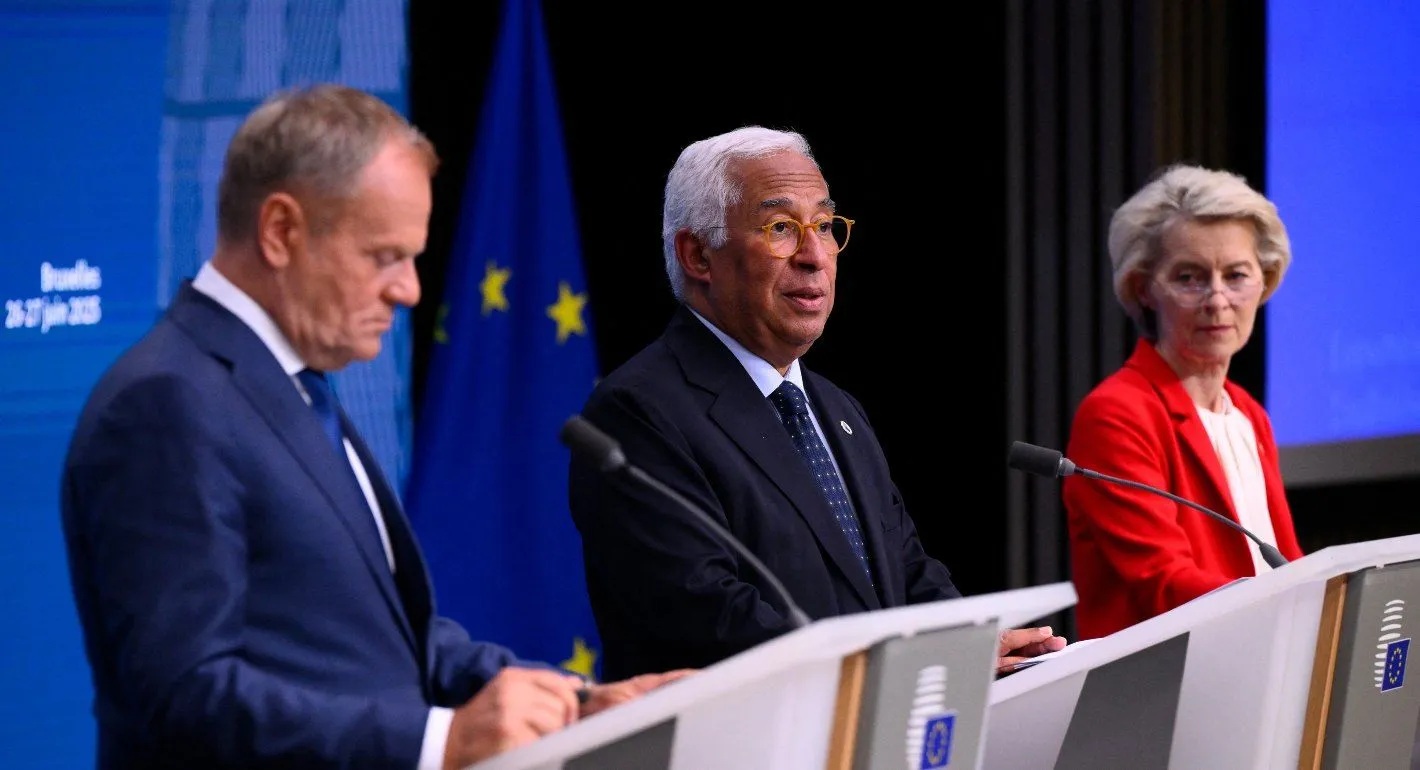
European elites fell in love with a fantasy: that the 21st century would be won by “soft power.” Former Swedish Foreign Minister Margot Wallström openly called Europe a future “humanitarian superpower.” Nice words. But China, Russia, and the Organisation of Islamic Cooperation never bought the script. To them, human rights are not universal – they are Western cultural baggage. They opted for hard power instead.
While Brussels lectured the world on values, Beijing built islands in the South China Sea and Moscow rebuilt its military. The result? A Europe that still boasts about its 2012 Nobel Peace Prize while its factories go dark and its borders are being overrun.
The return of “might makes right” is no longer theoretical. The US intervention in Venezuela, talk of American claims on Greenland, and the raw power plays around Taiwan have shredded the old post-Cold War illusions.
The EU stands there blinking, clutching its rule-based order like a security blanket in a knife fight. Even the UN means nothing when the American military is no longer willing to enforce its resolutions.
Asymmetry in conflict
And then comes the asymmetry that no one in polite circles wants to name out loud. Western armies are told to fight like knights in a tournament – dismount and meet the enemy on equal terms. Our adversaries feel no such compulsion.
Western militaries are expected to fight wars while adhering to moral standards that their adversaries rarely accept. In theory, this reflects admirable principles. In practice, it often means Western states must limit their own strategic advantages while confronting opponents who feel no such constraints. The result is a form of asymmetric warfare. This asymmetry reaches beyond weapons or tactics – it is also in moral expectations.
The Swiss strategist Hans Bachofner called this the divide between “post-heroic” and heroic societies. In Europe, a teenager is still filling out insurance forms at 18; in rural Afghanistan or parts of the Middle East, that same age is old enough to carry a rifle and die for a cause.
Europe answers with tiny elite units, endless rules of engagement, and defence budgets that, until recently, many NATO members could not even drag up to 2 per cent of GDP. Meanwhile, the other side fields thousands of young men who view martyrdom as a promotion.
Europe is geopolitically isolated. Wars around Ukraine and Israel have left Europe exposed. Relations with Russia, Turkey, and Iran are toxic. The US is shifting its focus to Taiwan and Latin America, or its internal fractures could pull its attention away overnight.
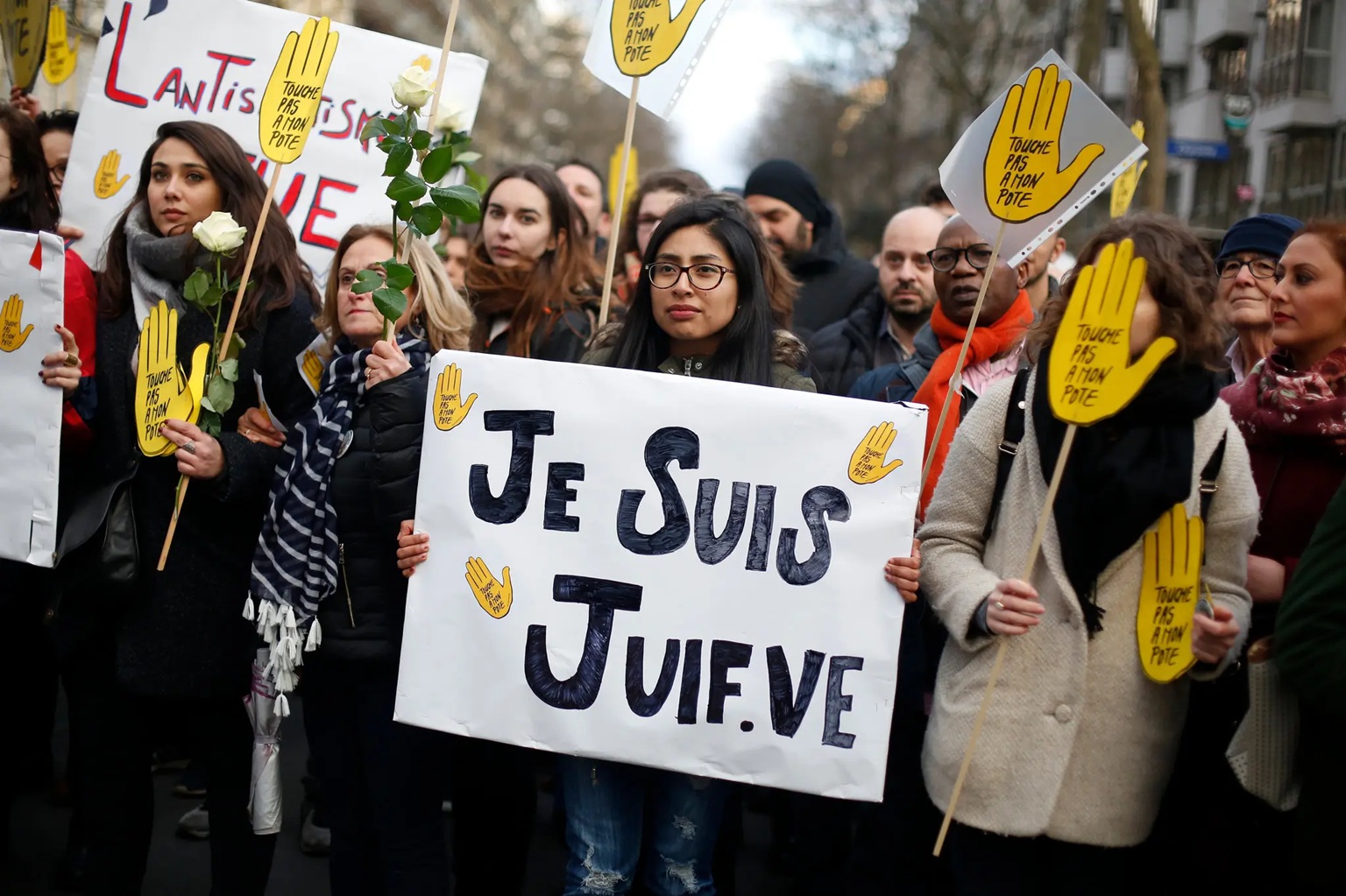
Any help from supposed allies? Even Israeli voices at Davos have been blunt: older Europeans are developing a new strain of antisemitic xenophobia born from their inability to handle mass immigration. Rabbi Goldschmidt urges Muslims – the “new Europeans” – to team up with Jews against “the extreme right” (read: anyone who wants secure borders). In other words, even Israel sees European nations as failing states that cannot be relied upon.
There is no rescue coming.
Corrupted superstructure|
Inside the continent, the cultural superstructure is rotting faster than the economy. Dutch philosopher Paul Cliteur nailed it years ago: mainstream media would rather discuss whether Ayaan Hirsi Ali is “polarising” than engage with a single word she wrote.
The same pattern repeats everywhere. Elite institutions – media, academia, bureaucracy – reward those who use the correct speech codes, not those who speak truth. Content has been replaced by etiquette.
Meanwhile, Islamisation advances, theocratic enclaves rise, climate radicalism (cheered on by billionaires like Soros) increases, whilst a generation of young Dutch and Europeans cannot afford a house or a future. The old Rhineland welfare state still protects boomers; everyone else lives under Anglo-Saxon cut-throat competition precarity.
When the middle class collapses, and entry-level jobs vanish under AI and automation, history is clear: radical movements will fill the vacuum. We saw it in the last century and are now living through the sequel.
The governing classes respond by doubling down on woke ideology while energy prices soar and mosques multiply. They bunker in their moral certainty – convinced that more moral reprimanding will fix the systemic failures, and that more surveillance is the answer.
This is the pattern dissected in What the World Can Learn from the Fall of the West. The book examines this decline with surgical honesty so that other civilisations do not repeat the same suicide. It shows how prosperity without civilisational confidence equals frailty. It shows how lofty moral ideals without strategic realism come down to surrendering to more aggressive cultures. It proves how elite detachment funnels the very chaos it claims to oppose.
The world is watching Tehran as a potential breaking point for US imperial overstretch. Every hesitation in Washington or Brussels, every apology, every refusal to call things by their real names, is noted in the war rooms of the newly emerging powers. They understand something that modern Western intellectuals have forgotten: power is not a dirty word, and civilisation is not guaranteed.
Civilisations fall when they lose confidence in their own foundations, when their elites lose touch with their populations, and when they mistake moral aspiration for strategic reality. The rest of the world is watching the West's unravelling unfold. And the first step toward avoiding that fate is understanding exactly why and how it begins.
The fall is already in motion. The main question now is whether the rest of the world will study the autopsy or become the next patient on the table.