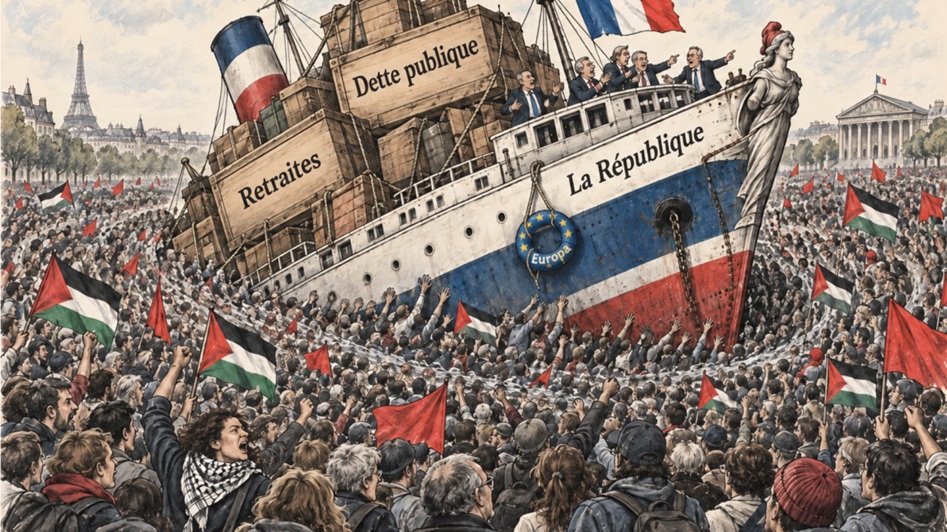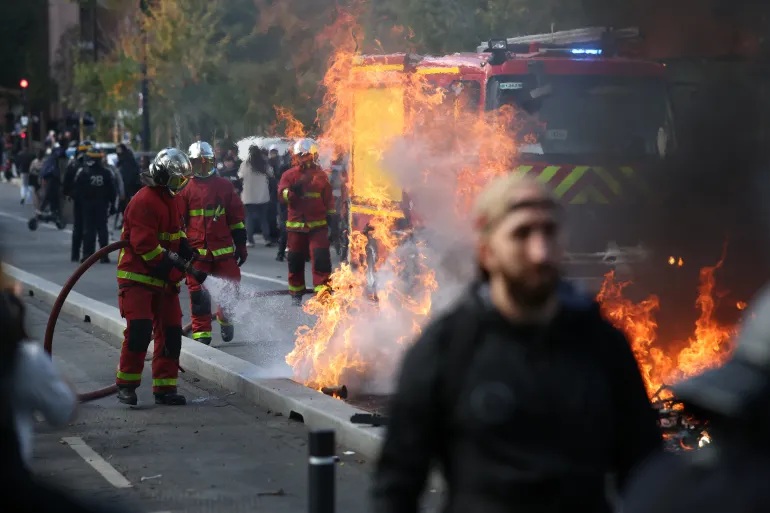
Somewhere in Brussels, they must be staring at their screens with clammy hands. France, the eurozone’s second-largest economy, is plunging not only into political chaos but also into a financial swamp. A prime minister stumbling over an austerity plan, a parliament locked in permanent deadlock, streets where Block Everything has become the new national sport, and a public debt creeping toward Italian proportions.
France is not a peripheral country like Greece once was. France is the backbone of the eurozone. If this country sinks, the entire structure creaks.
The Illusion of Stability
The European Commission has long maintained that the eurozone is “stable,” that reforms are effective, and that debts remain manageable. However, France is now being compared to Italy, and financial markets are starting to price Paris as if it were Naples. German bonds remain safe, French yields are soaring. The old core–periphery model has been turned on its head: the periphery has moved to the centre.
The Domino Effect
The consequences are clear:
• Market confidence in the eurozone is eroding. If France can barely service its interest payments, who still believes in European budgetary discipline?
• Germany becomes once again the ultimate guarantor. But how many times can Berlin afford this without blowing up its own politics?
• The European Central Bank will be forced once more to inject money into a system already overheated and worn out. Inflation as a side effect? Inevitable.
The Geopolitical Weakness
As if that weren’t enough, this crisis comes at a time when Europe should be presenting itself as a strong bloc vis-à-vis Russia, China, and the United States. But a bloc collapsing internally into mistrust, debt crises, and social unrest is not a geopolitical power centre? It is a geopolitical laughingstock.
The Real Question
Not whether Emmanuel Macron can find a prime minister who lasts longer than three months. Not whether French streets can endure another winter of blockades. The real question is: how long can Europe continue to pretend that the eurozone is a stable project?
France’s fall exposes something that has been smouldering for years: the eurozone is built on political consensus and financial castles in the air. Now that France’s cards are collapsing, Europe’s painful truth comes into view: not a project of unity, but of mutual dependence and mutual blackmail.