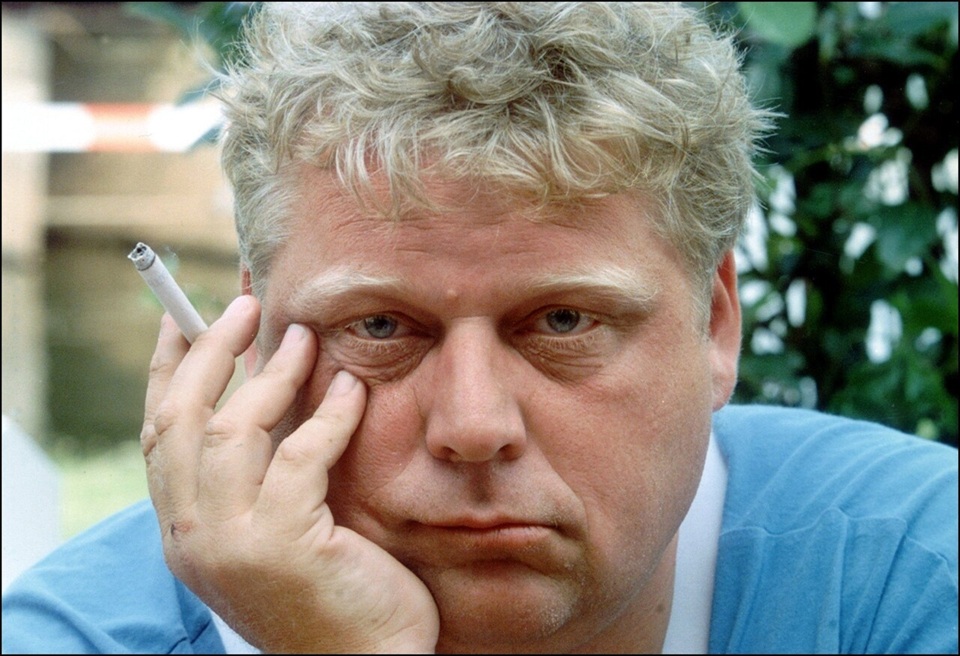
Inspired by Daniel Clarke-Serret’s article, this piece explores why commemorating the murder of Theo van Gogh remains so important today. Clarke-Serret makes it crystal clear that the murder of the Dutch cineast was not merely an event that took place 22 years ago and has limited relevance today. Rather, it tells us a great deal about the times we live in.
By Paul Cliteur
Today, in 2004, Van Gogh was brutally assassinated by an Islamic extremist. His only offence was his willingness to openly criticise Islam and direct Submission, a short film addressing oppression within the religion with texts written by Ayaan Hirsi Ali.
While his killer, Mohammed Bouyeri, was sentenced to life in prison without parole, the attack dealt a devastating blow to free expression. In the immediate aftermath, prominent figures like Hirsi Ali and Dutch far-right leader Geert Wilders were forced into hiding. In a society that pridefully labels itself as free, challenging a religion suddenly carried a death sentence.
Clarke-Serret, a Senior Fellow and Democracy Analyst at Section 1, a Canadian non-partisan democracy and civics think tank, characterises that murder as the end of criticism of Islam. Not because people say “it is forbidden”, but because they remain completely silent when terrorist coercion brings such criticism to an end. “Complete silence from the neutered, majority population.”
Not to mention the complete silence from the authorities.
From the “terrorism experts”. From the police and prosecutors. From ministers of justice and security. Why? Because they do not know how to deal with the issue. So they simply remain silent.
Clarke-Serret’s description captures precisely how I have experienced the past 22 years. Total silence about the issue: namely, that radical Islam completely silences both apostasy (i.e. leaving Islam) and criticism of Islam (i.e. “blasphemy”).
So Theo van Gogh is murdered. A few irrelevant remarks are then made about his murder. But nobody recognises that this is, in effect, a victory for radical Islam and the demise of criticism of Islam. Its utter demise. Nobody engages in it anymore.
A sequel to The Satanic Verses is never written. Not by Salman Rushdie, not by anyone. Nor did anyone dare to make a sequel to Submission. No more Danish cartoons (2005) or French cartoons (2015) are produced.
Why not?
Because governments can no longer guarantee protection against the consequences. The police and prosecutors are effectively powerless. So all they do now is pray and plead with critics to stay out of the jihadists’ way.
Once again: nobody talks about it. “As with antisemitism, it is the complete failure of law enforcement that is the most shocking issue.”
What is the current situation regarding criticism of Islam? We have seen its decriminalisation through the abolition of criminal blasphemy laws - that is, the removal of blasphemy offences from European criminal codes.
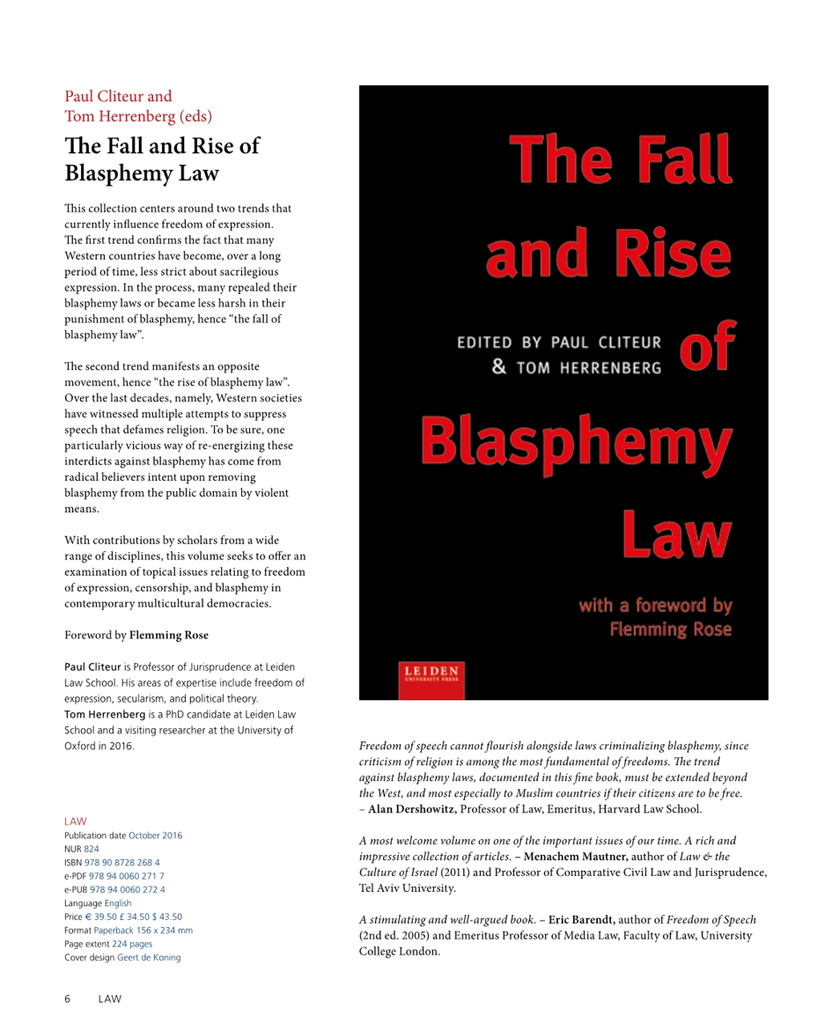
At the same time, however, criticism of Islam is subject to punishment enforced through terrorism, which is many times more effective than the punishment imposed by governments for blasphemy in earlier centuries. The Fall and Rise of Blasphemy Law (2016) is a nice read in that regard.
Clarke-Serret reaches a clear conclusion about this absurd situation: “So we must resist and, in this most upsetting of weeks, we must stand by the following doctrine: Complete tolerance to the tolerant. Complete intolerance to the intolerant.”