History in the Middle East rarely begins where modern analysts think it does. Most discussions of geopolitics start with the Cold War, the Iranian Revolution, or the creation of the modern state of Israel. Yet for many societies in the region, the deeper narrative begins thousands of years earlier, on the pages of the Book of Genesis. A story of courage, covenant, and the power of principle over raw might.
By Nadia Ahmad
In Genesis 14, a coalition of powerful Eastern kings marches westward into the land of Canaan. Their leader is Chedorlaomer, ruler of Elam, located in what is today southwestern Iran. With him are Kings from Shinar, Ellasar, and Goiim, forming a military alliance that sweeps through the Levant to punish rebellious city-states. Their campaign reaches the Jordan Valley, including Sodom and Gomorrah, and many inhabitants are carried off as captives, including Lot, the nephew of Abraham.
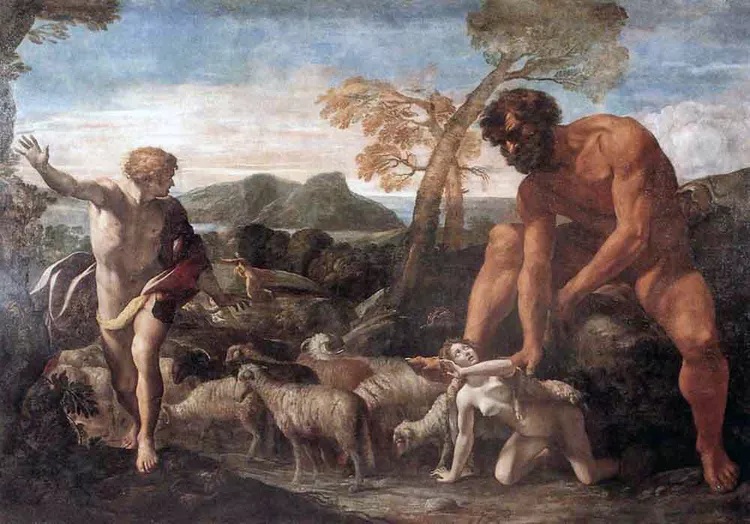
Abraham, neither King nor Emperor, but a pastoral leader of a small clan, learns of Lot’s capture. Gathering 318 trained men from his household, he pursues the invading armies deep into enemy territory. In a dramatic night attack, Abraham’s band routs the coalition, liberates the captives, and returns with all their goods.
This is no ordinary battle; it is a confrontation between covenantal resolve and imperial force. The hunger for territory or glory does not drive Abraham’s victory, but by the moral imperative to rescue family and uphold a sacred promise. When Melchizedek, priest of God Most High, later blesses him, Abraham’s response underscores his identity: he accepts nothing from the spoils except what is necessary for his loyal companions, refusing any boast that credits human power over divine deliverance.
Abraham’s triumph is remembered not as imperial conquest, but as the moment a covenantal vision challenged the logic of empire itself.
When sacred history mirrors modern borders
For centuries, this story was interpreted mostly within theology. But its geography, the Iranian plateau, Mesopotamia, and the Levant, remains the same strategic corridor shaping today’s Middle East. The paths Abraham’s small band traversed, the lands of the eastern kings, and the cities under siege echo in modern borders, military deployments, and strategic thinking. In this sense, the past and present overlap, producing a layered memory that persists in the minds of states, leaders, and populations.
Modern Iran is not only the heir to the Islamic revolution; it is also the inheritor of a civilizational memory stretching back to ancient empires. From Elam to the Achaemenids under Cyrus the Great, to later dynastic synthesis of religion and governance, Iran’s historical identity blends cultural depth with geopolitical ambition.
The Achaemenid Empire, spanning from the Indus to the Mediterranean, projected power through both military might and administrative sophistication, shaping much of Eurasia. Persian rulers wielded influence not only through force but through diplomacy and cultural patronage, establishing a model of governance that blended authority with ethical legitimacy. Even today, the Islamic Republic references this ancient grandeur in its rhetoric and strategic posture, tying contemporary politics to a long sweep of history.
Repeating ancient patterns in modern diplomacy
In a remarkable echo of the memory recorded in Genesis 14, modern Iran positions itself against frameworks such as the Abraham Accords, diplomatic initiatives that normalise relations between Israel and several Arab states. For Tehran, these agreements do not merely rearrange alliances; they symbolise a shift in the regional order that challenges Iran’s influence and historical vision.
The parallel is striking. In Genesis, Abraham confronted kings who relied solely on military might; today, Iran challenges diplomatic covenants that attempt to restructure regional alliances, seeing them as external impositions. Iranian rhetoric depicts these accords as threats to regional dignity and solidarity, portraying resistance as a defence of civilisation itself.
Today’s conflict between Israel, the United States, and their Western allies on one side, and Iran on the other, unfolds across the same geographic and symbolic corridor. Joint airstrikes on Iranian military and leadership targets triggered waves of retaliatory missile and drone attacks across the region, exposing the scale and immediacy of modern warfare.
Iran’s response integrates asymmetric warfare, cyber operations, and regional leverage. Missile barrages have been launched into Israel and U.S. positions, threatening civilians and infrastructure, while allied nations intercept projectiles and tighten air defences. Meanwhile, precision strikes and intelligence operations continue to shape strategic balance and heighten international stakes.
Each manoeuvre is steeped in narrative: for Israel, defending survival and territorial sovereignty echoes Abraham’s defence of the covenantal promise. For Iran, defending its influence and projecting power draws on a long civilizational memory. European analysts note how proxy engagements and political rhetoric intertwine, producing a complex modern battlefield that mirrors the ancient struggle in both symbolism and geography.
The shadow of the mullahs
In the modern theatre of conflict, the shadow of Iran’s religious leadership looms large. The Mullahs, guardians of revolutionary ideology and moral authority, shape both strategic decision-making and public narrative. Through the Supreme Leader, the Revolutionary Guard, and allied clerical councils, religious vision guides the projection of power, framing regional conflicts as moral struggles as well as political ones. Their influence extends across Lebanon, Iraq, and Yemen, embedding ideological purpose into diplomatic manoeuvres and military strategy.
The strategic corridors connecting Iran with the eastern Mediterranean serve as both logistical routes and symbolic continuities. What Abraham’s small band confronted — a coalition moving through critical territory — is echoed today by modern armies, missiles, and intelligence networks. The night ambush that defined Abraham’s victory finds a metaphorical echo in sudden strikes and counter-strikes, where ingenuity, anticipation, and timing matter as much as firepower.
Iran’s engagement in Iraq and Lebanon underscores the continuity of influence beyond immediate borders. Support for allied militias demonstrates how a civilisation-defining strategy extends across a region, much as Persian influence did through diplomacy and cultural imprint in ancient times. The modern war is thus not just tactical; it is civilizational, signalling a contest over identity, legitimacy, and influence.
Covenantal principles vs raw power
Genesis does not predict the future, but it offers a lens. Abraham’s victory teaches that conviction, identity, and covenantal principles can confront larger forces. The Abrahamic framework explains why conflicts in the Middle East often resonate beyond conventional politics:
Power is not only military or economic—memory, identity, and narrative shape perception. History, even sacred history, continues to inform modern strategies and rhetoric.
In this light, the ongoing war between Iran, Israel, and the West is more than a struggle over territory or military capability. It is a confrontation between civilisations, memories, and visions of legitimacy, filtered through thousands of years of cultural and religious imagination.
The Middle East as a palimpsest
The Middle East is a palimpsest. Beneath every border, alliance, and missile strike lies a layered memory of ancient encounters. Iran draws from its Persian and Islamic identity. Israel draws from its covenantal past and historical experience. The West brings a vision of global order. All converge on a stage that Abraham once walked in the imagination of the Levant.
Understanding this layered memory does not make the current war inevitable. It makes it intelligible. Civilisations interpret the present through stories that have survived millennia. Today, those stories are not just theological; they are geopolitical, cultural, and strategic.
As missiles strike, leaders convene, and alliances shift, the shadows of Abraham, the kings of the East, and now the Mullahs stretch across the modern battlefield. The tension between covenant and empire appears once again, but now on a scale and in mediums the patriarch could never have imagined.