When the First World War broke out, it was not the Americans' war. Yet, in 1917, they entered the conflict alongside the British and French. After Hitler attacked Poland, the United States initially remained neutral. Two years later, they were at war with Germany. When France clung to its rule over Indochina, many Americans rejected that late-colonial adventure. Yet, Vietnam soon became their war. In the disintegrating Yugoslavia, the European peacekeeping forces made fools of themselves. Ultimately, the United States had to call the Serbs to order.
By Oscar Hammerstein
Four conflicts that originated in Europe, and yet America took part in them. Wars are facts, regardless of who started them. Great powers must respond to them because they see it as their duty to defend their vision of the world order.
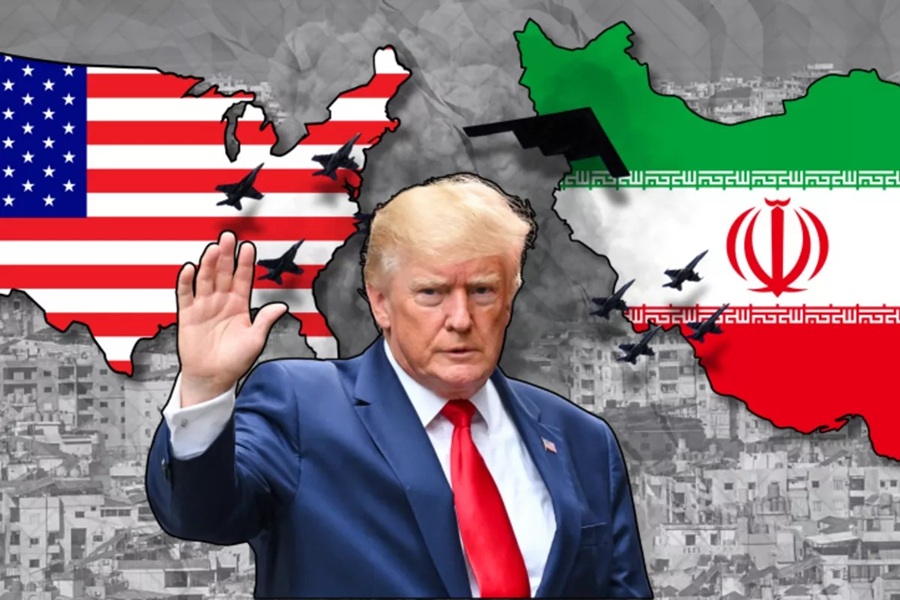
“It is not our war,” claimed Defence Minister Pistorius, Germany’s most overrated politician, regarding the war with Iran. Every era has its foolish statements. This one is one of them. But in doing so, Pistorius accurately captured the mood on the old continent and revealed what Europe is not: a power that thinks globally.
Iran and Ukraine simultaneously: Europe let an opportunity pass. By brusquely rejecting Washington's request for assistance, the European allies have merely demonstrated that they neither want to nor can play a role in the Middle East.
While London, Paris, and Berlin may have concluded the nuclear deal with Tehran more than ten years ago, that was diplomacy in fair weather. While the United States held the reins, the Europeans merely played a key role.
If the NATO partners had responded to Trump's request to cooperate in keeping the Strait of Hormuz open, it would not have immediately meant participation in the war. The United States also needed considerable time to move its fleet to the region. This would have been even more true for the weak European navies. It was therefore foreseeable that the fighting would be over before the first ship arrived.
Clever statesmen would have seized the opportunity to strike a deal with Trump: aid in the Gulf in exchange for support for Kyiv. Starmer, Macron, and Merz let that opportunity pass. They will yet learn that major wars cannot simply be ignored. One loser of the battle in the Middle East is therefore already certain: Europe.
A principled “yes” to the American president’s request would initially have been nothing more than a signal. It would have shown that Europe does not leave the region right on its doorstep indifferent. A signal that Europe feels responsible for the world, just as America has done time and again since the First World War.
Now the weapons in Iran have been silenced for the time being, but the damage to the European-American relationship will remain. The EU and Great Britain made the same mistake for the second time this century.
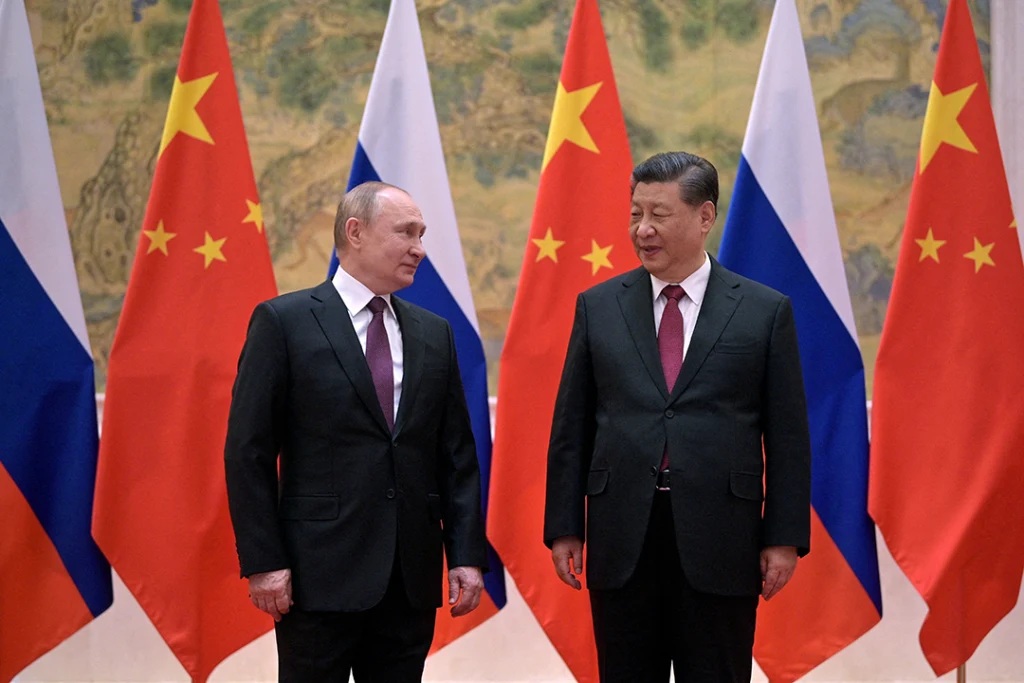
In 2008, Paris and Berlin refused to give Ukraine a concrete prospect of NATO membership. That would not have meant immediate accession, but it would have been a signal that NATO would not leave Kyiv indifferent to Russian imperialism. Because that signal failed to materialise, Putin felt encouraged to annex Crimea.
Even after that, Chancellor Merkel continued her business-as-usual with Moscow. She looked the other way regarding cheap gas. Not acting has just as much of a price as acting. Often, the price of doing nothing is even considerably higher, as was brutally demonstrated on February 24, 2022.
By supporting President Obama in seeking a diplomatic solution with Tehran, Germany, France, and Great Britain expressed their deep concerns regarding the Iranian nuclear program. However, that concern never led to a strategy for dealing with a potential violation by Tehran. It remained typical European fair-weather diplomacy. Just like now, when nothing is being done, and people are silently praying that oil prices will fall.
Since Trump's return to the White House, one word has been gaining ground: strategic autonomy. That the Europeans are far from achieving this is due only partly to their military dependence on Washington. Europe is primarily a selfish, ageing continent. It mourns its lost global power but is unable to define a new role. It prefers to shift the blame for its own decline onto others, preferably the United States.
In an almost adolescent reflex, the EU and London are taking revenge on Trump for his absurd Greenland episode. They are now turning their backs on him, even Chancellor Merz, who just a year ago thanked America and Israel for doing the “dirty work” in containing Persian imperialism.
This weak response can only be explained by the political capitulation to an anti-Americanism that has taken on irrational proportions since Trump. Europe wants to be sovereign, but its dependence on America is growing. Europe provides the culprit with a cheap excuse to declare that Ukraine is not its war definitively.
Trump has damaged transatlantic relations with his Greenland show, his unpredictability, and his threat to leave the “paper tiger NATO.” But what is gained when Europe, too, deliberately damages the alliance?
Offensive behaviour is not a strategy. It does not help Ukraine, where the EU does not even have the diplomatic contacts with Putin with which Trump has tried to conduct peace negotiations so far. And it certainly does not help in the Middle East, where Europe has voluntarily banished itself to the sidelines.
If France wants to establish peace in its former protectorate of Lebanon, or if Germany wants to accelerate the return of Syrian migrants, the Arab world knows: the spectators in the stands can safely be ignored.
The fighting is over for the time being. The result was predictable: the regime was neither overthrown nor forced to capitulate. However, the triumphant cheers from Tehran must not conceal the fact that the regime and its armed forces are weakened. Through the blockade of oil exports, Iran has also harmed itself. Tehran needs peace more than it will ever admit.
America is now the great hegemon in the Gulf, and Israel is the small one. This will not bring stability to the region, especially since Hezbollah and Hamas have not been defeated. Whether this result was worth the war is open to debate.
However, it will certainly further strain the already fragile transatlantic relationship. And this time, Trump does not bear the responsibility for it. Whoever governs the White House, people will remember how little they could count on their European allies.
Europe's behaviour would be understandable if it were to emancipate itself, militarily and economically, from America. Anyone with a Plan B can adopt a different stance. But there is no sign of that. Dependence on the United States has actually increased.
This applies to both weapons and American liquefied natural gas, with which Europeans compensate for their distance from Russian gas. In addition to security dependency, there is now also energy dependency.
To protect itself against Trump's whims and potential import tariffs, the EU is meanwhile concluding free trade agreements with countries it previously wanted nothing to do with.
Yet, exports to Mercosur countries, Indonesia, or India constitute only a fraction of exports to the United States. Moreover, technological dependency has been growing since the rise of artificial intelligence. Brussels is attempting to strengthen “digital sovereignty,” but it can do little against the dominance of the AI oligopoly from Silicon Valley.
Mutual ties are loosening. The last generation shaped by the Cold War will soon disappear from the scene. The memory of the Berlin airlift and the tanks at Checkpoint Charlie is fading. Demographics are changing, too.
Immigrants from the Maghreb in France, Pakistanis in Great Britain, and Syrians in Germany feel less connected to transatlantic values—just like Latinos and Asians in America. Even without Trump, the relationship will remain difficult.
Precisely for this reason, a gesture of solidarity in the Gulf would have paid off.
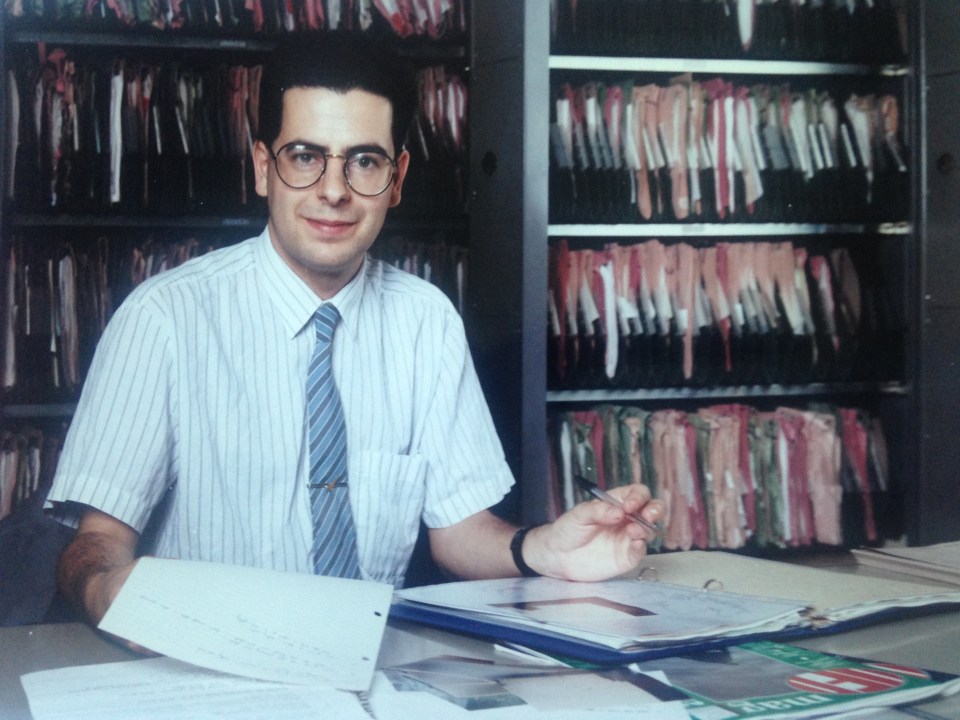
Oscar Hammerstein is a prominent Dutch public figure and retired lawyer. He has had a long career in the legal industry and has a strong entrepreneurial spirit. He is professionally skilled in Arbitration, European Law, Construction Law, Dispute Resolution, and Contract Law. His previous contribution can be found here.