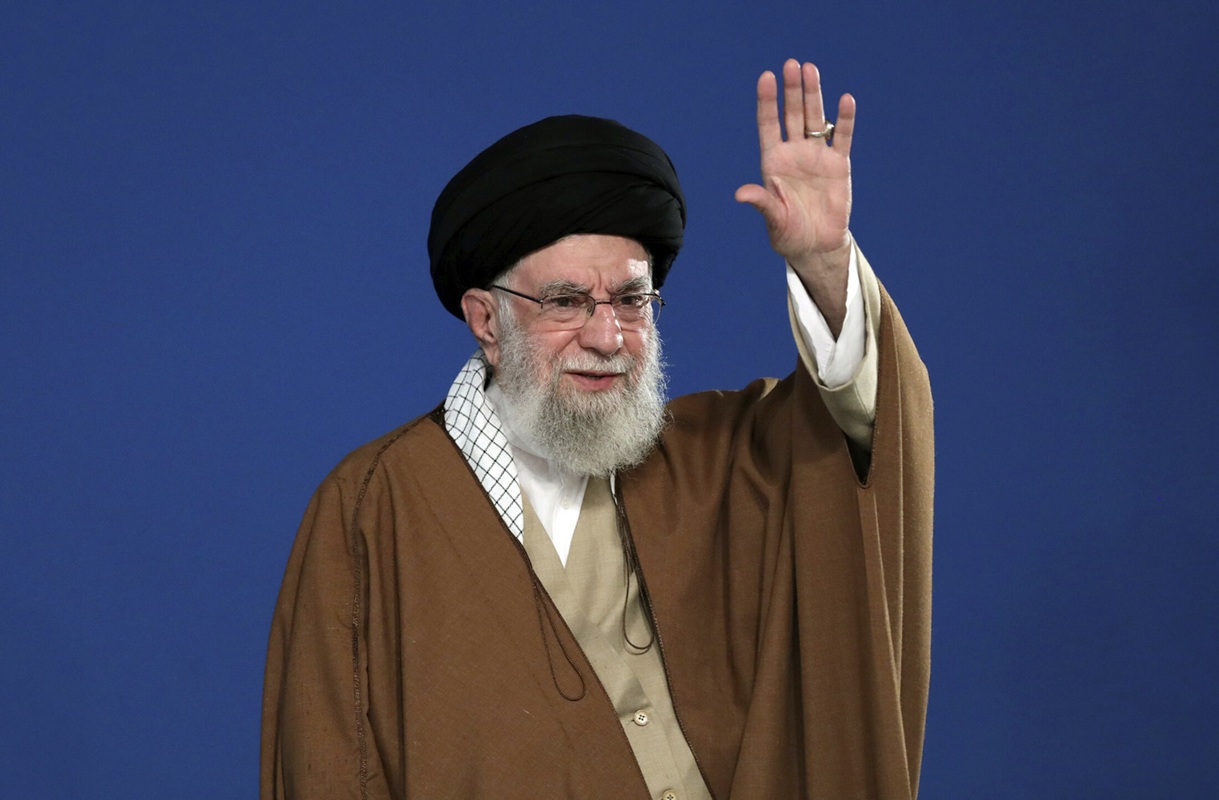
As pressure on the Iranian regime intensifies through escalating internal and persistent internal unrest, and heightened U.S. executive signalling regarding the use of force, analysis has primarily focused on the regime’s ability to endure or maybe collapse. Far less attention has been devoted to the regional consequences of a potential collapse. For Iraq, such a scenario would likely prove deeply destabilising.
By Hiba Abdulwahhab
Iran’s relationship with Iraq is neither recent nor episodic. Geography, history, and long-standing patterns of asymmetric power projection shape it. From early Mesopotamian rivalries to modern state competition, Iraq has repeatedly found itself exposed to the ambitions of a neighbouring power seeking strategic depth.
Since 2003, this dynamic has taken on an institutionalised form, with Iranian influence penetrating Iraq’s political system, security architecture, and economic networks.
For this reason, the survival of the Iranian regime represents one category of challenge for Iraq. Its collapse, however, may introduce a more complex and potentially destabilising set of risks.
Historical experience in the Middle East suggests that regime collapse rarely remains contained within national borders. Instead, political disintegration tends to generate spillover effects that spread to neighbouring states, particularly those with weak institutions and unresolved internal divisions.
In such contexts, the absence of a central authority often accelerates the diffusion of armed networks, illicit economies, and informal power structures.
In the event of a major rupture in Iran, Gulf states are unlikely to absorb significant destabilisation. Their security infrastructures, financial buffers, and regional partnerships provide a degree of insulation against direct spillover.
Syria, despite ongoing challenges, has entered a phase of relative consolidation, supported by regional normalisation and external backing, enhancing its capacity to absorb shocks compared to earlier periods.
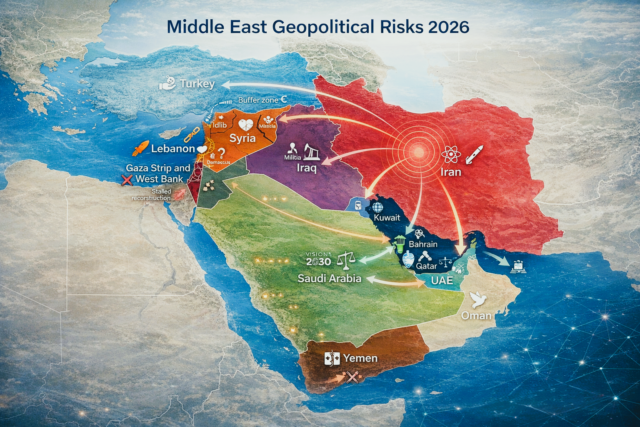
Iraq, by contrast, remains structurally vulnerable
Over the past two decades, Iran has invested systematically in embedding influence within Iraq’s formal institutions. This has included political parties, parliamentary blocs, security formations, and legal mechanisms designed to ensure durability beyond fluctuations in regional power dynamics.
This strategy reflects a long-standing Iranian assessment that pressure on the regime could intensify and that reliance on centralised authority in Tehran alone would be insufficient.
Should the Iranian regime collapse, these networks are unlikely to dissolve. Instead, they would undergo a critical transformation in how they are perceived and contested. No longer framed primarily as extensions of an external regional project, they would increasingly be treated as domestic political actors operating within Iraq’s broader governance failures.
This reclassification would complicate both internal reform efforts and external accountability mechanisms.
Such a shift represents a perilous phase in post-collapse environments. Once detached from an overt external patron, entrenched networks become easier to normalise within existing political systems and harder to dismantle through international pressure. In Iraq’s case, this risks deepening institutional paralysis rather than resolving it.
Consequently, Iran’s collapse should not be understood as a moment of automatic strategic relief for Iraq. Instead, it could exacerbate fragmentation and entrench long-standing dysfunction. The infrastructure of influence constructed over the years would likely persist even in the absence of a functioning centre in Tehran.
Policy Implications
For policymakers, this analysis underscores the need to shift focus from regime survival in Iran to post-collapse contingency planning, particularly regarding Iraq. Preventing destabilising spillover will require sustained investment in Iraqi state institutions, legal reform, and accountability mechanisms that address internal power networks rather than external proxies alone.
Without such preparation, Iraq risks becoming the primary arena in which the remnants of a collapsing regional order consolidate rather than dissipate. Iran’s potential collapse is not solely an Iranian issue. It is an Iraqi case with consequences that may unfold long after the immediate crisis has passed.







I had imagined the eventual collapse of Iran's current brutal regime affecting the financial backing of its terrorist proxie, but hadn't given thought to its dire consequences in neighboring Iraq.
Shokrun for sharing this perspective.