I was watching a YouTube interview with expert Patrick Henningsen, about the Iran war, typically, and he used a funny example to explain ‘threat assessment’ in the Oval Office. He said that if it were argued that Martians were firing missiles made of green cheese at the US, the president would believe it and start bombing these presumed alien bases on the moon!
By Emad Aysha
This immediately reminded me of Philip K. Dick’s short story “Martians Come in Clouds” (1953). Here, the little green men from the red planet come to Earth. They float on clouds and hide in the trees.
People gang up on them and burn the trees; a lynching type scenario, of course. Then a boy sees one of these Martians in a tree in his backyard, and the creature communicates telepathically with the boy, ‘showing’ him that they mean Earth no harm, that they are leaving their dying world, and that they want to live in isolation from humans.
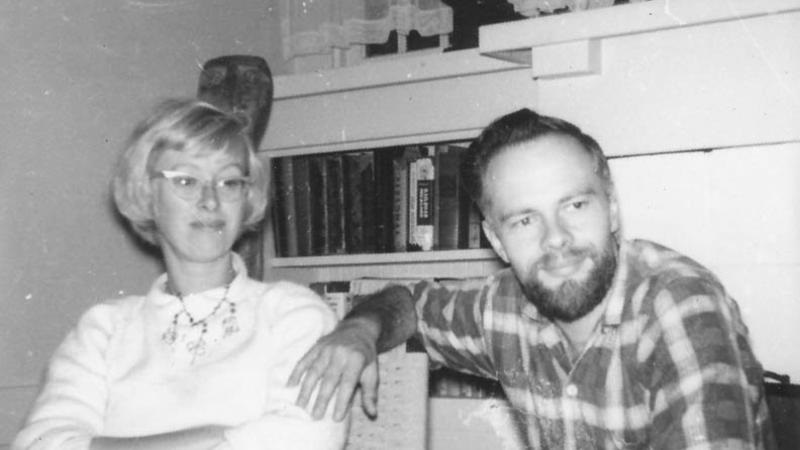
SEARCH PROTOCOL: Philip K. Dick [right] with Anne R. Dick, married from 1959 to 1965, only one of his many wives.
Alas, it does him no good. The boy gets his father to burn the Martian down, and the father brags afterwards about how his son didn’t even hesitate. Dick was commenting on anti-Communist paranoia in this and so many other stories, having endured the 1940s-50s with all the drills they did at school to psyche people up and make them subservient to the Cold War.
How poignant and relevant an insight into our current stressful times, with the endless paranoia about everything from terrorists to immigrants. This has always been reflected in American science fiction, horror, and pop culture, exemplified by movies as diverse as Little Shop of Horrors (1986) and Arachnophobia (1990).
Americans are genuinely scared of foreign plants and insects. I grew up watching Leonard Nimoy’s TV series In Search Of, with the episode on fire ants invading America from South America. (S2.E22 “Deadly Ants”).
In retrospect, it turns out the fire ant epidemic was a byproduct of the very war the Americans fought against them, using pesticides that killed indiscriminately – including the local ants and termites competing with them.
Imagine that nature teaches us that collective punishment creates more problems than it solves, if not reinforcing the very problem you were trying to solve to begin with!
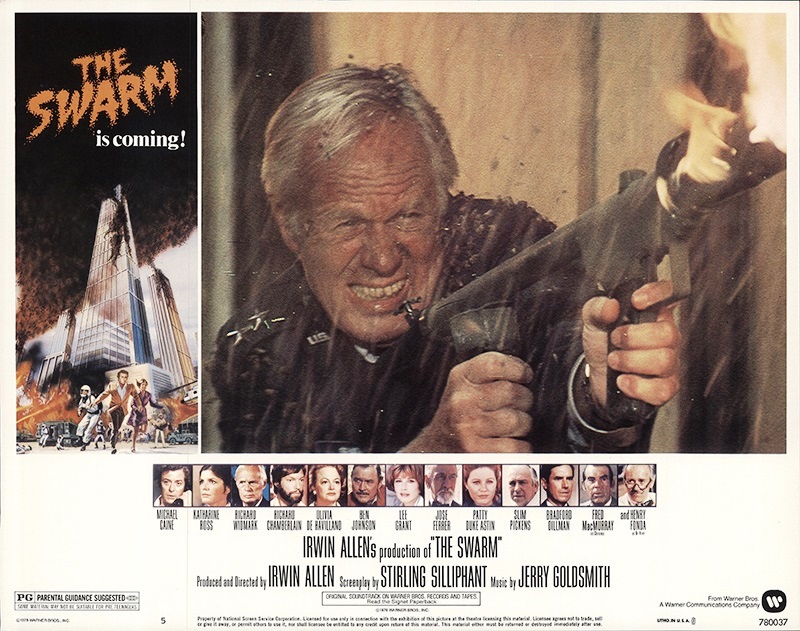
That was hinted at in another sci-fi/horror movie, for instance, Michael Caine’s The Swarm (1978). There, African bees, from South America again, invade America, and the military’s response is mass pesticide or burning. The British scientist played by Caine warns them that by killing the African honeybee, you kill the American honeybee as well, an unacceptable price.
That’s a tongue-in-cheek criticism of the nuclear war, since everyone is a loser. But there’s still that paranoia about ‘African’ bees. Ironically, people are now embracing African honeybees because they are more resistant to infections and parasites, whereas European honeybees are suffering. And without bees, we’d have to pollinate plants by hand.
It’s better to develop a symbiotic relationship with foreign organisms for mutual benefit. The same goes for immigrants, if you ask me, since the ancient Egyptians co-opted the Sea Peoples into their army after defeating them.

WARM AT HEART: Elizabeth, once again, from the visual extravaganza that is Guillermo del Toro's adaptation of Mary Shelly's classic
Don’t take my word for it, please see Carlos Sandoval García’s 2016 documentary “Casa en Tierra Ajena [Home in a Foreign Land]”. I suppose the same approach applies to the AI threat, using Philip K. Dick as another exemplar.
AI speculations are as old as science fiction, certainly robot stories going back to Mary Shelly’s Frankenstein (1818), but PKD is very unique in this regard. For one, he was way ahead of most other SF authors. He’s the only person I know of who anticipated AI news channels that you get now on YouTube, let alone wrote articles.
In Dick’s terminology, he called them homeopapes, newspapers and newsreels published and broadcast by artificially intelligent computers, producing genuinely impartial and constantly updated news. (Even the word homeopape is reminiscent of the internet term ‘homepages’).
You will also note that the homeopapes produce reliable news that everybody uses in their stories, including the government. Another distinguishing feature of Dick’s AI stories, then, is that it’s generally positive.
This impartiality is a common feature of his stories, such as “The Chromium Fence” (1955), in which a robot therapist helps the hero cope with the political mania tearing the country apart. (The country is split between Purists and Naturalists, crazies who want body odours and hair removed compared to regular people!)

The only evil robots in his stories are usually the ones disguised as human beings, creations that are territorial and don’t enjoy the emotional characteristic of empathy. Hence, the biological androids in Do Androids Dream of Electric Sheep? (1968) and the disguised mechanical robot in “Progeny” (1954).
Many of the positive robots in his stories have a paternal demeanour, which I presume refers to a gap in Dick’s early life, given the eventual absence of his father and his cold mother. That would explain his preference for women in his novels, which tend to be either redheads or women with Middle Eastern or Mediterranean features.
That sheds further light, wouldn’t you know it, on my previous review of del Toro’s Frankenstein (2025). Amazingly enough, the actress playing Elizabeth is the same person who plays Victor’s mother!
Kudos to the actress Mia Goth, who is half Brazilian, bringing out her Latin features as the mother. Not coincidentally, the English version of her has flaming red hair.
It’s that formative period when kids are growing up that you need to show them kindness and understanding to make sure they develop both emotionally and ethically. The same for thinking machines, which is what you see quite literally in the movie, when the monster learns to read and speak. Again, through understanding.
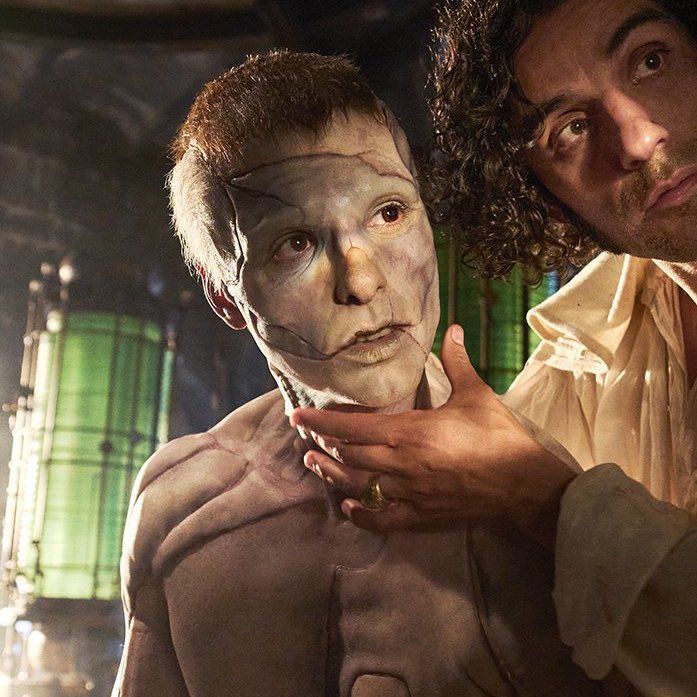
PATERNITY SUIT: A role-reversal of epic proportions as Jacob Elordi plays the Creature while Oscar Isaac is the true monster.
Let’s hope PKD's vision prevails because the Iran War is an AI war in the extreme, from target selection to drone and missile response. If left unchecked, the weapons will turn against us, religion notwithstanding!