The lead judge investigating last year's massive port blast in Beirut issued an arrest warrant on Thursday for former public works minister Youssef Finianos after he failed to appear for questioning, the state-run National News Agency reported.
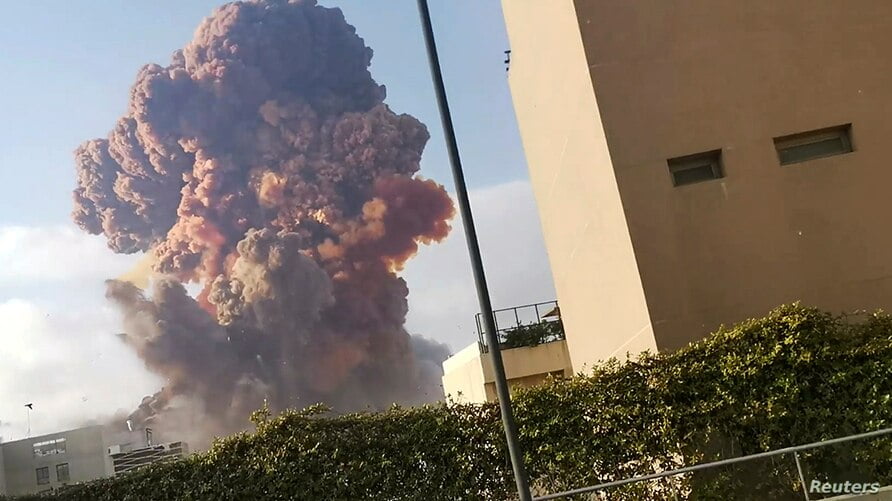
The massive August 2020 explosion was caused by hundreds of tons of ammonium nitrate which had been stored unsafely at the port for years. The arrest warrant is the first for an ex-minister arising from the investigation.
The blast killed hundreds, injured thousands and destroyed large swathes of the city but more than a year after the explosion, there are still no answers to what triggered it, and no one has been held accountable.
Judge Tarek Bitar, who is now leading the inquiry into the huge explosion, had issued requests in July to question former prime minister Hassan Diab and other top officials. They included former public works minister Finianos, whom Bitar's predecessor Fadi Sawan had charged with negligence.
All have denied wrongdoing.
Sawan was removed from the probe in February after a court granted a request for his dismissal by two other former ministers he had charged with negligence for the disaster – Ali Hassan Khalil and Ghazi Zeaiter.
Diab, the former Lebanese prime minister, is due for questioning on Sept. 20, although it is unclear whether he will return for the session after leaving Beirut on Tuesday for the United States. Bitar issued a subpoena for Diab on Aug. 26 after he failed to appear for questioning.
Rights groups and local media revealed that most state officials knew of the presence of ammonium nitrate in the port but did nothing to remove it or properly store it.
On Thursday, families of the victims demonstrated outside the Palace of Justice in Beirut and blocked a nearby road, angry at the lack of progress in the investigation.
"We are going to start taking steps that are not peaceful," Ibrahim Hoteit, the spokesperson for the victims told local television channel MTV from the demonstration.
On Wednesday, more than 140 local and international organizations and survivors of the blast have repeated a call issued earlier urging a UN-backed probe into the blast to mete out justice.
In their plea, the groups said government officials have refused to appear for questioning and authorities declined to lift immunity to allow for prosecution of members of parliament or senior government and security officials.
“Political leaders have attempted to cast doubt on Judge Bitar’s impartiality, accusing him of being politicized,” the groups said, and criticized Lebanese security forces for forcefully breaking up protests by families of the blast victims on at least two occasions. “The failures of the domestic investigation to ensure accountability dramatically illustrates the larger culture of impunity for officials that has long been the case in Lebanon.”
Source: Asharq Al-Awsat