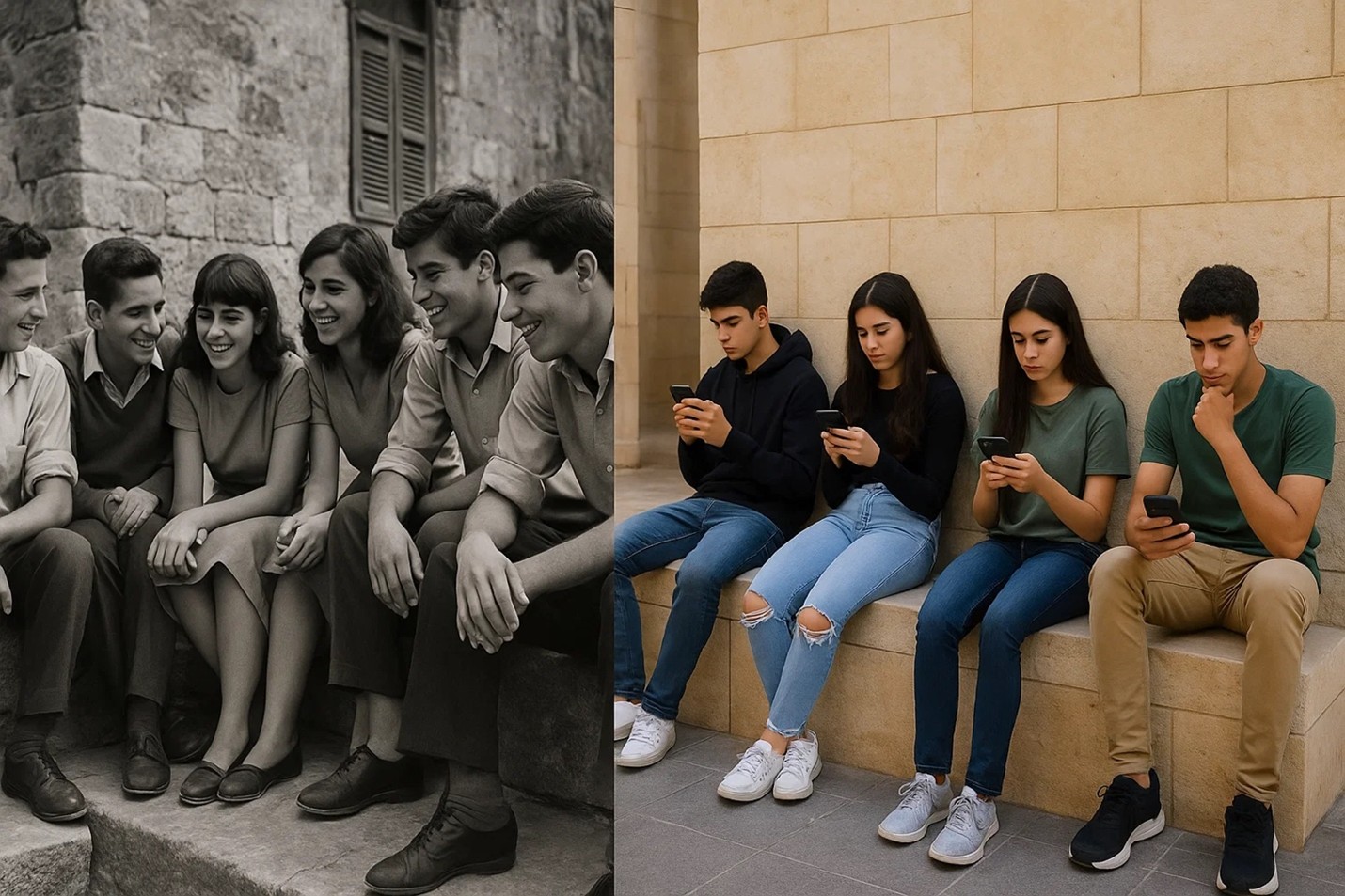
Before I left Lebanon (in 2022), I remember how people still carried pieces of joy in their pockets. They were tired, yes, but they still joked loudly and teased one another, they still made life feel lighter by turning pain into comedy, and somehow that made it easier to breathe. Families gathered around tables that were too full for what anyone could afford, neighbours knocked on doors with steaming plates of food, and friends stayed up until two in the morning arguing about politics as if their words might shift the future just a little.
By Murielle Hebbo
Humour was everywhere, loud and messy and unfiltered, wrapping itself around everyone like cigarette smoke that lingered in the air. Sarcasm was sharp but playful, and it felt like a collective way to stay sane. Weddings were grand, with fireworks that lit up the night sky and drums that made the ground shake under your feet. People still dressed up, still celebrated everything, still made plans to leave or stay, but they did so with a kind of defiance that almost felt joyful. They still spoke about tomorrow as if it were theirs to claim.
The Lebanon I Came Back To
Now, stepping back into Lebanon feels like walking into a house where someone quietly turned the volume down. The streets are the same and the faces are the same, but the energy is quieter, heavier, almost as if the air itself learned to carry the weight. People move more slowly now, and smiles take more effort. Conversations no longer wander toward dreams or possibilities but stay fixed on survival, on what broke today, on how to make it through the week. Weddings are smaller, simpler, stripped of the extravagance that once felt like an act of rebellion. Outings are fewer, birthdays are quieter, and when laughter finally comes, it feels careful and measured, like it had to be summoned.
Even sarcasm sounds different now. It is still there, but it no longer feels playful; it feels sharper, almost bitter, a way to bite back at reality instead of softening it. Joy does not come naturally anymore; it feels scheduled, like something people have to plan for, and even then, it does not echo the way it used to.
Noticing the Small Things
What stays with me most are the small moments. The shopkeeper who once cracked jokes as he handed me change now nods with tired eyes. The aunt who once filled every room with her voice now sits quietly in the corner, her hands folded, her silence speaking volumes more than words could. Friends who once debated plans for the future now shrug and say Let’s see, as though asking what comes next has become too heavy to even think about.
Then there is the silence… A silence that was never this loud before, a silence that does not bring peace but feels like the sound of people who have run out of words, who have seen too much and no longer have the energy to narrate it.
Seeing It Sharply, Feeling It Deeply
When you leave and come back, you see things differently; you know what those still living here have trained themselves to stop noticing. You remember how it used to feel, even in the middle of chaos, when there was still a strange kind of lightness in the air, when laughter stretched further, when even pain was loud and shared, and everyone seemed to carry the same weight together.
Now the weight feels individual, private, almost invisible. Everyone carries their battles behind polite smiles and tired eyes. It is not just about politics or the economy or instability; it is the exhaustion of having to adapt again and again until even joy becomes a form of work.
The Price of Resilience
Lebanon’s people are still standing, and they will always stand, but standing has a cost. Resilience sounds beautiful until you realise it means living with wounds that never fully heal. Adaptation kept them alive, but it also took pieces of them along the way — pieces like their spark, their loud laughter, and their wild plans for tomorrow.
The Question That Lingers
Lebanon will always be my place of nostalgia and memory, my family’s gathering place, the home of summers spent barefoot on cool tile floors and winters wrapped in thick blankets while the generator hummed outside. But every time I return, I see more clearly what has changed, in the people, in the air, in the way joy shows up and how rarely it stays.
And I cannot help but ask myself: how much of themselves can a people lose before they cease to be who they once were?