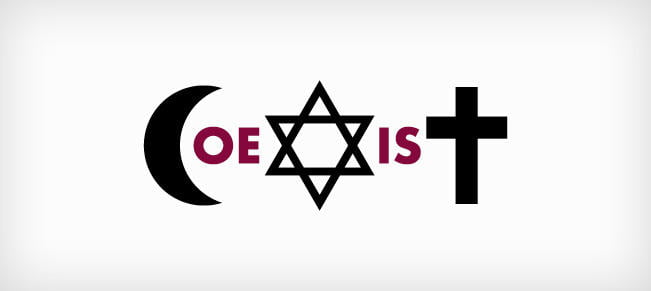
The Arab Muslim world struggles with sectarian and ideological conflicts that affect the stability and progress of the region’s states and cause loss in human lives and economic devastation among their consequences. Sectarian conflicts are not exclusive to the Muslim world.
By Dr Haytham Mouzahem
Both the Christian West and Hindu-Sino East suffered from it as well, and to a certain degree still do. Some countries in Europe and North America did not achieve an acceptable form of religious tolerance until the end of the twentieth century.
Motives of tolerance were neither religious nor ethical; they were political and economic. For example, King Henry the Fourth of France signed a decree on April 13th 1598, assuring the French Protestants that they would no longer be persecuted for their religious beliefs, which contrasted with Catholic beliefs. The decree, known as “Nantes,” represented a crucial step towards freedom of thought in Europe. However, the decree lasted less than a century before it was repealed by King Louis the 14th in 1685, causing a wave of violence targeting Protestants that eventually led to the immigration of 400,000 French Protestants to several parts of Europe and the British colonies.
Religious freedom
Britain was moving towards religious freedom when King William Orange announced the “Tolerance Act” in 1689, a vital step towards the gradual implementation of religious freedom in Great Britain. However, ideology, rather than political or economic motives, pushed for this tolerance.
The divergence from the Protestant Church into Presbyterianism, New Baptist, and the Religious Society of Friends (Quakers) proved to be a heavy burden of continuous repression and impractical political progress. A long civil war was the result of attempts to curb the new freedoms of Catholics and Protestants who diverged from the original doctrines. This war created an obstacle to economic progress and made uniting the island of Britain more complicated.
The Tolerance Act was not only a response to the religious struggle that ripped Britain’s social fabric, but also to the increasing religious tolerance in the nearby and rival state to Great Britain, namely the Netherlands. The Dutch Protestants suffered immensely under Spanish rule and made an effort to guarantee religious minority rights after gaining independence in 1579.
The newfound tolerance helped facilitate Dutch trade with other nations and turned the country into a haven for oppressed religious groups from England, which lost many talented citizens to its rival; another reason to push for the British Tolerance Act.
'Act for Establishing Religious Freedoms'
The irony is that many of the diverged religious groups that long struggled to achieve religious tolerance in Britain feared the very tolerance spreading into the American colonies. However, following America's independence, religious pluralism and tolerance helped push back against oppression. In 1786, following several discussions in the Virginia Legislative Assembly, the 'Act for Establishing Religious Freedoms' was passed.
The act was a sample of the First Amendment to the United States Constitution. In fact, Catholics themselves found themselves in a better legal and social status by the end of the 18th century, following periods when they were labelled as “followers of the anti-Christ”, for up until that time, Catholics were the religious group less tolerated than others and remained persecuted.
Catholics became more successful in the southern Spanish colonies, and Roman Catholics were granted an exclusive special status in the Latin colonies. The Spanish monarchy assured that Catholicism would be the only permitted faith in its colonies, and Catholic clergy were offered land and special legal patronage in separate courts.
However, circumstances changed after South America's independence. In the mid-19th century, the Catholic Church’s estate was confiscated, and clerics no longer had the right to conduct marital and burial rituals. Church inquisitions were abolished, and monks were brought under the jurisdiction of civil courts. With the beginning of the 20th century, Latin America allowed Protestant missionaries into its lands and as religious tolerance grew, so did Protestant followers.
The Mexican Revolution brought the most significant change in the relationship between the Church and State in the history of Latin America. The 1917 constitution prohibited the Church and other religious sects from possessing any estates, and it deprived clerics of the right to run for office and vote, making them second-class citizens. In 1992, the Catholic Diocese, with the Vatican's support, pushed to remove the most restrictive articles against clerics from Mexico’s constitution. These amendments were also beneficial to non-Catholic groups, enabling them to spread into other states.
With the collapse of Communism in Eastern Europe between 1989 and 1991, the drafting of new democratic constitutions began. Laws were introduced to manage religious groups, but the initial system of religious freedom for Russia in 1997 favoured the Russian Orthodox Church. It made it impossible for other sects’ missionaries.
In 1998, the US Senate passed the International Religious Freedom Act, which requires the State Department to conduct annual surveys worldwide to monitor religious freedom and to consider it in foreign policy.
In 2015, some European states still struggle to find ways to legally merge Islam – the religion of many immigrants – into their secular societies. In contrast, countries like France do not tolerate the hijab in public schools and institutions.
Dr Haytham Mouzahem* is the founder and head of the Centre of Asian and Chinese Studies and a former Editor-in-Chief of The Levant News. He tweets @haytham66.
This article first appeared in Islamnews