I find myself asking that question more and more. Not out of fear, but out of curiosity. You reach an age where death is no longer an abstract concept, but an old acquaintance who occasionally comes by to check on how you're doing.
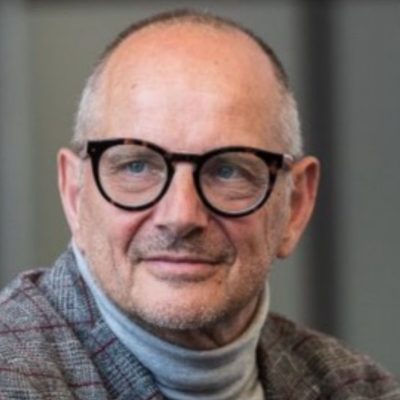
And while I'm thinking about that, I strangely think of the Dutch chemist Johan Vollenbroek (1949). He is the chairman of Mobilisation for the Environment, an NGO that works to improve environmental quality.
Vollenbroek acts as a representative for residents' and environmental organisations in legally testing environmental permits and challenging violations of environmental rules by the government and companies.
Not just the man himself, but also what he symbolises. And what he associates me with.
Some people never really die. Their body does, but their way of seeing things lingers like mould on the walls of society. A permanent layer of indignation that clings to everything that grows, blooms, builds, or moves.
Maybe that’s the real afterlife.
Not a heaven with harps or a hell with fire. But a world where our beliefs keep wandering around, long after we ourselves are gone. One leaves behind children. Another music. Another an invention.
And yet another a pile of procedures.
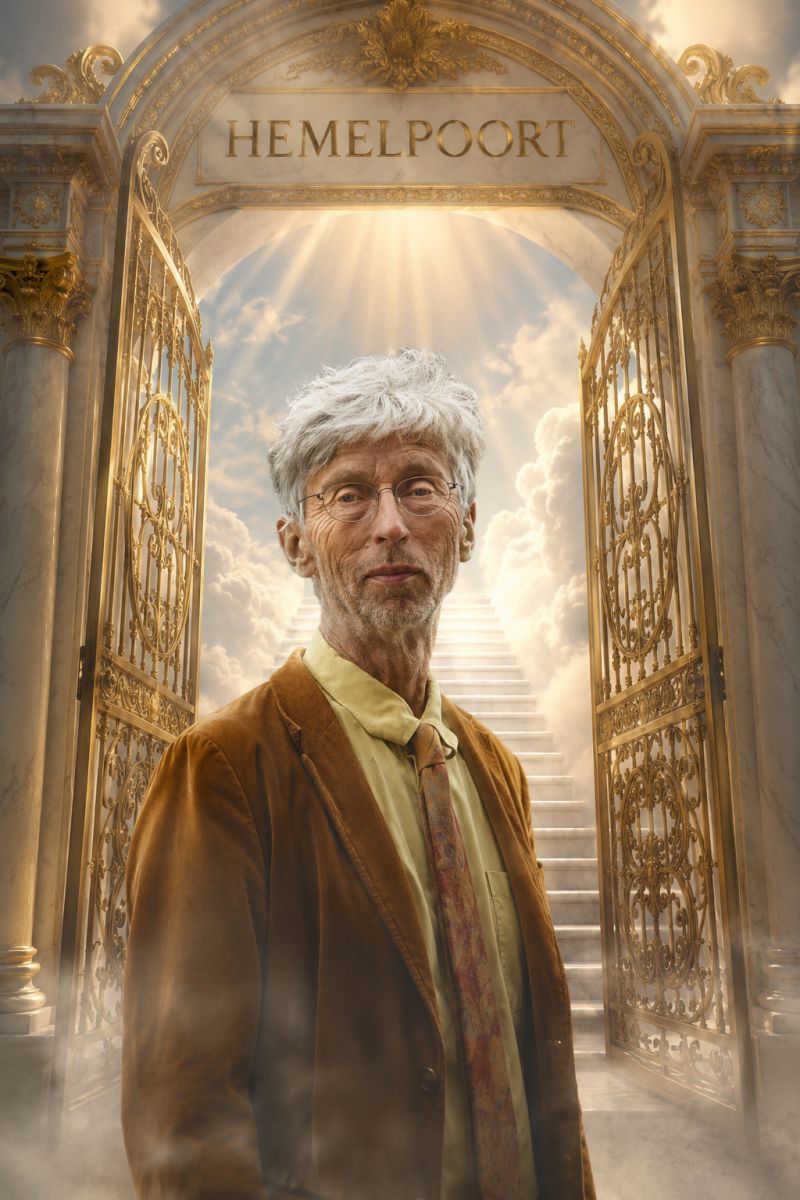
Then I wonder: when you arrive up there, if there even is an up there, what will you be judged on?
Not on how many lawsuits you won.
Not on how many permits you ripped up.
But on a much simpler question: What have you given the world?
Have you made the world bigger or smaller?
That seems like an awkward conversation to me.
“Welcome,” says eternity. “So… what have you made of your life?”
“I’ve prevented someone from expanding a barn.”
Silence.
“And besides that?”
“I’ve halted a residential neighbourhood.”
Silence again.
“Anything else?”
“I’ve delayed a highway.”
I suspect even Peter would take off his reading glasses at that point.
Because, in the end, death might be the only place where procedures no longer exist. No objections, no appeals, no temporary measures. Just the question of what remains of a human life when all the files have been closed.
There, without forms and without delays, only one measure remains: what your presence has added to the world of others.
Everything you stopped, slowed, or blocked quietly disappears from view.
What remains is what you made possible.
And that’s the only thing death can’t erase.