The Iranian regime is a theocracy. It is tempting to state that this is nothing special. But the religious background of the Iranian regime is barely addressed, even though, from a traditional democratic perspective, the Iranian ayatollahs have some strange ideas in their heads. The same could be said of Vladimir Putin, Donald Trump, or Benjamin Netanyahu. To make sense of it, an analysis of Iranian politics along the same lines as American or Israeli politics is needed.
By Paul Cliteur
I was inspired after reading a column by the renowned Dutch writer Leon de Winter, titled “Iran was on the road to the end times” (De Telegraaf, April 8, 2026), in which he addresses the religious background of the Iranian regime.
Is Iranian politics significantly different - and differently strange - than American or Israeli politics? Or, in other words, should our attitude toward a theocracy not be fundamentally different from our attitude toward a non-radically religious regime (whether a democracy or an “ordinary” dictatorship)?
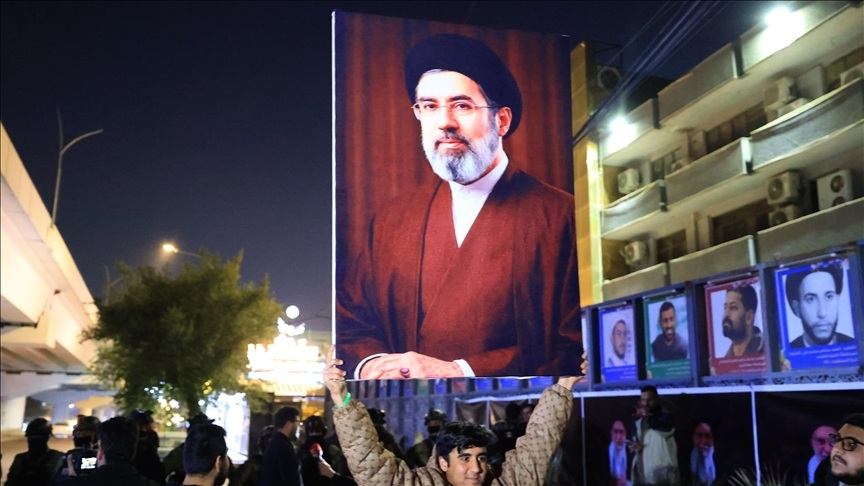
Let us take a closer look at the nature of the Iranian regime. The regime of Ayatollah Khomeini, established in 1979, conducts, as De Winter writes, a continuous war against the West based on the ideology of the Twelve Imams. This ideology forms the basis of Iran’s state religion.
It holds that the twelfth imam (in the line of successors to the Prophet Muhammad) did not die but entered “occultation” in 874. This twelfth imam will one day return as the “Mahdi” to usher in the end times. Until that moment arrives, Iran is ruled by the clergy, headed by the “Supreme Leader.”
Often, people who do not share this ideology consider it mere nonsense that needs not be taken seriously. In other words, they take note of the main outlines of the Twelve Imam ideology, but then attempt to understand the behaviour of the Iranian state in the same way they would understand that of a regime such as the United States or Israel.
In traditional geopolitics, one might say: all states seek power. Or: all states seek territory. Or: all states seek oil. But is that really so? Should we not say that the Iranian state primarily - and authentically - seeks the Mahdi? They truly await this Mahdi, and all their actions are connected to that expectation.
The distinctive feature of De Winter’s column is that he genuinely tries to do justice to the religious motivations of Iran’s rulers. And this religious doctrine has far-reaching consequences, for example, for their foreign policy.
De Winter writes: “If the regime must sacrifice millions of people for its survival, then so be it: everything must give way to the return of the Twelfth Imam.”
As mentioned, for most commentators in geopolitics, the religious ideology underlying the Iranian regime has no real significance. Most geopolitical analysts explain the behaviour of states and politicians - of all states and politicians - in terms of a hunger for power. From this mainstream geopolitical perspective, no distinction is made between countries such as the United States, China, Saudi Arabia, or Iran. All states follow a logic centred on oil and territory, not on the return of a twelfth imam or other religious constructs.
But what if De Winter is right? What if the ayatollahs in power in Iran and their followers truly believe what they claim to believe? Then we must approach the potential behaviour of such states in a completely different way. Can that behaviour even be influenced? A theocracy would then be truly life-threatening - far more dangerous than other types of states.
Apocalyptic thinkers with nuclear weapons
Geoffrey Robertson addressed this issue in his book Mullahs without Mercy: Human Rights and Nuclear Weapons (2012). Like De Winter, Robertson takes the mullahs' religious motivations seriously. He attempts to imagine what might happen if a radically theocratic regime gains access to nuclear weapons.
Now, possession of nuclear weapons is inherently dangerous. Any state that possesses them poses a risk that they might be used recklessly. But nuclear weapons in the hands of Iran present an additional risk: they could be used by people who are no longer reachable through “normal logic.” The actual use of such weapons could be justified as contributing to a religious apocalyptic vision.
Therefore, a country like Iran must never be allowed to obtain nuclear weapons under any circumstances. Radical theocracies currently pose a greater problem than ordinary dictatorships. Radical theocracies, such as Iran, operate according to a logic that is difficult to comprehend.
But what, then, should we think of the American Secretary of Defence, Hegseth? Is he not also influenced by Christian rhetoric? Or what about the Zionists? Do they not also think in religious terms? And what about the Sunni monarchies in the Middle East, led by Saudi Arabia? Do they not also think religiously, justifying their actions based on verses from the Qur’an or stories about the Prophet?
To a certain extent, this cannot be denied. And the norm of political secularism (politics not based on religious considerations) can indeed be applied to those countries. However, the difference with Iran is big and significant. Iran is a radically theocratic regime.
Countries such as Saudi Arabia and the United Arab Emirates are developing in a more favourable direction: less Qur’an, less sharia, less religiously conditioned politics, and more openness, more dialogue, more rapprochement with the Western world. One might say that Iran is currently the leading nation in the radicalisation toward theocracy.
Religion and immigration policy
Taking the religious dimension of politics seriously has various consequences, including for immigration policy. To illustrate this, I will begin with recent figures concerning the terrorist threat.
Europol (a European police information and cooperation centre) recently published a report on terrorism within EU countries. Much can be said about this threat, as the report itself does, but I will highlight one aspect: the figures on successful terrorist attacks in 2024.
Europol distinguishes between, among others:
What do we see? In 2024, in the countries examined, there was only 1 far-right motivated attack, compared to 21 far-left motivated attacks and 24 jihadist motivated attacks.
Much can be said about these results. One of the most striking insights runs counter to many people’s intuition. Many view terrorist attacks in Europe as something associated with the “far right,” fitting a narrative about the rise of far-right politics.
Parties like Alternative für Deutschland, the Front National, and the Dutch Party for Freedom are often seen as major dangers. This leads to the expectation that far-right groups must be responsible for most terrorist attacks. But the data shows: only one.
That is not all. Other Europol data also challenge common assumptions. What turned out to be a significant problem in terms of terrorism was not the far right, but its counterpart: the far left. Far-left groups were responsible for as many as 21 attacks. This is uncomfortable for many people, since the left is often associated with progressivism.
The idea that the left can also have an “extreme” variant creates cognitive dissonance. Yet this appears to be the case - at least according to Europol’s report.
Then there is jihadism. The overwhelming majority of terrorist attacks in the EU (again, 24 attacks) were jihadist in motivation. This refers to a “holy struggle” that, according to radical Islam, should be waged to ensure the triumph of Islam over secular forces in the world.
This jihadism, like far-left extremism, is something many people find difficult to acknowledge. As seen earlier in the discussion of Leon de Winter, commentators on international relations can be divided into two types: those who interpret state behaviour purely in terms of secular factors, and those who also take religious factors into account.
A similar divide exists among terrorism researchers. Some pay attention to religious factors (jihad), while others do not. In France, this is reflected in the debate between Gilles Kepel and Olivier Roy. Kepel argues that the religious motivations cited by jihadists - both as explanations and justifications - must be taken seriously. Roy disagrees, viewing these religious elements as secondary, with terrorists actually motivated by secular factors.
In my view, Kepel is right to take these religious motivations seriously - just as De Winter is right about the Twelve Imam ideology. Taking the religious motivations of Iranian leaders seriously leads to the conclusion drawn by Robertson: Iran must never obtain nuclear weapons.
Similarly, taking the religious motivations of terrorists seriously has consequences. For example, in education, attention must be paid to religious radicalisation. It also has implications for immigration policy: allowing large numbers of immigrants from regions where jihad is a valued ideal creates security risks for countries that grant these individuals citizenship.
Conclusion: we'd better take religion and religious motivations seriously.
Bibliography
Cliteur, Paul, The Secular Outlook: In Defence of Moral and Political Secularism (2010), Part 4, pp. 172–281.
Europol, European Union Terrorism Situation and Trend Report, 2025:
Kepel, Gilles, The War for Muslim Minds: Islam and the West, Harvard University Press, 2004.
Roy, Olivier, « Le djihadisme est une révolte nihiliste », dans Nicolas Truong, Résister à la terreur, 2016.