The Concertgebouw in Amsterdam is one of the largest cultural institutions in Europe. Since 1888, music has been central: not politics, but art. Conductors, soloists, and orchestras from all corners of the world have taken to the stage under one unwritten agreement: in the concert hall, what sounds count, not what is right.
By Oscar Hammerstein
The recent tightening of the rules for guest musicians seems to undermine that agreement. The new wording allows artists to be barred if they are “indirectly involved” in “serious violations of international humanitarian law.” Think of war crimes or genocide.
At first glance, this seems like a noble principle. But the nuance is crucial. Indirect involvement and serious violations are concepts that are rarely defined so unambiguously in international law that a concert hall can apply them without bureaucratic and legal risks.
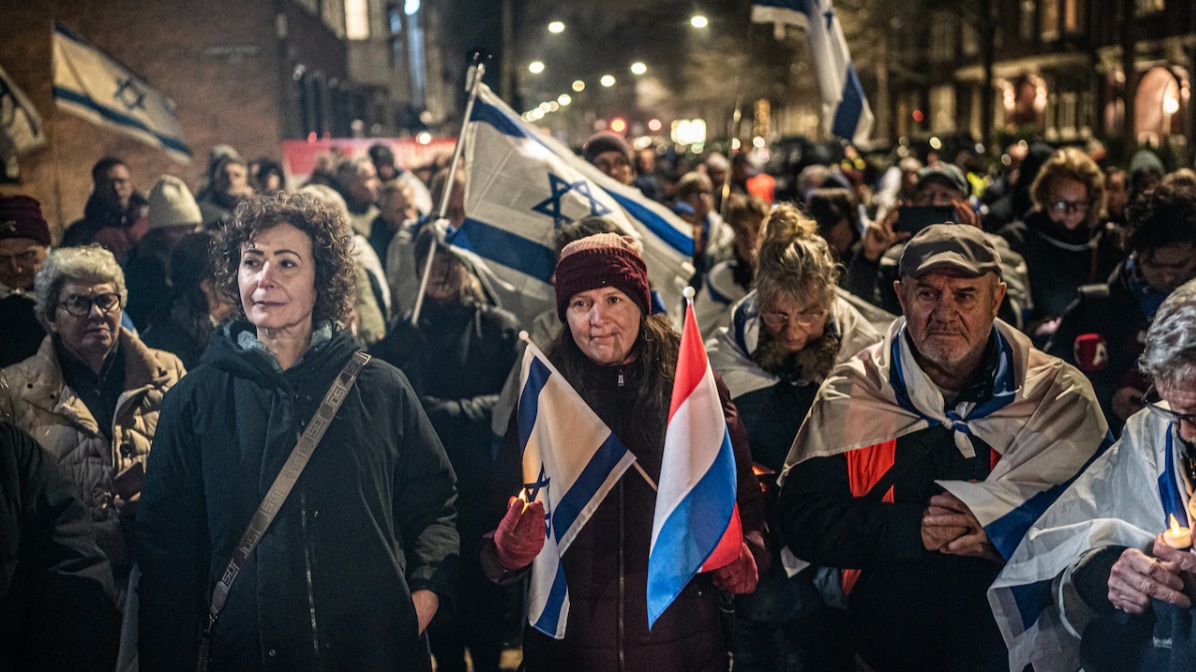
The impetus for change is evidently linked to the controversy surrounding a previous performance by Shai Abramson, a cantor affiliated with the Israeli army, during a Hanukkah concert. This led to fierce protests and a heated political debate in the media. Supporters emphasised: this concerns a religious singer, not politics.
Critics pointed out that Abramson's position within the Israeli army makes a stage in Amsterdam incompatible with the conflict in Gaza. The issue became a symbolic case in broader debates about Israel, Gaza, and the role of cultural institutions. This controversy provided the impetus for a policy change, likely even to make Abramson's future performance impossible in advance.
The core of the change: “indirect involvement” and “serious violations” are now counted as criteria for excluding someone. But how do you determine such a thing without a court or an international body acting as an authoritative arbiter?
The problem shifts from “who is allowed on stage” to “who has played an indirect role in an international crime.” And that is where the subjective interpretation begins: what is “indirect”? Who judges that? And on what legal basis?
In a world where states frequently make accusations regarding human rights and war crimes, every artist with even a distant association with a conflict would have to be screened. That is practically unfeasible and artistically undesirable.
Consider a hypothetical scenario: the Berliner Philharmoniker gives a benefit concert for Israeli hostages. Is that humanitarian work or political support? If a musician donates to a charity such as the Jewish National Fund, should that be viewed as “indirect involvement”?
Such questions have no objectively binding answer. What is a gesture of solidarity to one person may be a political act to another. A concert hall that must assess this automatically enters the realm of political interpretation.
In the current geopolitical reality, accusations of violations of international law are widespread: Russia in Ukraine, Iran, China, the United States, Israel, etc. Consistent application of such a criterion would mean that a significant portion of the international music world would have to be screened. Practically unfeasible and artistically undesirable.
Historically, major concert halls adhered to a simpler and more robust principle: artistic neutrality. Musicians are judged on their art, not on geopolitical context, unless personal criminal offences have been committed or there has been an explicit call to violence.
For decades, this principle has protected against political storms. As soon as you abandon it, a concert hall becomes a forum where political loyalty sets the agenda.
The current step appears to be an attempt to lay a policy foundation for action based on political or moral objections. However, such a foundation only works if it is clear, objective, and legally defensible. That is lacking in this formulation.
It is perhaps understandable that the Concertgebouw responds to protests and public pressure. But the question remains: is a cultural institution the right arena to determine geopolitical responsibility?
A music palace is not a court, nor a parliament. It is a place where people listen and where the language of Bach, Mahler, and Mozart sometimes resonates more strongly than the language of diplomacy and conflict.
If a concert hall begins to determine which musicians are morally permissible based on geopolitical interpretations, it shifts from a cultural platform to a legitimation institution. That is a risk that no venue, however prestigious, should take.
The ambition to channel protests and set moral boundaries is commendable in itself. However, the path to that ambition must not lead to an institutional translation of political loyalties into artistic access. A cultural institution must, above all, keep music, quality, and accessibility central. Granting “moral access” based on geopolitical judgments undermines its own mission.
My appeal to the Concertgebouw: stick to artistic neutrality as historically proven. Rather, work with clear, verifiable, and legally defensible criteria: for example, exclusion in the event of concrete, legally established convictions by recognised courts; exclusion in the event of explicit calls for violence; and a transparent, publicly empowered review or appeal system.
Establish clear rules and communicate them clearly, including how they are enforced and the supervision applied.
To conclude, a music palace must program music, not geopolitical legitimacy. If we allow art institutions to weigh political loyalties, we lose what makes a concert hall so unique: a heaven where the voices of composers and musicians can rise above all political issues.
If the Concertgebouw is afraid of discussion and protest, that in itself can be a reason to cherish the classical core value: art before politics. Let the concert hall not become a courtroom; let it remain a place where music steers the conversation, not where political logic determines the program.
Oscar Hammerstein is a prominent Dutch public figure and retired lawyer. He has had a long career in the legal industry and has a strong entrepreneurial spirit. He is professionally skilled in Arbitration, European Law, Construction Law, Dispute Resolution, and Contract Law. His previous contribution can be found here.