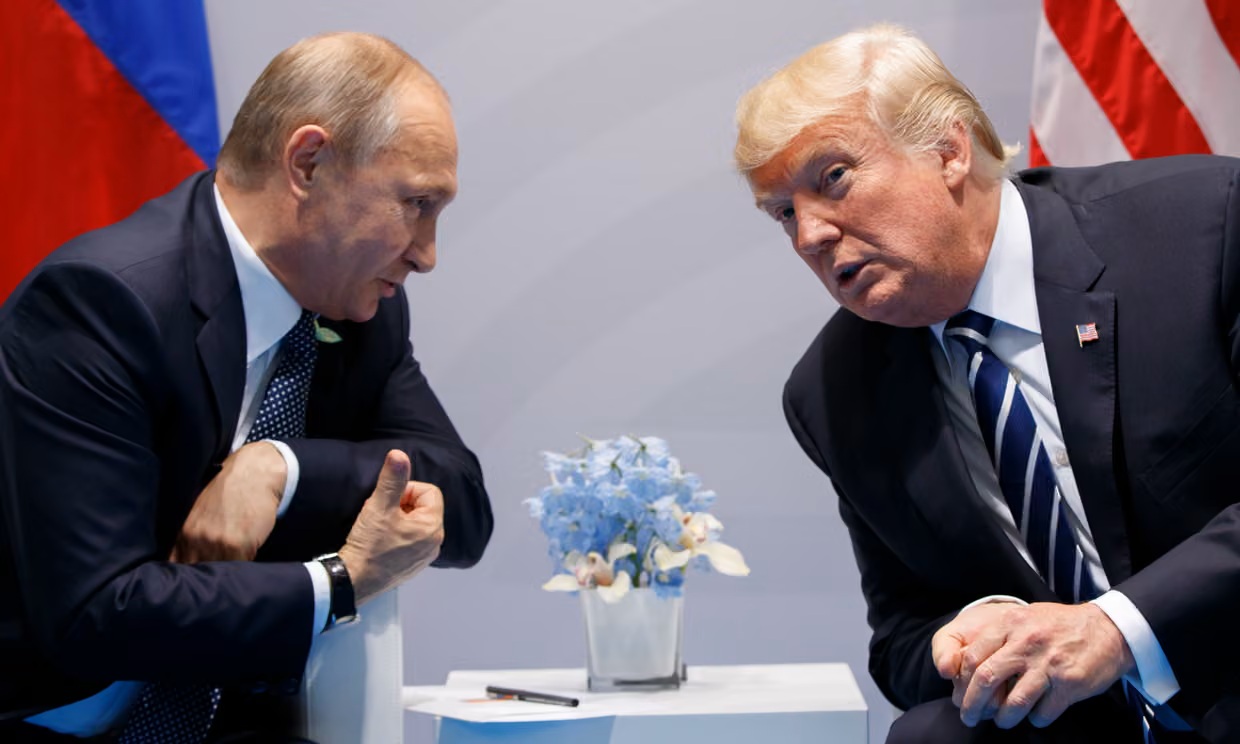
Amid the ongoing Ukraine peace deal saga, Russian troops have made tactical gains in Eastern Europe. Although the capture of Pokrovsk in the Donbas and Vovchansk in the Kharkiv region has undoubtedly improved Moscow’s negotiating position, the question remains: Is the Kremlin really interested in reaching a peace – or at least a ceasefire – agreement with Kyiv?
By Nikola Mikovic
While the world was busy monitoring US President Donald Trump's special envoy Steve Witkoff and son-in-law Jared Kushner’s flight to Moscow, as well as their stroll across Red Square with Russian presidential envoy Kirill Dmitriev, the Russian military seized more territory in Ukraine.
Reports suggest that after a year and a half of fighting and heavy casualties, Russian troops have established control over the city of Pokrovsk. For Russian President Vladimir Putin, it is a “good base” for achieving all the objectives of his “special military operation” in Ukraine.
Critics would argue that Russia was closer to achieving its goals when its troops were standing on the outskirts of Kyiv in 2022. However, after withdrawing Russian forces from around Ukraine’s capital – calling it a “goodwill gesture” – the then Russian Defence Minister Sergey Shoigu said that Moscow would focus on capturing the Donbas instead. Ever since, the Russian military has been storming heavily fortified Ukrainian positions in the region, suffering heavy losses and making only insignificant tactical gains.
Almost four years after launching the invasion of Ukraine, Putin has not achieved any of his strategic goals in the former Soviet republic. The Kremlin now seems to be desperately seeking the United States, which its propaganda has repeatedly labelled as Russia’s greatest geopolitical adversary, to help end the conflict in a way that would allow Putin to save face.
Since Trump returned to the White House, Russian media has noticeably changed its rhetoric regarding Washington. Now it is Europe, rather than the United States, that is Moscow’s “greatest opponent.” Russian officials and analysts often portray European powers as major “obstacles” to achieving peace in Ukraine.
But how likely is it that the United States, which Belarusian President Alexander Lukashenko has once labelled as “the greatest empire and the leading country in the world”, cannot impose its will on its European partners?
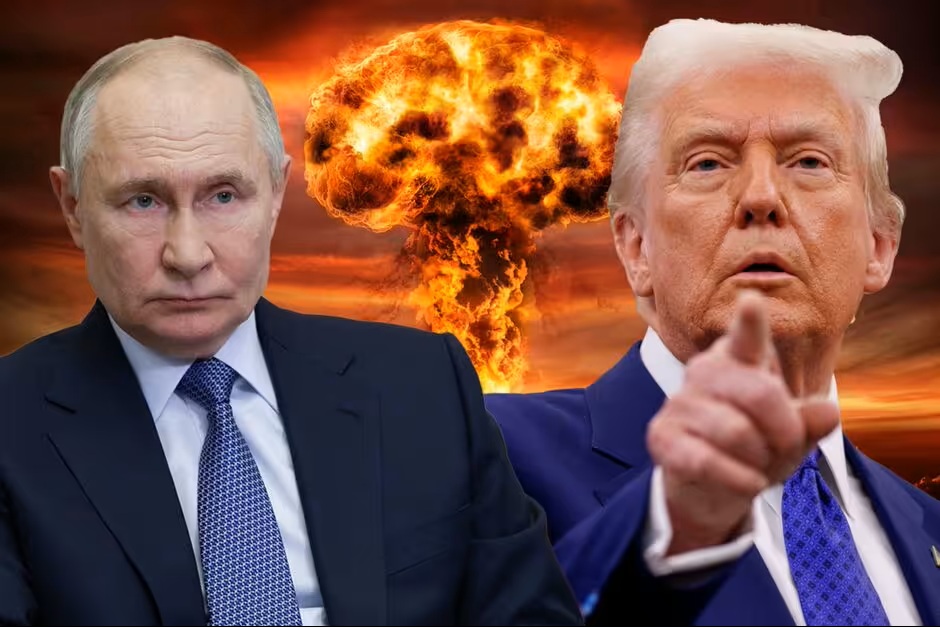
It is entirely possible that Donald Trump, repeatedly presenting himself as a leader who “ended eight wars,” is genuinely interested in either ending the conflict in Ukraine or at least freezing it, as such a move could earn him the long-coveted Nobel Peace Prize.
Wars are also good for business, especially for the military-industrial complex. Having the largest military-industrial complex in the world, the United States is almost certainly benefiting from selling weapons to its European allies, with countries like Poland making massive purchases of American military hardware.
European countries, on the other hand, have not only been buying weapons from the US but have also started developing their own production capacities, preparing for a potential direct military confrontation with Russia.
At the same time, Moscow is also heavily investing in its own military-industrial complex. Despite Western sanctions, Russia’s economy is still holding up – in relative terms – mainly thanks to its “war mode.” Policymakers in the Kremlin are fully aware that a potential peace or ceasefire deal that does not include sanction relief could have a profound impact on the Russian post-war economy. To avoid that, Moscow seems to be pushing for an agreement on its own terms. Alternatively, if no resolution is reached, it will simply continue fighting the war.
Although Ukraine, more than any other actor, has the strongest reasons to end the bloodshed, Kyiv is not willing to compromise with the Kremlin at any cost. Firmly backed by European powers, Ukraine has repeatedly stated that it will not make any territorial concessions to Russia.
The fact that President Volodymyr Zelensky, along with other Ukrainian officials, has started talking about “difficult decisions” they might have to make, could indicate that they are preparing the population for a deal that may not be very favourable for Kyiv.
But even if that happens, the war is unlikely to end. Russian representatives have consistently praised Trump for reaching a “peace deal” between Israel and Hamas, pointing out that what happened in Gaza could serve as a model for Ukraine. In reality, despite the ceasefire, Israel continues to bomb Gaza.
Suppose Moscow and Washington reach a similar deal on Ukraine. In that case, the war is likely to turn into a low-intensity positional warfare, similar to what occurred during the Minsk Agreements era from 2015 to 2022. In the meantime, both Russia and Ukraine, as well as European countries, will almost certainly prepare for an inevitable new war.
One of the significant reasons why Trump can only freeze, but not end, the conflict in Ukraine is that, under the current conditions, neither Moscow nor Kyiv has suffered a decisive defeat. But even if Russia eventually manages to make significant strategic gains and capture some of Ukraine’s large cities, Kyiv is still unlikely to accept what would be widely perceived as capitulation. Instead, it is likely to follow the Azerbaijani model.
After the First Karabakh War ended in 1994, Baku never recognised the loss of its territories and maintained its claim over the areas under de facto Armenian control. It waited for the right moment, and nearly three decades later, in 2020 and 2023, it regained them.
Unlike Azerbaijan, which at the time had a relatively young population, Ukraine is facing a severe demographic crisis. Following Kyiv’s decision to allow men aged 18-22 to leave the country, Ukraine faced a “youth exodus.”
If a deal with the Kremlin is reached and borders are widely opened, hundreds of thousands, if not millions, of people are expected to flee abroad. Under such circumstances, would Ukraine be in a position to fight another war?
For all these reasons, neither party directly or indirectly involved in the conflict in the Eastern European country is genuinely interested in ending the hostilities. The only ones who would like to see an end to the bombing, shelling, drone attacks, and widespread destruction are the Ukrainian and Russian people. But they are not the ones making the decisions.