The Middle East is entering a dangerous new phase where the collapse of old deterrence structures has unleashed unprecedented unilateral power. In this emerging landscape, victory itself has become the greatest threat to regional stability.
By Hiba Abdulwahhab
The Middle East is not an arena of random chaos; it is a carefully engineered system built on controlled instability. What appears to be disorder is, in fact, a deliberate architecture designed to prevent the emergence of any single hegemon.
The wars of 2023–2025, the collapse of old alliances, and the shifting balance of power have only made this clearer. Beneath all the turbulence lies one dangerous truth: the greatest threat to the region is victory itself.
No actor, whether Israel, Iran, the Gulf states, or even a newly emerging Sunni-led Syria, is permitted to win decisively. The region protects itself not by resolving conflicts but by ensuring that no state becomes strong enough to dictate outcomes. Stability comes not from peace, but from permanent equilibrium through managed uncertainty.
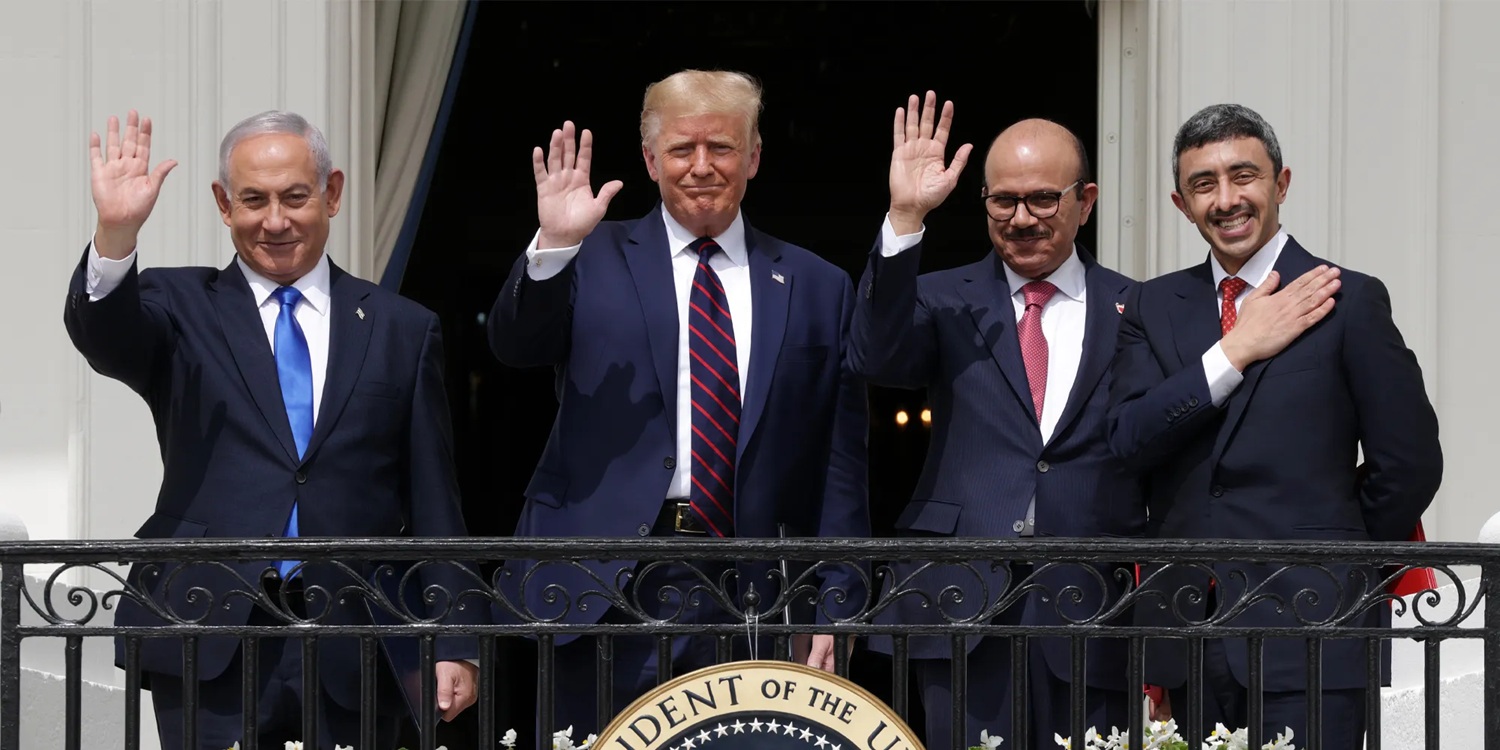
Nothing revealed this more clearly than Israel’s strike on Qatar, alongside Israel’s killing of Hassan Nasrallah and the removal of Hezbollah as a significant regional threat, one of Iran’s most aggressive proxies. The events in Lebanon and Qatar were not isolated incidents; they represented a seismic shift in the region’s unwritten rules of deterrence.
For decades, Hezbollah served as Iran’s most powerful card and the backbone of the so-called Axis of Resistance. Its collapse shattered that axis and opened unprecedented strategic space for Israel.
And then Israel struck Qatar
Qatar, the United States’ closest diplomatic partner in the Gulf and host of the region’s most significant American base, had long been viewed as insulated from confrontation. Israel’s willingness to target it anyway revealed a new and unsettling reality: Israel now operates with a level of unilateral confidence unrestrained by alliances, regional sensitivities, or older geopolitical norms. It acted because it could.
The strategic implications of Israel’s strike on Qatar forced a reevaluation across Gulf capitals, not necessarily through explicit statements, but through the logic of regional security. The incident exposed an emerging imbalance: with Hezbollah weakened, and Iran constrained both internally and regionally, Israel became the only actor capable of projecting force across the region without meaningful pushback.
In this context, Iran’s continued though diminished presence serves as a structural counterweight that complicates unilateral Israeli dominance. A weakened Iran can be managed; a collapsed Iran would remove one of the few remaining constraints on Israeli power, creating a vacuum stretching from Baghdad to Beirut. It is this potential vacuum, not any affinity for Iran, that shapes Gulf strategic calculations.
The collapse of Iran would not be a contained domestic crisis but a regional earthquake that would shake the entire Middle East, with the Gulf states absorbing its first and most dangerous shockwaves. Collapsing states do not fall alone; they pull parts of the region down with them, and Iran, given its transnational political project cultivated since the fall of the Shah, would generate consequences far beyond its borders.
The experience of Iraq after 2003 showed that even massive turmoil can sometimes be partially contained by neighbouring states. Yet the aftermath of the Arab Spring demonstrated that major state failures produce far more complex and prolonged trajectories, as seen in Syria, Yemen, Libya, and Sudan.
For this reason, the disintegration of Iran today would unleash instability far beyond the region’s ability to contain it, sending dangerous reverberations into the heart of the Gulf. At the same time, Iran’s absence would enable Israel to rise as an unrestrained dominant power, precisely the scenario Gulf capitals fear most.
In this shifting landscape, Syria has re-emerged as a central arena for regional influence. After years of stagnation, the erosion of Bashar al-Assad’s regime and the collapse of the Shia Crescent created space for new political actors.
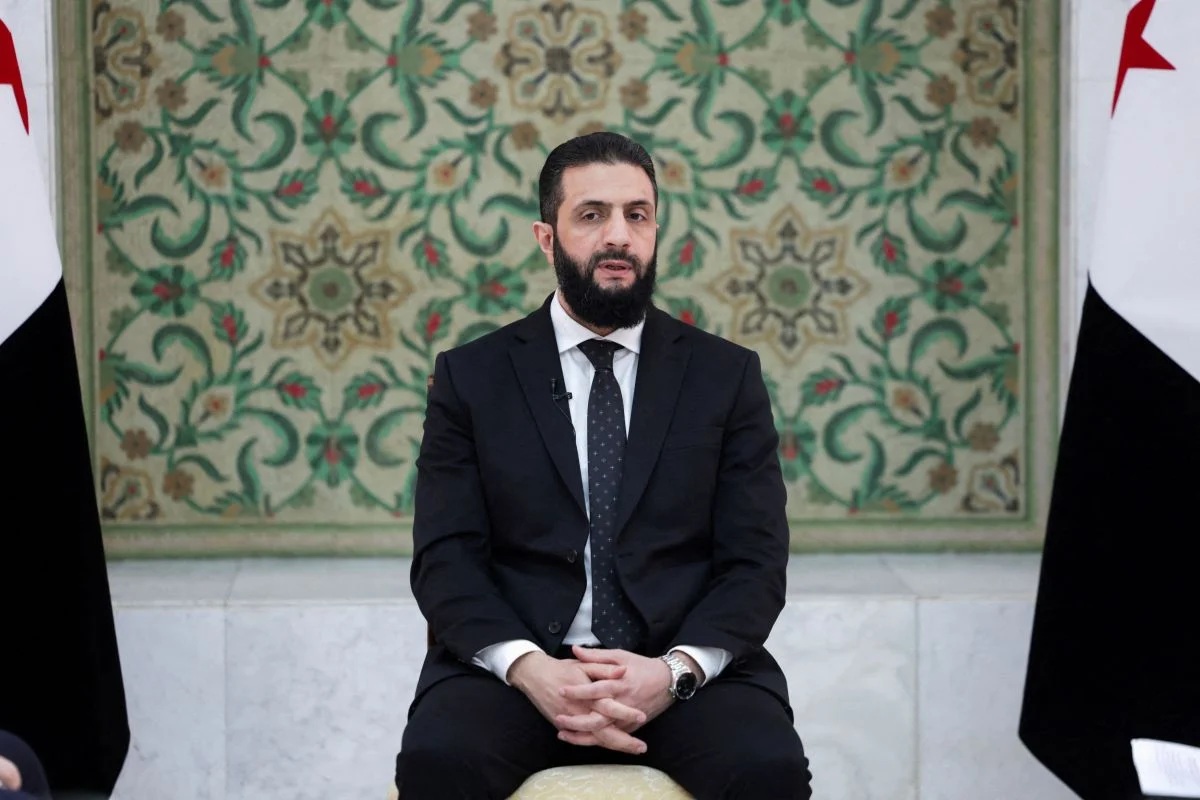
At the forefront is President Ahmed Al-Sharaa (formerly al-Joulani), who has transitioned from militant commander to political figure, an evolution few would have imagined a decade ago.
Al-Sharaa has become one of the most influential emerging leaders in the Levant. His rise reflects a broader trend: the quiet formation of new Sunni leadership structures, directly supported by the United States, the Gulf States, and parts of the international system. A Sunni-led Syria backed by regional powers is no longer hypothetical; it is an unfolding political reality.
A Syria led by figures such as Al-Sharaa presents both possibilities and risks. For the Gulf, it represents an opportunity to dismantle Iranian influence in the Levant and close the chapter on the Shia Crescent that once structured regional power.
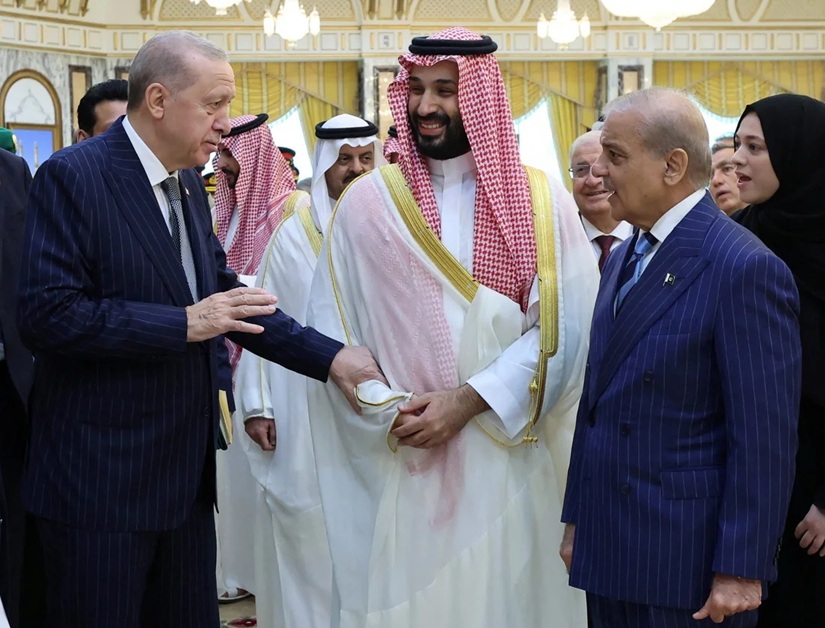
More broadly, the consolidation of Syria as a Sunni-led state—geopolitically aligned with Jordan, Saudi Arabia, and Turkey would signal the emergence of a new Sunni crescent, reshaping regional balances after years of Iranian dominance.
For Israel, however, this trajectory is deeply unsettling. A coherent Sunni bloc, connected through state-to-state coordination rather than militias and backed by key regional actors, could generate the most consequential geopolitical realignment since the U.S. invasion of Iraq.
Thus, Syria is being allowed to re-emerge, but within limits. Strong enough to counter Iran, yet not strong enough to reshape the regional balance.
No country illustrates the region’s no-victor logic more clearly than Iraq. Iraq is not being rebuilt; it is being maintained in a calibrated state of managed equilibrium. Its political system is intentionally fragmented:
• The Shi‘a are powerful but divided,
• The Sunnis are present but not dominant,
• The Kurds are autonomous but not independent.
The state is strong enough to avoid collapse but too weak to pursue an independent regional role.
Every actor needs Iraq, but none can be allowed to control it:
Iran needs Iraq as a buffer and economic lifeline.
The Gulf needs Iraq as a barrier to Iranian expansion.
Israel needs Iraq to remain fragmented to prevent a Sunni resurgence.
The United States needs Iraq to be stable enough to avoid major shocks but not strong enough to alter the regional balance.
No one wants to lose Iraq, but no one is allowed to win it.
Lebanon and Yemen embody the same logic. Lebanon remains in a permanent crisis, neither collapsed enough to be irrelevant nor stable enough for any faction to dominate. Yemen, if unified, would give Saudi Arabia overwhelming regional power; if it collapsed entirely, it would empower Iran. Thus, Yemen remains suspended between war and resolution by design.
What many describe as chaos is, in reality, the region’s operating system. The Middle East avoids outcomes because outcomes produce winners, and winners destabilise the entire architecture.
Wars do not end.
States do not fully collapse.
Rivals do not achieve a decisive victory.
The region’s security depends on preventing resolution.
Victory is dangerous.
Defeat is unacceptable.
Thus, the Middle East remains permanently in the grey zone, where no one wins, no one loses, and the game continues indefinitely by design.