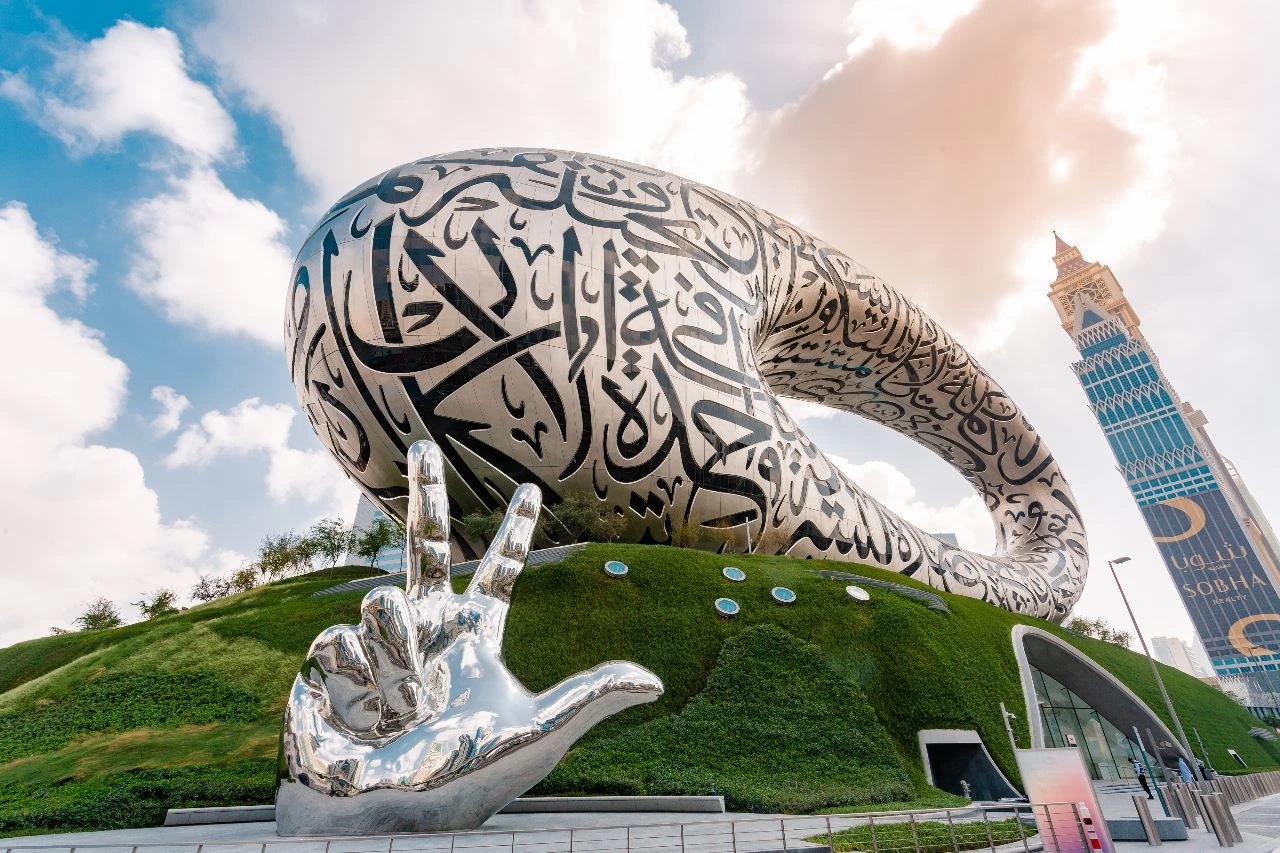
I was invited to an Arabic-script-based event once, and something very notable emerged. The introductory speaker, Dr Iman Negm, complained that the cultural establishment in Egypt does not consider Arabic calligraphy an example of pictorial art.
By Emad Aysha
The first speaker, Muhammad Baghdadi, a distinguished literary figure, echoed similar complaints, noting that calligraphy was on its last legs in Egypt not long ago. There were no proper exhibitions showcasing Arabic script alongside paintings, handicrafts, and ancient Egyptian artefacts.
Thankfully, Baghdadi was able to turn things around at the last minute, but how does one explain this malign neglect to begin with? You could chalk it down to the usual bureaucratic ineptness and lethargy that Egypt and much of the Arab world are notorious for. But there could be more to it than that.
The initial comments dovetail with what I’ve learned, through academic happenstance, about Sufism in the Arab literary establishment. Academics refuse to categorise Sufism as an artistic and literary movement on a par with surrealism, Dadaism, Cubism, and Impressionism. But that’s wild!
Sufism operates primarily through literature and art, from poetry and storytelling to morality plays, and all of it is performed publicly to help cleanse people of worldly temptations and political grievances.
Arab historians of poetry, and modernist Arab poets – including Christians, secularists and even scientists – all say (over and over again) that the most consistent, innovative and productive literary tradition in Arabic history has been Sufism.
Modern poets actually praise Sufis for how radical they were in their poetry, breaking all the sacrosanct norms of Arabic poetic form, and try to revive Sufi techniques in their own poems. Sufism is the artistic movement par excellence. So why this bizarre academic neglect?

ROOTS OF PROGRESS: Dr. Ola Elaboudy [right] at the event talking about the Sinai linguistic overlap between Arabic and ancient Egyptian.[My photo]
The only answer I can offer is an obsession with modernity, a cultural inferiority complex vis-à-vis the West. To modernisers, Sufism doesn’t count as a literary movement, ‘only’ a religious movement.
The same with calligraphy, which is a visual art form, but since it is not ‘modern’ art that is representational art depicting people and places, it doesn’t count by their jaundiced criteria. Hence, there is a neglect of exhibitions and sponsorship of actual calligraphers.
They want Egypt to be modern, so they only sponsor modern art exhibitions and, perhaps, some things that bring in revenue, like handicrafts and ancient Egyptian items, no matter how traditional those are. Would foreigners pay for calligraphy in a language they can’t read?
The issue of Arabic script is more pertinent than you would at first think – myself included. Baghdadi explained that part of the motive the Mongols had in throwing books in the river in Baghdad was to end our written language, and so destroy our identity and ability or desire to fight back.
Literacy is the true preserver of national character, language and history. At school, we learned that the Mongols were trying to make Arabs ignorant of science and philosophy, to control them better. But this makes more sense.
What a genius interpretation of history! He also explained that Cairo assumed the role after what happened to Baghdad, with many great calligraphers taking refuge here and new hybrid scripts developing, combining new Egyptian and old Kufic styles.
This process continued in modern history as well, when Atatürk transformed Turkey into a republic and, critically, Latinized the country’s language. Calligraphers from Turkey came to Egypt and thrived during the monarchical period, with their contributions appearing in the decorations of new city districts.
My good friend Dr Ola Elaboudy (see above) was one of the panellists, an Egyptologist from Cairo University. She traced the abgadiya (phonetic alphabet) of the Phoenicians and Arameans to the labours of a group of Arabs in ancient Egypt's Sinai.
They were employed as labourers on Egyptian monuments. Still, in the process, they learned hieroglyphics. They tried to simplify it for their own Semitic language and produced a proto-script that later evolved into (or contributed to) the above-mentioned scripts.
Those, in turn, morphed into Nabataean writing, which later gave rise to the Arabic script. Dr Ola also argued that the basic grammar of ancient Egyptian was the same as that of Arabic, with some linguistic features unique to Egyptians that persist in our dialect.
But if the languages hadn’t been similar to begin with, had common roots, the Egyptians would have never taken up Arabic to start with. (Ancient Egypt did adopt foreign words during its imperial reign, and desert Arabs have continually migrated there and to Sudan.)
Egypt’s the melting pot. It always has been, and always will be – if the literary and art establishment let it live up to its heritage, and potential. The salutary role of elites cannot be underplayed.
Again, history is a guide in this regard. As Dr Ola documented, while the Coptic Church preserved the ancient Egyptian language, at the spoken level, they were too concerned with simplification, using hieratic and demotic, and in the process adopted Greek letters.
Much the same is true today regarding English and French in education, at school and university, which are elevated over Arabic. Dr Negm pointed this out from the outset in her opening remarks.
The person who warned about all this, from early on, ironically, was Taha Hussein. I learned this while shopping for second-hand books on education. The seller told me that Taha Hussein was complaining about the elevation of English and French over Arabic, specifically the Arabic teacher, a ploy by the British when they were here.

JANUS-FACED EDUCATION: Taha Hussein's still controversial book [left] and a new book by Ramy Galal prophetically titled 'The Future of Egypt's Culture: An Age of Anxiety'.
The Arabic language teacher has been a joke ever since. It didn’t register immediately, but I realised he was referring to Taha Hussein’s The Future of Culture in Egypt (1938), often regarded as an anti-Arab diatribe. But it wasn’t—just a toned-down critique of imperialism, and implicit collaboration.
The book was practically a work of science fiction, anticipating what actually happened in Egypt, with the jaundiced education system we have now!