Extremely disturbing reports came again from Iran in recent days. Scattered and fragmented, but more poignant for that very reason. Images of streets littered with bodies, asphalt running red with blood. Reports of heavily armed units deliberately firing on protesters with a DShK – a lethal anti-aircraft weapon. And interspersed with them were short messages that reached us via WhatsApp, not as news but as cries for help, in stark sentences:
By Farinaz Aryanfar
"I think I need surgery on my leg." "We are grieving. No further explanation. None is possible and unnecessary. The context is painfully clear.
After days of mass protests, people were pushed back into their homes, prisons, and hospitals with overwhelming force. The streets in many cities are now largely quiet. Not because the resistance has disappeared, but because it has been brutally suppressed and transformed.
At several universities, including the medical universities of Tehran and Shiraz, strikes and protests have broken out to demand the release of arrested doctors and students. At the funerals of the deceased protesters, families mixed grief and resistance: amidst tears and applause, slogans were chanted, and their loved ones were called a "sacrifice for the country."
At the same time, a deep sense of despondency prevails among many Iranians: the feeling that they have failed again, that the authoritarian state is too powerful. It is mixed with hope and fear: hope for international pressure, but also the fear that a possible American attack will plunge the country further into chaos. And the question that lingers: who can—or will—help?
Internationally, there has indeed been some movement. New steps have been taken at the diplomatic level: last month, the Iranian Revolutionary Guard was placed on the EU terror list, and an emergency meeting of the UN Human Rights Commission was held to discuss the situation. These formal responses demonstrate that the events have not gone unnoticed.
In addition, statements by US President Donald Trump received global attention, urging Iranian protesters to continue their protests and suggesting they could count on his support, including military intervention, something that seems closer again this past week.
They don't want "saviours"
Within the Iranian diaspora, the developments are being received with mixed feelings. Some Iranians see the steps taken as much-needed international recognition and support. Others see them as insufficient or fear they remain symbolic. This division is important to acknowledge: are these international responses actually helping the people of Iran?
Whether a US military attack on Iran would improve the situation is questionable. What we do know is that such attacks have not yet occurred, and that Trump, as an international actor, is difficult to consider reliable given his actions on the world stage. For this reason alone, it is risky to tie the hopes of millions of people to statements whose consequences are unpredictable.
This very uncertainty explains why some Iranian intellectuals are sceptical of foreign intervention, especially when it comes from states that themselves violate human rights, legitimise wars, or structurally oppress women. They don't want new "saviours" with their own geopolitical agendas, but rather space to shape their own future.
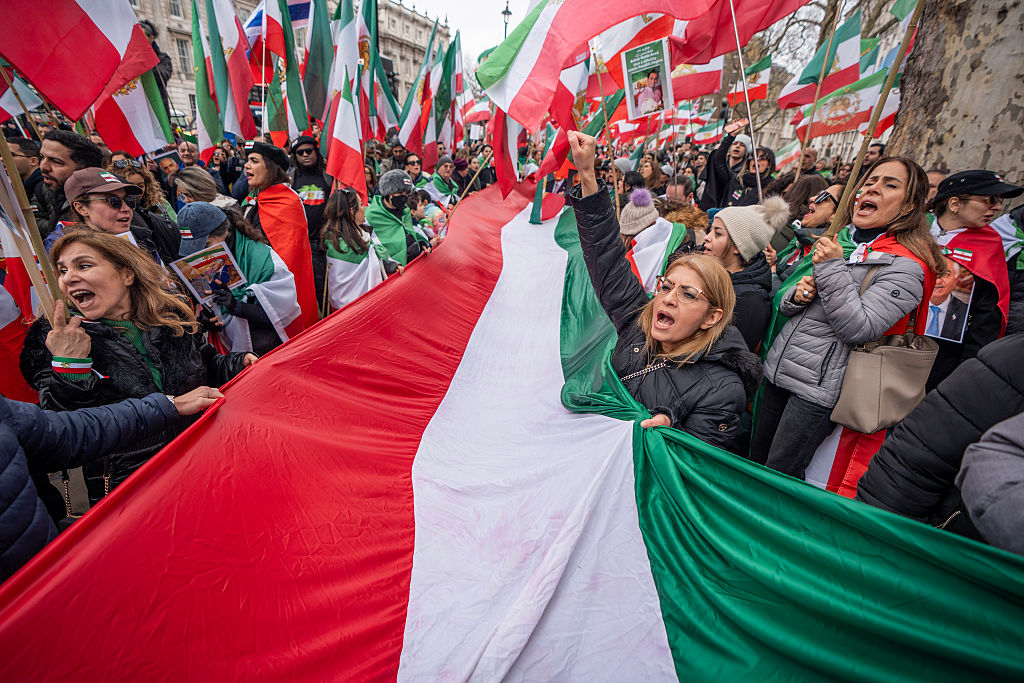
At the same time, a different perspective is emerging. At demonstrations organised by supporters of Reza Pahlavi, the son of the former king (shah), Israeli and American flags are waved, and open calls are made for both American military intervention and Pahlavi's installation.
What this means varies widely: some supporters see him as a future monarch, others as a leader of a transitional period after the current regime, and still others as an international spokesperson who, with the support of the US and Israel, can force change.
However, there are deep divisions among Iranians, both in Iran and in the diaspora, regarding his role and legitimacy. For many demonstrators in Iran, the protest is primarily about resistance to the Islamic Republic and a cry for freedom, not about appointing a new leader. Precisely for this reason, this requires context and analysis, which is often lacking.
Satelite channels
For over twenty years, the public debate about Iran, both within Iran and within Iranian communities in exile, has been dominated by Persian satellite channels and media outlets funded by Saudi Arabia, Israel, and the right-wing extremist movement in the US.
These channels do something the Iranian regime does not: they address corruption, articulate anger, and debunk propaganda. This explains their popularity. But there's a trade-off: they almost consistently tell a single story about Iran's future, one in which only one alternative exists, and other voices are structurally absent.
This one-sidedness is further reinforced through social media, which receives significant funding. Young people in Iran, cut off from independent information by censorship and internet blockades, are presented with a highly simplified image. In this narrative, Reza Pahlavi is portrayed as a saviour.
This is where the problem lies: the erasure of internal differences and plurality among Iranians. Yet, a diversity of ideas, voices, and dreams for the future is the essence of what freedom means.
This is not an abstract media problem. It strikes at the heart of what is at stake in Iran. A society fighting for dignity, freedom, and self-determination is in danger of once again becoming a plaything of forces that speak about Iranians, rather than with them. In practice, people in Iran must not only resist their own oppressive state but also navigate external power blocs that exploit their struggle for their own ends.
Doing nothing is not an option
In my work with international NGOs, I experience genuine solidarity and a willingness to act. At the same time, I see the harsh reality: direct support from Western governments, international NGOs, or public human rights funds to civil society movements in Iran can endanger people's lives.
The regime can use any visible foreign involvement to label activists as "spies," resulting in arrests, torture, or worse.
But doing nothing is not an option. If direct support is dangerous, another form of assistance is obvious: actively countering disinformation and one-sided narratives. This requires targeted investments in independent analysis, fact-checking, and secure media platforms, as well as the deployment of expert Iranians journalists, researchers, and digital experts who can do this work without becoming targets themselves.
Anyone who wants to support Iran in its path toward democracy and freedom will have to look beyond statements and moral support. Concrete plans are needed to enable independent information and to protect the space for journalists, unions, women's organisations, and students to organise and express themselves freely.
And there is a need for international pressure, including the discussion of free and independent elections under the auspices of the United Nations, not to impose a future on Iranians, but to give them the space to shape that future themselves.
Farinaz Aryanfar has 20 years of experience in humanitarian and development aid. She is currently Unit Manager @OxfamNovib. This is her first contribution to The Liberum.