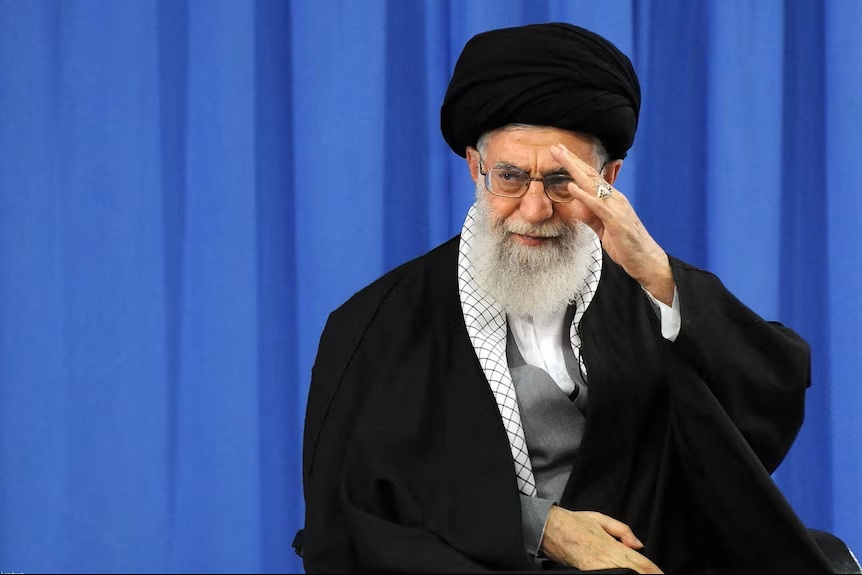
A dramatic escalation in Middle East tensions transformed into outright war when U.S. and Israeli forces launched a coordinated military offensive against Iran. The campaign culminated in the reported death of Iran’s Supreme Leader, Ali Khamenei; an event that marks not merely a battlefield milestone, but a rupture in the strategic architecture of the region and beyond.
By Rafic Taleb
The assassination of a sitting Supreme Leader is unprecedented in the modern Middle East. It signals a decisive shift from shadowy confrontation and proxy conflict to an overt regime-decapitation strategy. The geopolitical ramifications extend far beyond Tehran, reshaping deterrence theory, alliance systems, and the future of norms of state sovereignty.
Previous Western narratives framed tensions with Iran primarily around its nuclear program. Yet analysts argued in earlier strategic assessments that the underlying objective among certain policy circles in Washington and Tel Aviv was always broader: neutralising the ideological and institutional core of the Islamic Republic itself.
Under President Donald Trump and Prime Minister Benjamin Netanyahu, regime durability—not merely uranium enrichment levels—was increasingly seen as the central challenge. A nuclear-capable clerical regime would become exponentially more difficult to deter or dismantle. From this perspective, escalation was framed as pre-emption; regime destabilisation as strategic necessity.
Reports in 2025 suggested that Washington had previously restrained Israeli plans targeting Khamenei, wary of uncontrollable escalation. By early 2026, however, calculations appear to have shifted. Diplomatic tracks had collapsed.
Intelligence assessments warned of narrowing windows of opportunity. What was once considered too destabilising was reinterpreted as decisive action capable of reshaping the regional balance before Iran crossed irreversible strategic thresholds.
The immediate fallout has been severe. Iranian missile and drone retaliation targeted Israeli territory and U.S. installations across the Gulf. Air defence systems were activated region-wide, and civilian casualties mounted.
Yet the deeper shock lies within Iran’s internal political order. The office of the Supreme Leader was not merely symbolic; it served as the ultimate arbiter of military, judicial, and ideological authority. Its sudden vacancy creates a critical crisis of cohesion, raising concerns about the stability and future direction of Iran's internal politics.
The Assembly of Experts now faces intense pressure to appoint a successor, but the process unfolds amid factional rivalry. The IRGC, clerical elites, reformists, and technocrats all have stakes in the transition, raising questions about whether a swift consolidation or a contested succession will dominate, and how this impacts Iran’s internal stability.
Simultaneously, resistance movements have accelerated their positioning. Kurdish factions in western Iran have announced coordinated movements into Kurdish-majority cities, declaring their intention to hasten the collapse of the existing order. The National Council of Resistance of Iran, led by Maryam Rajavi, has declared the formation of a provisional government aimed at transferring sovereignty to the Iranian people and establishing a democratic republic.
Calls for pluralism, human rights, and free elections are being amplified amid the vacuum. Whether these initiatives represent viable transition frameworks or aspirational declarations depends on their ability to secure territory, legitimacy, and international recognition.
Regionally, the destabilisation of Iran’s central command reverberates across its network of aligned actors. Hezbollah in Lebanon, Iraqi militias, Syrian-linked formations, and Yemeni factions now face strategic ambiguity. Their responses could significantly impact regional stability, prompting the audience to recognise the broader consequences of this event for international security.
Globally, the implications are profound. The targeted killing of a constitutionally entrenched head of state raises questions about regional responses and international reactions, including condemnation from Russia and China, which warn that such unilateral decapitation strategies could destabilise the international system.
If such actions become normalised instruments of policy, deterrence theory will adapt accordingly, and vulnerable regimes may double down on nuclear acquisition as insurance against external overthrow.
Energy markets have reacted sharply, with fears centred on potential disruptions to shipping lanes in the Gulf. Insurance premiums, commodity volatility, and strategic petroleum calculations are already reflecting elevated risk. Europe and Asia must now reconsider engagement strategies with a potentially unstable Iran, balancing non-proliferation goals against the dangers of fragmentation.
The long-term trajectory hinges on whether Iran consolidates power or fractures. A unified, securitised Iran could lead to increased regional assertiveness, while fragmentation might trigger prolonged instability, affecting regional security dynamics and policy planning for neighbouring states and global actors.
Counter-alliances may also form. Russia and China could deepen partnerships with states wary of Western interventionism. Regional middle powers such as Turkey and India will navigate carefully, hedging between strategic blocs. The United States and Israel, having crossed a historic threshold, must now manage both deterrence credibility and escalation control.
The assassination of Ali Khamenei did not merely end an individual’s rule; it disrupted a political theology that has structured Iran’s governance since 1989. Whether this moment becomes the catalyst for democratic transition, authoritarian retrenchment, or regional conflagration remains uncertain. What is clear is that the Middle East has entered a new strategic era—one in which regime decapitation has moved from covert contingency to an overt instrument of policy.
History will likely record 28 February 2026 not simply as the beginning of a war, but as the day when the region's geopolitical grammar changed.