The South Caucasus is once again confronting a rapidly deteriorating security environment as major geopolitical rivalries unfold on its borders. To the north, the war between Russia and Ukraine continues, while to the south, the confrontation between Iran and the United States/Israel has escalated through missile strikes, drone warfare, and retaliatory operations. Wedged geographically between these conflicts, the South Caucasus faces growing risks that regional stability could unravel as tensions spill across borders.
By Vasif Huseynov
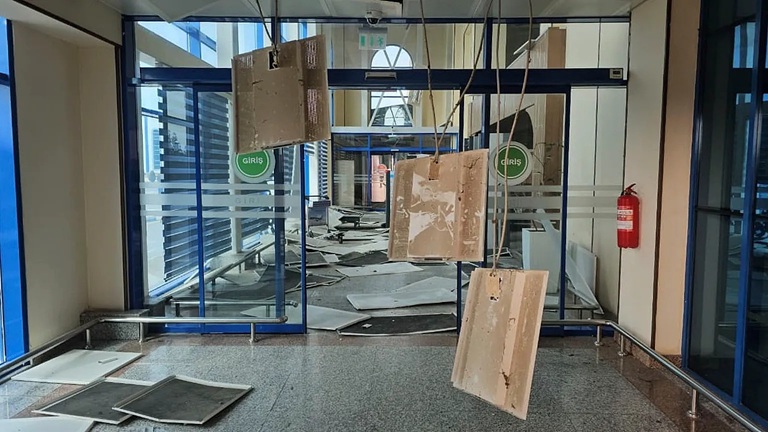
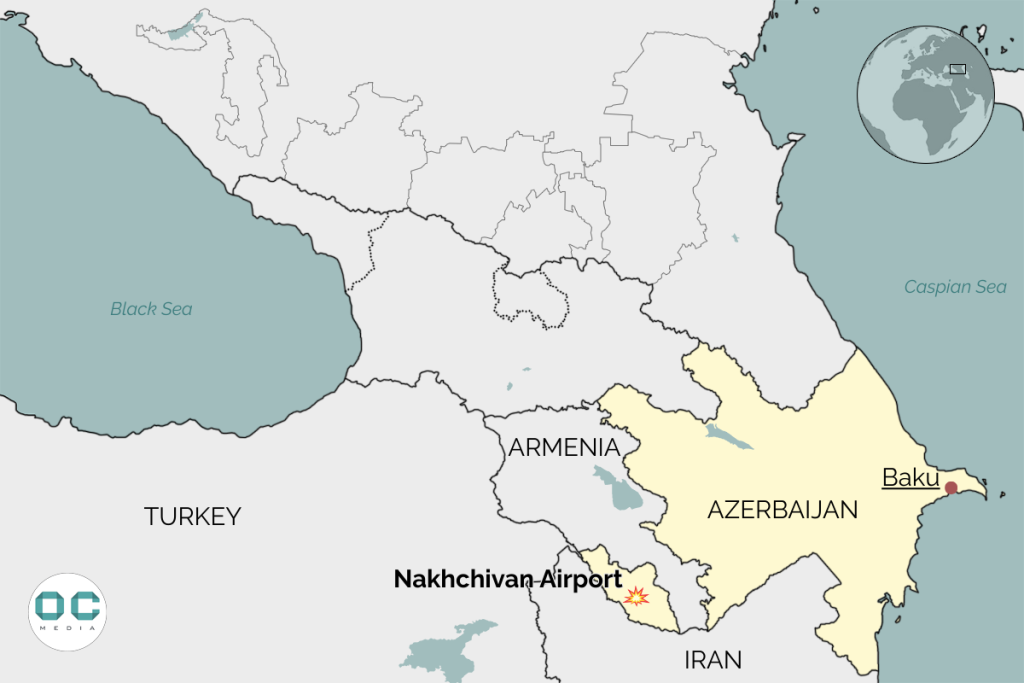
Recent developments between Azerbaijan and Iran illustrate how easily the expanding Middle Eastern conflict could destabilise the region. On March 5, several Iranian-made drones struck targets in Azerbaijan’s Nakhchivan Autonomous Republic, damaging infrastructure at the Nakhchivan International Airport and exploding near a secondary school during class hours.
Azerbaijani authorities described the incident as a terrorist attack and stated that the drones were launched from Iranian territory. The episode immediately triggered alarm in Baku and raised fears that the conflict between Iran and Israel could open a new front along the northern edge of the Middle East.
The incident occurred despite Azerbaijan’s careful efforts to remain neutral during the latest escalation between Iran and Israel. Azerbaijani officials have repeatedly emphasised that the country will not allow its territory or airspace to be used for attacks against neighbouring states.
Nevertheless, Iranian officials and media outlets affiliated with the Islamic Revolutionary Guard Corps (IRGC) have increasingly accused Azerbaijan of assisting Israel during the twelve-day war between the two countries in 2025. Such narratives have gradually shifted from rhetorical accusations toward arguments that could justify a more confrontational policy toward Baku.
The drone strikes, therefore, occurred against the backdrop of already fragile relations between the two neighbours. Tensions had been building in recent years, largely driven by Iran’s concerns over Azerbaijan’s close strategic cooperation with Israel and the broader geopolitical shifts that followed the Second Karabakh War.
After Azerbaijan restored control over its territories in 2020 and consolidated this outcome through subsequent operations in 2023, the regional balance changed markedly, contributing to sharper rhetoric and increased military signalling along the Azerbaijani–Iranian border.
For the first time in the post-Soviet period, Iran conducted large-scale military exercises near its border with Azerbaijan in early October 2021, and repeated similar drills in October 2022. These manoeuvres, featuring tanks, helicopters, and artillery deployed in northwestern Iran, were widely interpreted as a rare show of force. They reflected Tehran’s unease about Azerbaijan’s growing partnership with Israel as well as its concerns about potential regional border changes involving Armenia in the context of discussions surrounding the Zangezur corridor.
This recent historical background of the Iran-Azerbaijan tensions was the reason why many feared that the drone strikes against Nakhchivan may be the beginning of violent escalation between the two countries.
Yet despite the seriousness of the March 5 incident, both sides moved quickly to prevent a deeper escalation. Iranian officials denied deliberate involvement and announced an investigation into the drone strike.
In telephone conversations with Azerbaijani leaders, Iranian representatives denied that the attacks were launched from the Iranian territory, emphasised that Tehran respects the sovereignty of neighbouring states and does not seek confrontation with Azerbaijan. For its part, Baku demanded clarification and accountability but avoided steps that could trigger immediate retaliation.
Azerbaijan also employed diplomatic gestures aimed at reducing tensions. Shortly after the incident, President Ilham Aliyev spoke by phone with Iranian President Masoud Pezeshkian to discuss the situation. Soon afterwards, Azerbaijan dispatched humanitarian aid to Iran, sending nearly 30 tons of food and medical supplies. The aid shipment underscored Baku’s intention to maintain cooperative relations with its southern neighbour even amid the ongoing crisis.
These steps reflected a broader pattern in Azerbaijan’s foreign policy. Since gaining independence following the dissolution of the Soviet Union, Azerbaijan has pursued a strategy to maintain balanced relations with competing geopolitical actors.
Former President Heydar Aliyev first articulated this approach in the 1990s. Facing a complex regional environment and unresolved territorial conflict with Armenia at the time, he promoted a foreign policy doctrine based on maintaining constructive ties with all major powers while avoiding alignment with any single geopolitical bloc.
Under the leadership of President Ilham Aliyev, this strategy has largely continued. Azerbaijan has carefully avoided joining both Western-led integration structures and Russian-dominated organisations, choosing instead to build flexible bilateral partnerships.
The country maintains close relations with Western actors – including the European Union and the North Atlantic Treaty Organisation – while simultaneously preserving pragmatic ties with Russia and other regional powers.
This balancing act is visible in Azerbaijan’s simultaneous relations with Israel and Iran as well. Baku has developed a strategic partnership with Israel in areas such as energy, security cooperation, and defence technology.
At the same time, Azerbaijan shares economic ties with Iran, with millions of ethnic Azerbaijanis living across the border. Managing these parallel relationships has long required careful diplomatic manoeuvring to prevent tensions with one partner from undermining relations with the other.
The recent crisis with Iran has also underscored how delicate Azerbaijan’s balancing strategy can be. At the same time, Baku moved quickly to rally diplomatic support from its international partners. Turkey was among the first to react, strongly condemning the drone strike and reaffirming its commitment to Azerbaijan’s security.
Several other regional partners and European officials likewise voiced solidarity with Baku. Reflecting the broader concern among Azerbaijan’s partners, the Organisation of Turkic States convened an emergency meeting of foreign ministers in Istanbul on March 7, where participants condemned the attacks on the Nakhchivan Autonomous Republic and reiterated their support for Azerbaijan’s sovereignty and territorial integrity.
These diplomatic efforts reflect Azerbaijan’s broader objective of preventing the crisis from isolating the country or pulling it into the widening confrontation between Iran and Israel. Rather than responding solely through hard security measures, Baku has combined firmness with active diplomacy to keep tensions from spiralling further.
By maintaining open channels with Tehran while simultaneously reinforcing ties with Western and regional partners, Azerbaijan has sought to contain the crisis and avoid being drawn into a larger geopolitical conflict.
In this sense, the response to the Nakhchivan drone incident once again illustrates how strategic balancing remains the cornerstone of Azerbaijan’s foreign policy in an increasingly turbulent regional environment.