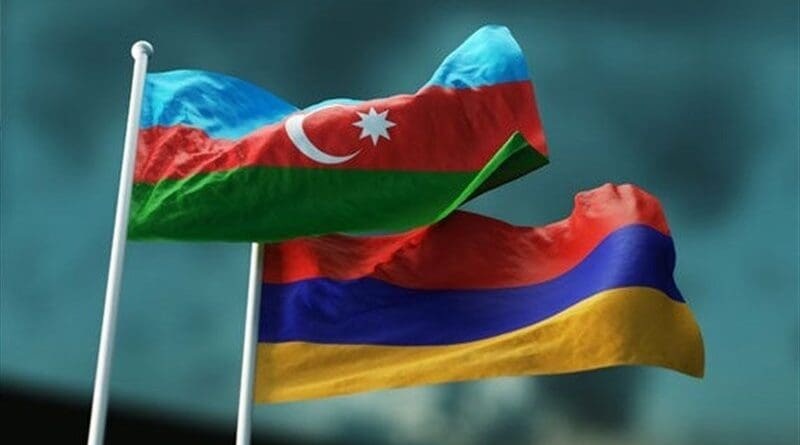
The dynamics between Armenia and Azerbaijan since the end of the Second Karabakh War have been defined by a gradual, fragile transition from active conflict to an uneasy peace-building phase. The collapse of the separatist entity in 2023 and subsequent diplomatic engagement, supported by actors such as the United States and the European Union, created a framework for a comprehensive peace agreement. Yet this process has remained highly sensitive to domestic political pressures in both countries, particularly in Armenia, where narratives of the past conflict continue to shape public opinion and constrain policymaking.
By Vasif Huseynov
In Armenia, the political legacy of the war and its aftermath continues to weigh heavily on the government of Nikol Pashinyan. While Yerevan has formally committed to a peace agenda, including mutual recognition of territorial integrity and normalisation with regional actors such as Turkey, these steps have been politically contentious at home.
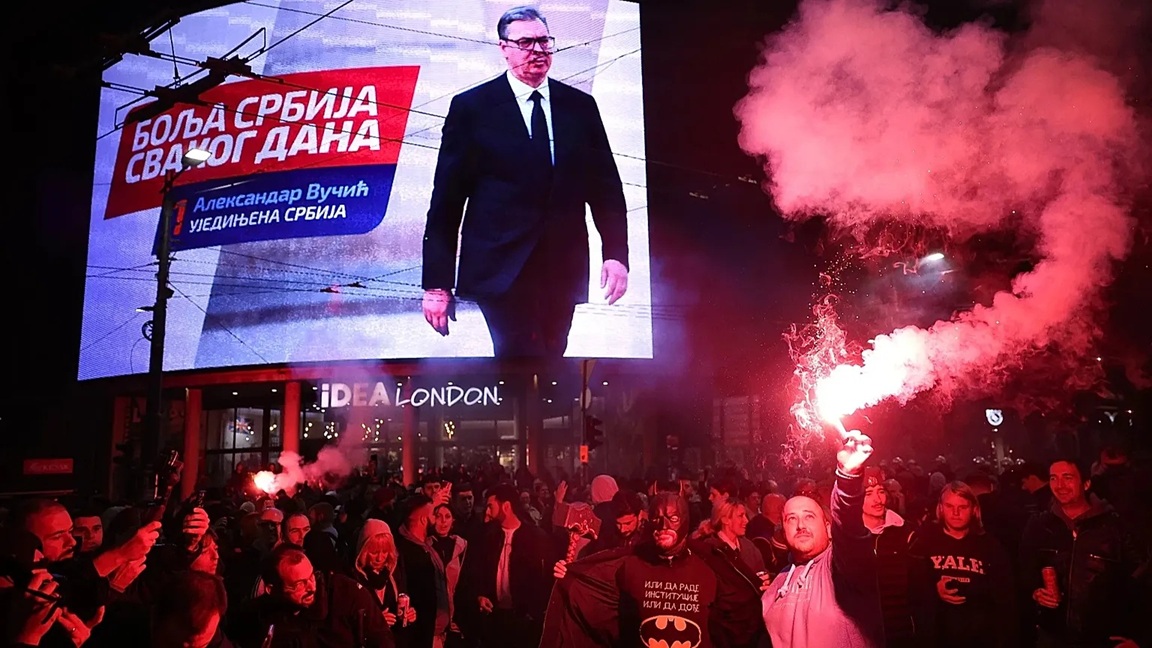
Opposition forces have consistently framed the government’s approach as overly conciliatory, turning the peace process itself into a central issue of domestic political competition – especially in the run-up to elections.
Something has shifted in the language coming out of Yerevan in recent weeks. The arguments are not new — the fate of Armenian detainees held in Azerbaijan, claims about Armenian heritage abroad, complaints about the closed border with Turkey — but the volume has been turned up, and the voices have changed.
Where these themes were previously articulated, in measured terms, they are now being driven by the Foreign Minister Ararat Mirzoyan and Speaker of the National Assembly, Alen Simonyan, with a bluntness that deserves to be read for what it is: instrumentalisation of the former conflict for electoral purposes in the campaign communication before the parliamentary elections.
On 17 April, addressing the 152nd Assembly of the Inter-Parliamentary Union in Istanbul, Simonyan declared that "genuine reconciliation" required the release of the nineteen Armenian detainees held in Baku. On the sidelines, he asserted that Azerbaijan's "lobbying and influence" in Turkey are what prevent Ankara from opening its border with Armenia: "Turkey seems to be a prisoner of these relations."
Armenian politicians have recently also amplified their rhetoric about the Armenian cultural heritage in the formerly occupied territories of Azerbaijan.
None of these formulations survives serious examination. But that is not the point. The point is to animate a domestic electorate six weeks before a vote.
An election fought on familiar ground
Armenia goes to the polls on 7 June 2026. Nikol Pashinyan's Civil Contract party faces a reconstituted opposition — Samvel Karapetyan's Strong Armenia, Robert Kocharyan's Armenia Alliance, Gagik Tsarukyan's Prosperous Armenia — and the political weight of 2020. T
The ruling party's programme, published in early April, rests on the proposition that peace with Azerbaijan has been achieved. That claim alone is not enough to mobilise the base. Peace — and the concessions it has required — is precisely the terrain on which the opposition intends to attack.
Hence, the turn toward themes that carry maximum domestic emotional charge and minimum political cost. Detainees. Missing persons. Heritage. A closed border with Türkiye that can be blamed on someone else. Each allows the ruling party to defend its position without supposedly retreating from the peace framework it has signed up to.
It is, in its own terms, thought of as a shrewd campaign choreography. But campaigns end. Peace processes, if they are to mean anything, do not.
The detainees: A legal process, not a negotiation
The nineteen individuals in custody in Baku are not bargaining chips. They are defendants in criminal proceedings. Among them are former leaders of the separatist entity that administered the Karabakh region of Azerbaijan for nearly three decades, facing charges that include terrorism, mercenarism, preparation and waging of aggressive war, and crimes against humanity.
The underlying conduct produced close to a million internally displaced Azerbaijanis, the massacre at Khojaly in February 1992, the killings at Bashlibel in April 1993, and the systematic destruction of Azerbaijani towns, villages, mosques, and cultural monuments — including 65 of 67 mosques in the territories that remained under occupation until 2020 and, in the case of the former Nagorno-Karabakh Autonomous Oblast, until September 2023.
Reducing this body of evidence to the question "when will the prisoners be released?" is to substitute a slogan for a legal process. President Ilham Aliyev has addressed the question directly: those in custody committed crimes against national security and against humanity, and their release is not on the agenda.
Azerbaijani society — which includes hundreds of thousands who lost homes, family members, and entire communities — holds this position because it is the only one compatible with the experience of the past three decades.
On 14 January 2026, Azerbaijan transferred four Armenian nationals to Yerevan as part of a bilateral exchange, and both sides continue to engage through a joint commission on missing persons. The process is a real one. It is simply not the process Simonyan's rhetoric describes.
The Turkey argument: misdirected grievance
The claim that Azerbaijan somehow prevents Turkey from opening its border with Armenia is also indefensible. Turkey is a sovereign state. Its border policy is set in Ankara.
What the formulation obscures is the actual state of the Turkey–Armenia normalisation process. Special envoys have been engaged since 2022. A partial agreement was reached that year to open the border to third-country nationals and holders of diplomatic passports.
What has been implemented so far is a simplified visa procedure for diplomatic, special, and service passport holders from 1 January 2026. The pace reflects Ankara's own calculations, including the state of the Armenia–Azerbaijan peace framework, not obstruction from Baku.
Cultural heritage is perhaps the riskiest theme on which to campaign, because the historical record is most uncomfortable for Yerevan. Azerbaijan has documented the destruction during the occupation of more than 700 historical monuments, 22 museums with approximately 100,000 exhibits, 927 libraries, 58 archaeological sites, and 26 fortresses, along with the overwhelming majority of Islamic religious sites.
The state of Muslim and Turkic heritage in today's Republic of Armenia, dating to the Erivan Khanate and earlier, is a subject on which a full accounting has yet to be made.
The campaigning cost for a peace process
There is no objection, in principle, to an Armenian government defending its record before its own voters. The difficulty is that the specific techniques — recasting criminal defendants as political prisoners, transferring responsibility for Turkish policy to Baku, invoking heritage selectively — do not retire on 8 June.
They enter the international conversation and shape the framing adopted by diaspora advocacy organisations and sympathetic foreign legislators. At the moment, the peace framework, initially signed in Washington in August 2025, remains unsigned.
Peace in the South Caucasus is a historic achievement — and a fragile one. It will not be destroyed by a single campaign cycle. But it can be eroded, quietly and cumulatively, by the habit of treating the former conflict as a reservoir of political energy to be drawn on whenever an election approaches.
The region, which has waited more than three decades for the conditions it now has, deserves a peace process that is not held hostage to electoral calendars.