In battle, when soldiers retreat from cities, they may fight back with a strategy, but when the general is killed, the army is decapacitated. Currently, Mali is facing a crisis in which state security is being challenged from all sides, with seismic repercussions across the Sahel coup belt.
By Ahsan Ali
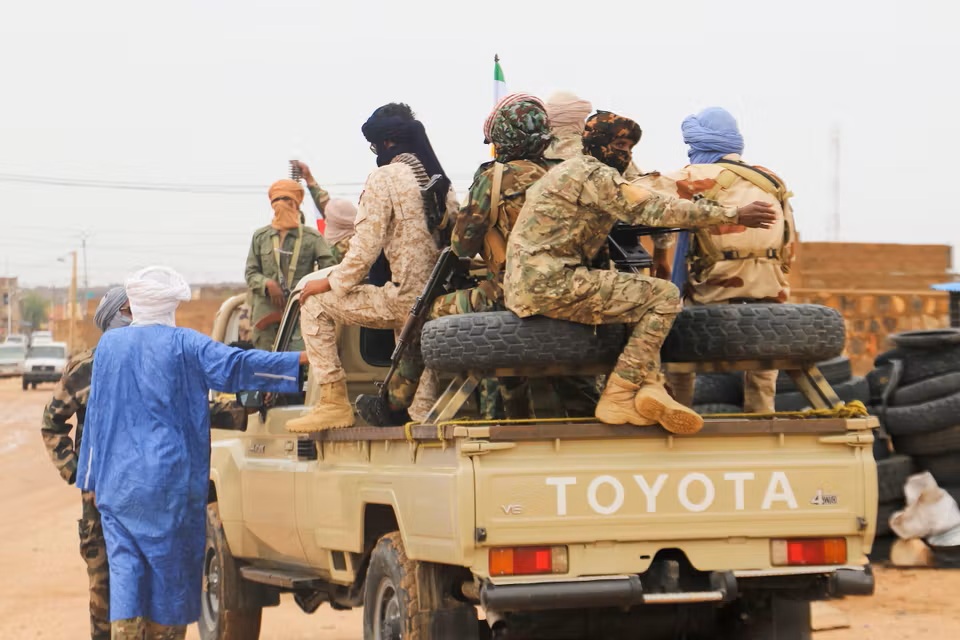
Mali is facing a crisis with the separatist Tuareg rebels under the Azawad, which wants a separate state in the north, and Al-Qaeda-linked JNIM wants to impose an extremist interpretation of Sharia law. Both have their own ideologies and goals, but their common enemy is the “pro-sovereigntist” military government of Assimi Goïta.
The 25th April joint offensive by Azawad and JNIM shook Malian cities and led to the killing of Defence Minister General Sadio Camara. He was one of the most influential officers within the ruling military junta, replacing the French with the Russian Wagner Group as an international security partner.
Sadio Camara's death is a major blow to the country’s overstretched 41,000 armed forces morale, which is already fighting on multiple fronts. He was one of the architects of the Malian security landscape and a potential successor to Assimi Goïta's government and its effects in the region.
Assimi Goïta has been under severe criticism over his handling of the state security and media censorship to suppress separatist and extremist gains in other towns and cities. The death of Camara may undermine the morale of the Malian soldiers who are already under psychological and operational strain due to the persistent challenges posed by JNIM and Azawad.
With reported checkpoints around Mali’s capital, Bamako, fierce fighting or potential fallout within the state could occur at any time if no strategy is in place. The state is in disarray, attempting to fight back, but in reality, military gains remain limited, with no effective or useful Russian backup.
With Bamako under jihadist blockade and supplies only under Russian protection, the regime and the region are in acute threat of extremist government. The attacks will bolster the morale of other extremist and separatist groups in the Sahel region, specifically Burkina Faso and Niger. Both states are plagued by extremist violence and may experience further destabilisation.
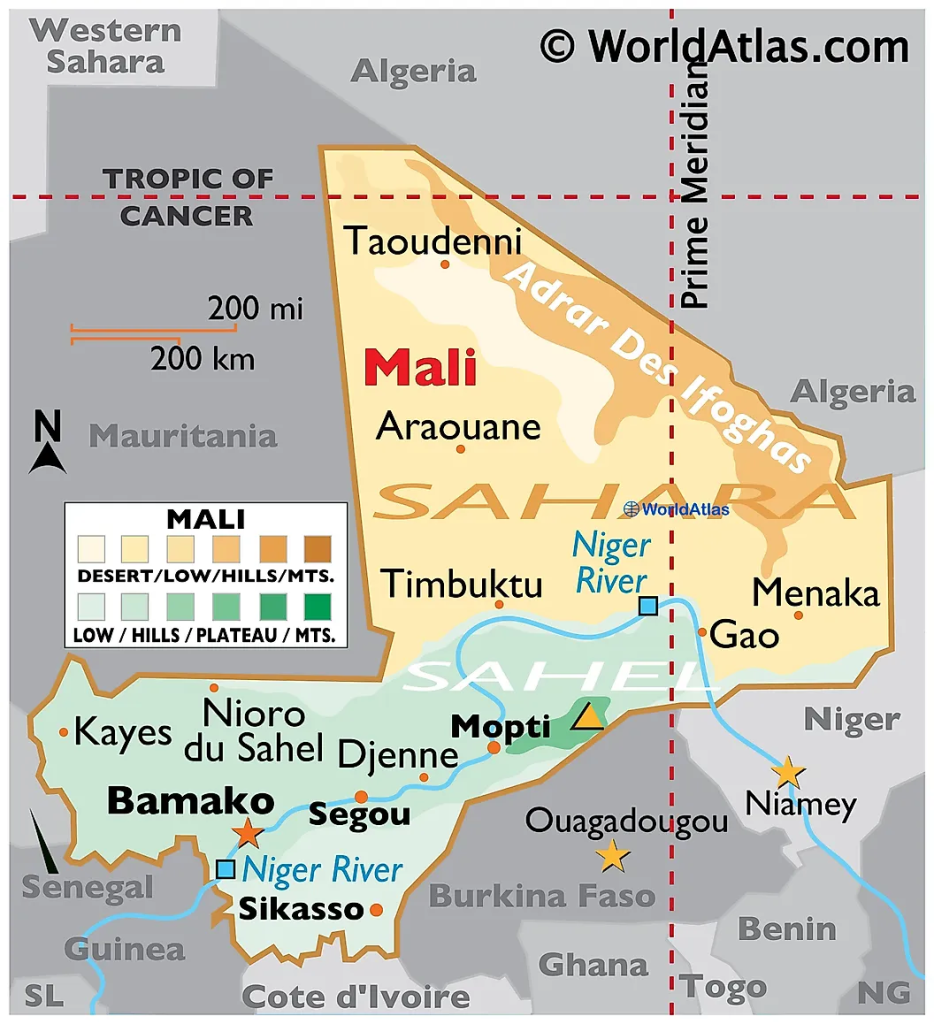
The recent attack conveys a strategic message to Bamako, highlighting the vulnerabilities of the junta-led establishment. It is indicative that broader attacks can occur, citing structural deficiencies, systemic corruption, and inefficient domestic forces in the coup belt of Niger and Burkina Faso.
Any siege and shift of power in Bamako could precipitate civil war, as Azawad and JNIM exhibit their orientations, objectives, and ideologies on parallel grounds. Any collapse of the Malian state would end the Alliance of Sahel States, likely creating instability and civil conflict, with reverberations across the Sahel.
In the chaos, the extremist groups affiliated with Al-Qaeda are amongst those to derive strategic advantage, as they are present in the Sahel and the surrounding regions. If Bamako falls to extremists, Niger and Burkina Faso capitals are at heightened risk of instability, potentially catalysing increased support for militant actors in both states.
These groups may exploit to bolster their identities, expand their influence, and advance their political ambitions in the Sahel region. This would create the trajectory of Islamist radicalisation across the wider region. It may have spillover effects on states such as West African States, Chad, Nigeria, and other vulnerable states.
Mali may seek external powers such as Russia or shift its security partner to the US to assist in fighting against extremist and separatist threats. However, to address the core issue, it must resolve the internal structural issues, such as poverty, weak governance, and corruption, that continue to facilitate such groups.
Any downfall of power in Bamako could create a strategic setback for Russia, which positions itself as a key security partner of the Sahel States. Further, Moscow’s influence would decline amid evolving geopolitical dynamics, driven by the traditional allies’ shift of power in the Middle East and regional competition in the South Caucasus.
Mali and the Sahel States stand at a critical juncture, where any political or security shift may have far-reaching repercussions within the state and across the region. Such developments may shape the security and stability across the region in the years to come.