This essay examines the ideological motive attributed to Abdul Ballout after the attack on Berlin Pride. It distinguishes Islamism from Islam as a religion. It argues that the attack should be understood as Islamist “theoterrorism”: violence committed in the name of God against freedom of expression and liberal society. The author contends that political leaders should identify and confront Islamism explicitly rather than speak only in general terms about hatred and intolerance.
By Paul Cliteur
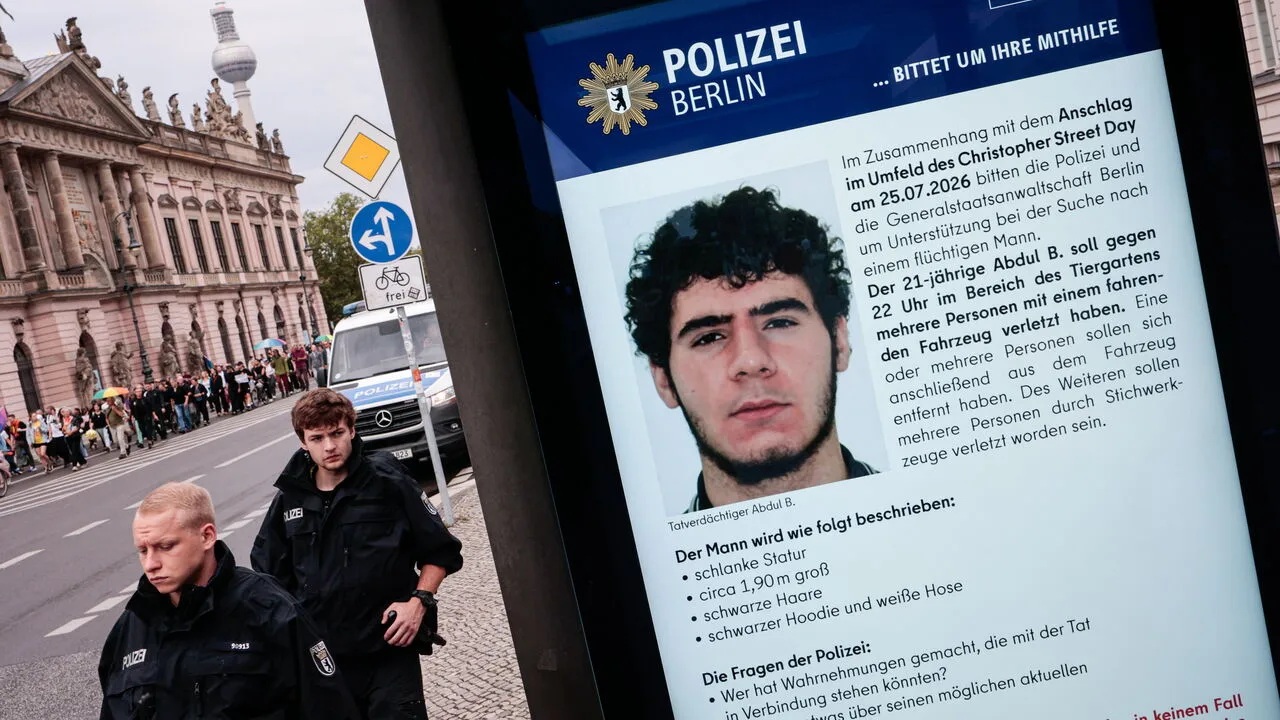
On Saturday evening, 25 July 2026, at around 10 p.m., Abdul Ballout drove a rented van into pedestrians near Tiergarten Park, a few hundred metres from the closing Pride celebration at Berlin’s Brandenburg Gate.
A Polish woman in her sixties was killed. According to the latest reports, approximately 29 to 31 people were injured, several of them seriously.
Ballout fled. The following day, he was found in an allotment complex in Berlin-Spandau. According to the police, he charged at officers with a bladed weapon and was shot dead.
A video was found on his phone in which a masked person—presumably Ballout—pledged allegiance to Islamic State. IS material was also discovered in his home. The German authorities are therefore treating the case as an Islamist terrorist attack.
Ballout was a 21-year-old German of Lebanese descent. He had previously been convicted of preparing a serious act of violence endangering the state after attempting to join IS. Despite this, he was not in prison.
Let us examine Ballout’s motives more closely. What drove Abdul Ballout to attack Berlin Pride? The German police tell us that Ballout was an “Islamist”. That is not the same as a “Muslim”, nor is it simply another word for an adherent of Islam. An Islamist is someone who gives Islam, as a religion, a political form. Islamism is an ideology.
Islamism provides the ideological basis for terrorism. Terrorism is the use of violence for a particular purpose. The Islamist’s objective is the Islamisation of the state and society in the country where he carries out his attack. What does “Islamisation” mean? It means adapting every aspect of life to Islam. Everything—literally everything—must be brought under the control of Islam.
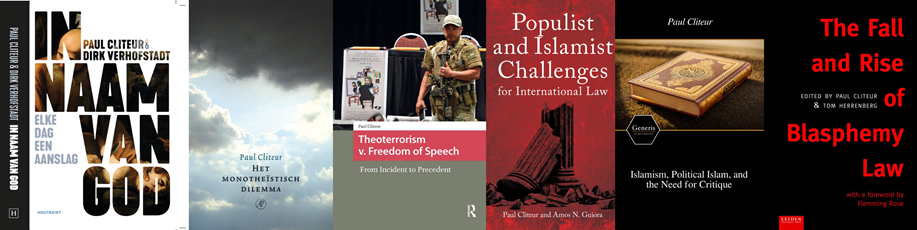
The Islamist acts “in the name of God”. God determines morality: what must be done. God’s command must be obeyed unconditionally. The Islamist faces a dilemma—a “monotheistic dilemma” (one that also arises in the other monotheistic religions). The dilemma is this: what should be done when God’s command conflicts with the constitution or national law—in this case, German law? The answer is that God’s command takes precedence.
So which takes precedence: freedom of expression or a prohibition on blasphemy? The answer is the prohibition on blasphemy. Why? Because God commands it—“in the name of God”.
For Abdul Ballout, Pride is one long parade of blasphemy. It must be stopped. How? If necessary, through violence—that is, terrorism. The kind of terrorism at issue here is therefore terrorism “in the name of God”. A specific term can be used for such terrorism: “theoterrorism”.
When theoterrorism is committed by someone holding Islamist or jihadist beliefs, it may be called “Islamist theoterrorism”. In the Western world, this jihadist theoterrorism directs its struggle primarily against freedom of expression as a principle. For the Islamist, freedom of expression must be destroyed.
A Pride participant must not be free to display his or her sexual identity. Salman Rushdie must not be free to write a critical book about Islam. A cartoonist must not be free to draw a cartoon of Muhammad. Why not? Because God does not permit it.
Thus, when German Chancellor Friedrich Merz, Amsterdam mayor Femke Halsema, Dutch Prime Minister Rob Jetten and other representatives of mainstream politics speak in their responses to the Pride attack about “hatred” and “intolerance”, they miss the point. Abdul Ballout does not merely “hate”. He is an Islamist.
We should not embark on a struggle against “hatred”, but on a struggle against Islamism. That struggle should have begun long ago. The picture has, after all, been clear for several decades. But perhaps it will finally begin now.
Friedrich Merz does not yet dare to use the word “Islamism”; the German police do. That is progress.
References
Cliteur, Paul, “The Rudi Carrell Affair and its Significance for the Tension between Theoterrorism and Religious Satire”, Ancilla Iuris 2013: 15, pp. 15–41. https://www.anci.ch/articles/301
Cliteur, Paul, Theoterrorism v. Freedom of Speech: From Incident to Precedent, Routledge, 2019. https://ap.lc/pfvkc
Dewinter, Filip, Inch’Allah: The Islamization of Europe, Uitgeverij Egmont, Brussels, 2012.
Van Rooy, Sam, Voor vrijheid dus tegen islamisering, Doorbraak, Hofstade, 2018.
Paul Cliteur has been writing about Islamism for approximately 25 years.