While wearing the hijab and niqab is widespread among Muslims in the West and Russia, authorities in Central Asia have imposed restrictions on religious clothing. Despite having majority Muslim populations, several countries in the region continue to regard religious clothing as a highly sensitive and controversial issue.
By Nikola Mikovic
Although Tajikistan – a mountainous nation of around 11 million people officially banned the niqab, burqa, and other clothing deemed “alien to national culture” back in June 2024, several obscure Russian media outlets last month portrayed the story as though Dushanbe had only recently adopted the legislation.
These reports continue to circulate amid a broader debate over why Russia itself has not introduced similar restrictions.
Indeed, in Russia, as well as in several European countries, critics are widely questioning not only their governments' stance on Islamic clothing but also their migration policies. In some Western nations, authorities have already introduced restrictions on certain forms of Islamic dress, including bans on the niqab and the hijab.
Any broader restrictions, according to Tajik political analyst Muhammad Shamsuddin, would inevitably conflict with the liberal-democratic values on which Western political systems and societies are founded.
“That said, given current political and social trends in several Western countries, it cannot be ruled out that stricter measures may be adopted in the future,” Shamsuddin told The Liberum.
Russia, in his view, presents a different case, as it is a large, multiethnic and multireligious state with a substantial Muslim population.
“The adoption of restrictions similar to those introduced in Tajikistan and other Central Asian nations could be perceived by many Muslims as discriminatory toward a religious minority. Russia's recent historical experience is also highly relevant.
During the 1990s, it was predominantly Muslim regions that became the main centres of separatist movements, and those conflicts also had a significant religious dimension.
The Kremlin likely takes these considerations into account and, for that reason, refrains from introducing a ban on the hijab and the niqab, as several Central Asian states have done,” the Tajik analyst argues.
In his homeland, women's hijabs and men's beards are often treated by authorities as an outward sign of potential religious extremism. In neighbouring Kyrgyzstan, Islamic dress is also a sensitive political question. Nevertheless, the authorities in Bishkek banned the niqab in early 2025, raising questions in some Russian circles about why Moscow has not done the same.
Zamirbek Minbaev, a political analyst based in Kyrgyzstan, believes that a ban on the hijab or niqab in Russia could create political tensions with Muslim-majority regions such as the North Caucasus, Tatarstan, and Bashkortostan, as well as with communities whose loyalty and integration are important to the Kremlin.
“That is why Russia tends to rely more on surveillance, control of religious institutions, regional measures, and targeted restrictions on groups labelled extremist, rather than a single nationwide model regulating Islamic dress,” Minbaev told The Liberum.
European governments, as he explains, operate under stronger legal and political constraints related to freedom of religion, minority rights, anti-discrimination norms, and constitutional pluralism.
“The bigger difference is that many European systems still treat religion as a legitimate part of public life, provided it operates within constitutional rules. In Central Asia, the Soviet and post-Soviet state reflex is different: religion is more easily accepted as private belief, family tradition, or cultural heritage, but not as an autonomous public-political identity.
That is why visible religious markers can be read by the state not only as personal faith, but as a possible challenge to secular public order and state-defined identity,” he stressed, pointing out that all Central Asian states emerged from a system that treated religion as a controlled and marginal sphere of public life.
However, during the second half of the 1980s, as communist ideology and Soviet authority in Central Asia gradually weakened, religious sentiment and the revival of Islam increased significantly across the region. As a result, according to Muhammad Shamsuddin, Islamist groups emerged as influential political actors and began seeking not only political influence but also a decisive role in shaping the socio-political order of Central Asian states.
“This eventually led to confrontation between Islamist movements and supporters of the secular state, culminating in the civil war in Tajikistan. Ultimately, secular political forces consolidated power in all five Central Asian republics, but the perceived threat to secularism and political stability did not disappear,” Shamsuddin said.
In his view, globalisation and Central Asia's integration into international political, economic, and cultural processes also played an important role in strengthening religious identification among parts of the population and in spreading ideas that Central Asian governments regarded as undesirable.
“These developments opened societies that had previously been relatively isolated during the Soviet period and exposed them to cultural influences and ideological currents that had previously been unfamiliar.
One example is the growing influence of Salafism,” Shamsuddin pointed out, adding that foreign terrorist organisations increasingly recruited citizens from Central Asia and promoted extremist ideologies calling for the overthrow of existing governments in the region.
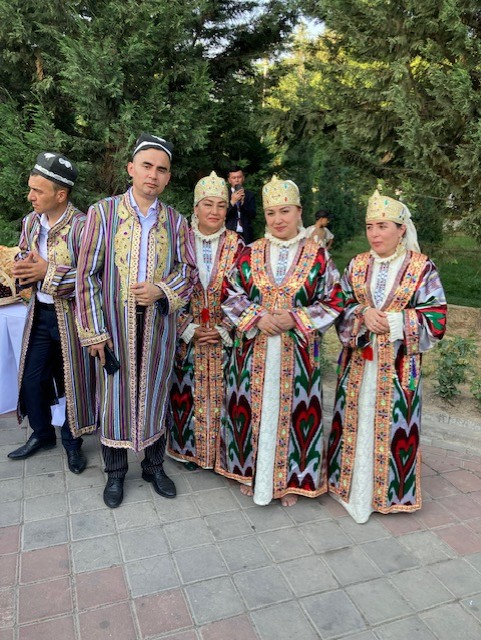
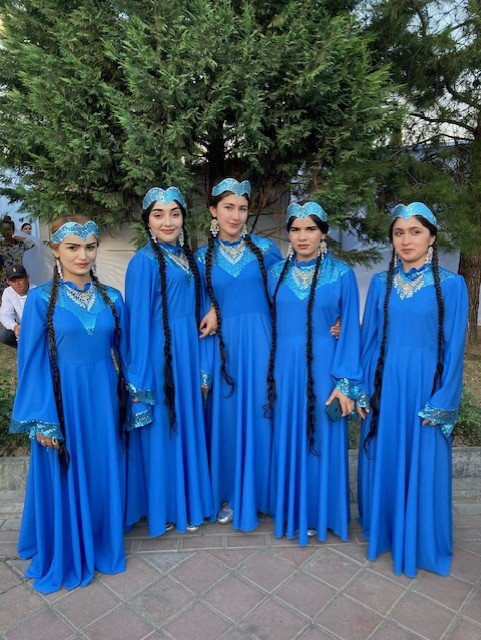
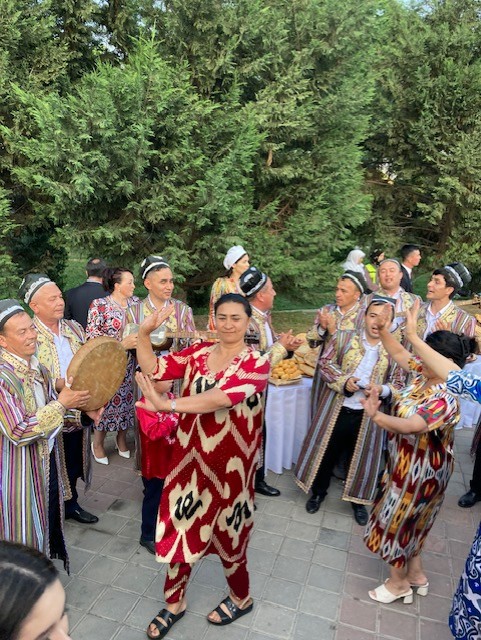
While these groups promoted Islamisation, the authorities sought to revive Central Asia’s historical, cultural, and national traditions to strengthen state sovereignty and national identity. Shamsuddin states that governments increasingly came to view Islamic clothing as incompatible with their efforts to revive and preserve national traditions. Minbaev, on the other hand, believes that Central Asian governments are not afraid of clothing itself, but rather that they fear visible religious markers may become the first step toward an alternative public identity and, potentially, political mobilisation.
“Restrictions on the niqab in particular are presented as a security measure and as a defence of local religious tradition against imported forms of public religiosity. For many people educated in the Soviet and early post-Soviet environment, public religiosity was also associated with backwardness, low education, or social conservatism.
This helps explain why significant parts of society may tolerate or even support restrictions on visible religious symbols: they do not always see them as a restriction of personal freedom, but as protection of secular order, modernity, and social stability,” Minbaev concluded.
Ultimately, restrictions on Islamic dress in Central Asia are part of a wider effort by governments to define secular identity and preserve state authority. Given growing tensions over migration and identity in some European societies, as well as calls in Russia for stricter approaches to migration and Islamic dress, elements of this model could gain traction in Russia and parts of Europe in the foreseeable future.