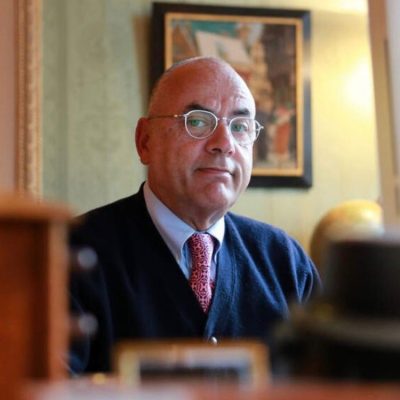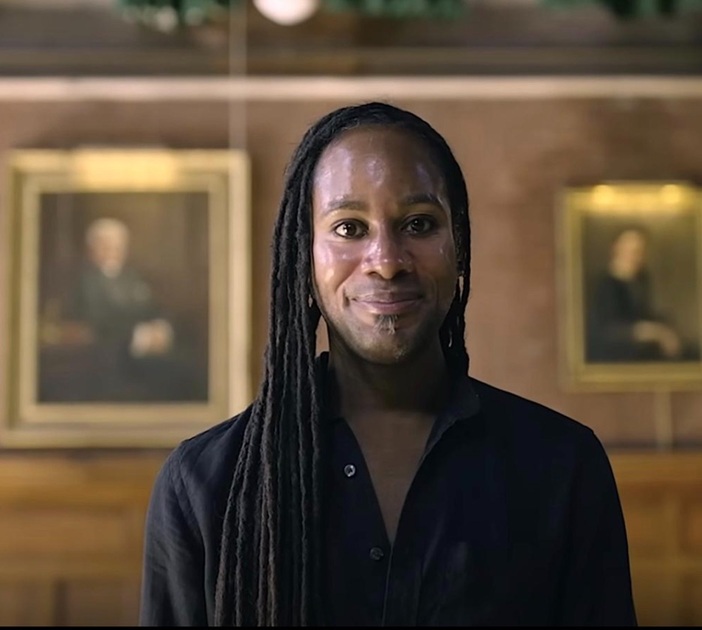
Jason Arday was 41 years old when he was found dead in a home in Battersea, South London, on Thursday, 13 August. Just days earlier, he had resigned from his professorship at Cambridge with immediate effect. Talks promoting his forthcoming autobiography, Great and Unfortunate Things, for which he had reportedly received an advance of £1.4 million, had been cancelled. The "relentless accusations, speculation, and public commentary," he stated, had taken a heavy toll on him and his family. His death makes the controversy surrounding his departure more tragic, yet no less relevant.
By Oscar Hammerstein
On the contrary: the Arday affair is ultimately not just about Jason Arday. It concerns the people who appointed him, the university that presented him as an academic star, and, above all, an intellectual climate in which identity, diversity, and political activism are increasingly conflated with academic merit.
For this reason, two separate questions must be distinguished. We do not know exactly what led to his death, likely suicide, though caution is warranted on that point. However, the question of how an academic with a track record that was subsequently deemed so controversial could secure a prestigious chair at Cambridge at the age of 37 is entirely legitimate. And it is a question that is becoming increasingly uncomfortable.
Arday’s life story was almost too good to be true. He was diagnosed with autism as a child. According to the story that brought him fame, he did not speak until the age of eleven and only learned to read and write at eighteen.
He went on to earn a doctorate, became an academic, and ultimately reached the very pinnacle: Cambridge. There, he brought something to the table that was almost irresistible to the modern university: Arday was Black, and his research focused on race, inequality, and discrimination.
Upon his appointment, Cambridge presented him as an exceptional researcher in the fields of race, inequality, and education. Moreover, his appointment was explicitly linked to the goal of reducing the underrepresentation of Black and other minority academics.
He became the youngest Black professor in Cambridge’s history. It was a PR fairy tale. Yet a university should not deal in fairy tales. Its primary mission is the pursuit of truth. It must question, verify, investigate, and, precisely, attempt to refute what it would most like to believe.
For when a story aligns seamlessly with an institution's moral aspirations, its scholarly scepticism ought to be at its peak. In Arday’s case, that appears to be exactly where things went wrong.
“The best in the world”
Arday was unanimously selected in 2022 by a nine-member Board of Electors. The committee was chaired by Baroness Sally Morgan, a Labour peer and former advisor to Tony Blair. The composition of the committee is particularly noteworthy. Its members included a majority of academics whose research focused on race, racism, whiteness, decolonisation, inequality, and social justice, with specialisms extending to the ‘decolonisation of feminism’, a phrase that presumably presupposes an understanding of the very theory it is meant to explain.
Naturally, this does not prove that Arday was appointed because of his skin color. However, it makes the question regarding the academic criteria applied all the more relevant.
Professor Hilary Cremin, then head of the Faculty of Education, went much further. Following his appointment, she described Arday as “the best in the world” in his field of research. That is a staggering claim.
For once journalists and academics began to scrutinise his work more closely, a very different picture emerged. Questions arose regarding his doctoral thesis, academic articles, interview material, academic affiliations, and various spectacular claims on his curriculum vitae.
The independent investigation by Cambridge was specifically intended to determine how thoroughly the appointment committee had scrutinised his publications, thesis, CV, and other achievements. And therein lies the real issue. It is not that an academic might have shortcomings, nor that a university might make a flawed appointment; such things happen.
The real issue is that nine highly qualified individuals unanimously saw something that others, once they actually took a closer look, apparently found far less self-evident.
Moreover, the criticism did not concern merely a few careless citations. In one academic article, Arday presented statements as coming from research participants he had himself conducted; later, striking similarities were discovered between them and statements in previously published research by others.
This touches on something more fundamental than textual plagiarism. When existing interview material is presented as originating from one’s own empirical research, it casts doubt on the reliability of the research data itself.
Questions also arose regarding his doctoral thesis. According to subsequent analyses, dozens of passages bore a strong resemblance to an earlier thesis. Incidentally, Liverpool John Moores University had previously concluded that plagiarism had not been proven.
Arday himself has consistently denied committing intentional fraud. That distinction must be maintained. An accusation is not a conviction, and a suspicion of academic misconduct does not amount to proven fraud.
Yet this is precisely what makes the question facing Cambridge all the more pressing: what exactly did the appointments committee investigate?
This brings us to Critical Race Theory. Arday worked within an intellectual tradition in which concepts such as whiteness, structural racism, microaggressions, decolonisation, and lived experience play a central role. He himself described how recounting experiences of racism by lecturers of colour could serve as a means of self-empowerment and a form of "Critical Race Theory counter-narrative."
That may sound like emancipation. From a scientific perspective, however, a problem arises when personal experience is no longer merely the object of study but also serves as evidence for the theory itself.
A theory that posits that societal structures are governed by racism, and subsequently interprets any criticism of that theory as a manifestation of that very same racist structure, risks rendering itself immune to falsification. And that is precisely where science bleeds into ideology.
Science does not begin with the question, "Which conclusion is morally desirable?" It begins with, "Is my hypothesis actually correct?" That distinction may seem trivial. Yet it represents the boundary of civilisation separating the university from activism.
The weak spot of the humanities and social sciences
This brings the humanities and parts of the social sciences into the picture. It would be going too far to dismiss all humanities and social science disciplines as ‘woke’. Historians, philosophers, legal scholars, linguists, sociologists, and anthropologists regularly produce excellent and sometimes brilliant research.
Yet, precisely within parts of these faculties, an academic culture has developed in which concepts such as decolonisation, intersectionality, whiteness, social justice, and lived experience are no longer merely analytical terms, but also function as moral passwords.
I deliberately use the English terms; in the most ‘decolonised’ corners of Dutch universities, Dutch itself apparently turns out not to be the right language. Mastering the correct vocabulary demonstrates not only a specific scholarly approach but, increasingly, membership in the ‘right’ moral community. And that is precisely where it becomes dangerous.
For as soon as language ceases to serve the purpose of examining ideas as precisely as possible and instead signals which side one is on, scholarship imperceptibly begins to resemble activism.
This is not because left-wing activism is worse than right-wing activism, but because any form of activism is the natural enemy of open-minded inquiry the moment a desired political outcome begins to dictate which questions may be asked, and which answers are acceptable.
A physicist can hardly force a particle accelerator to yield a progressive result. A chemical reaction is unimpressed by a diversity statement. In disciplines where interpretation, language, and personal experience play a far greater role, the guardrails are less robust. The consequences of this are no longer confined to the university.
The associated vocabulary has permeated newsrooms, talk shows, and public institutions, where word choice sometimes betrays the moral judgment expected of the speaker. Anyone who uses the wrong word may not even need to explain their argument: the linguistic slip-up is already treated as a political confession.
Precisely for this reason, in disciplines where language itself is a key research tool, methodological discipline must be stronger, not weaker.
Perhaps the Netherlands itself holds the best answer to this development. For generations, the motto Praesidium Libertatis, Bulwark of Freedom, has stood above the country’s oldest university. In my view, Leiden University’s motto should be the motto of every university. Not Praesidium Diversitatis, not a bulwark of inclusion, representation, or social justice, but a bulwark of freedom.
The freedom to investigate, to dissent, to ask the wrong question, and to reach a conclusion that is politically or morally inconvenient for anyone. Leiden itself describes this concept as the freedom of thought and speech essential to the practice of scholarship. This is not merely a fine Latin phrase for a university seal; it is the very condition for the existence of scholarship.
That is precisely why Praesidium Libertatis is more important than ever today. A university need not tell its students which views are acceptable; it must teach them to examine every view. It need not lead society toward a prescribed moral destination; it must produce knowledge that enables society to form its own judgment.
Anyone who subordinates scholarship to a political mission, however noble that mission may deem itself, undermines that very freedom. And without that freedom, what remains is not a university, but a training institute for the prevailing orthodoxy.
"Woke" as an institutional revenue model
"Woke" has been used as a pejorative term so often by now that it has become almost meaningless. Yet, a recognisable institutional phenomenon does indeed exist. Universities have built vast bureaucracies centred on diversity, inclusion, equity, decolonisation, and social safety.
This has given rise to a new class of professionals whose careers depend on the notion that the problems they were hired to address are structural and permanent. A problem that gets solved ultimately eliminates the bureaucracy built around it. A structural problem, by contrast, justifies new committees, officials, inquiries, policy documents, training programs, and budgets.
This creates a peculiar incentive. The university ceases to be merely a place where societal phenomena are studied and becomes an institution that views itself as an instrument for societal change.
In the process, the hierarchy of academic values shifts almost imperceptibly. Societal impact, representation, and identity may come to stand alongside, or, in the worst-case scenario, take precedence over, intellectual originality, methodological rigour, and empirical reliability.
Who was actually using whom here? And then the Arday case takes on a tragic dimension. Perhaps Jason Arday is ultimately not the main defendant in this story. Shouldn't Cambridge primarily take a closer look at itself?
Suppose his academic achievements were indeed insufficient for the position he ended up in. Suppose his spectacular life story, his identity, and his significance as a symbol of diversity weighed more heavily than a ruthless assessment of his scientific work. In that case, the university did him no service but used him.
The same academic culture that claims to want to liberate minorities from stereotyping has instead turned him into a symbol of his skin colour. Not simply Jason Arday, a scientist whose work had to be judged by the same standards as anyone else's, but “Jason Arday, Cambridge’s youngest black professor.” With that, his success also became the institution's success.
Until the questions began, it became apparent how dangerous it is to turn a human being into a symbol. For when the pedestal falls, the person standing on it falls with it. There are Cambridge academics who have since suggested that his remarkable life story, young age, media appeal, and diversity profile weighed too heavily, and that his appointment was a sort of quick fix for Cambridge's diversity problem.
That is, I predict, what the conclusion will be. But that is precisely what the independent investigation must determine.
The real scapegoat
Jason Arday therefore does not deserve a posthumous condemnation that university inquiries failed to deliver during his lifetime. He deserves something else: an investigation into who placed him on that pedestal and why. The nine members of the appointment committee are known.
Yet, as far as the public knows, none of them has individually explained why they voted for Arday at the time. That is remarkable, for the people who selected the candidate represent the very system that subsequently presented him as an exceptional talent. It would therefore be all too easy to lay all the responsibility on Arday, who has since passed away.
The far more interesting question is whether a university, so eager to prove itself diverse, inclusive, and socially progressive, forgot along the way what a university exists for in the first place.
Not for representation. Not for activism. Not for the right political convictions. Not for an inspiring life story. But for organised scepticism toward every claim, especially those we desperately want to believe.
It is also a useful lesson for the Netherlands, where administrators, politicians, and academics from progressive-liberal circles, in which the D66 party is heavily (over-)represented, are all too keen to burden universities with societal mandates concerning diversity, inclusion, and social justice.
A university, however, is not an agency for implementing a political ideal. The moment a university begins to prescribe how the world ought to be, rather than investigating with an open mind how it actually is, politics has already conquered scholarship.
If the independent investigation reveals that Cambridge relaxed its standard quality controls because Arday perfectly embodied the institution’s ideal image, then the affair is far more significant than just one failed professorial appointment.
It would mean that an ideology claiming to champion equality has violated the most fundamental principle of equality: that the same academic yardstick should measure every scholar. And that is the bitterest irony of the Jason Arday case.
A movement that sought to liberate people from labels turned his identity into his primary credential. An academic culture that claims to expose power structures failed to scrutinise its own power sufficiently. And a university that ought, above all, to teach critical thinking appears to have failed to apply that same critical eye to a narrative it was all too eager to believe.
The remedy has been embedded in the university’s DNA for centuries. Leiden gave it a name: Praesidium Libertatis, Bastion of Freedom. Not the freedom to say only what is acceptable within the prevailing academic morality, but the freedom to challenge it.
The moment a university trades that freedom for a political agenda, it loses more than just its independence; it loses its raison d’être.