The sun sinks heavily behind the sheer limestone cliffs of Kastellorizo, a Greek island so small a person can walk its perimeter in an hour. Sitting a mere two kilometres from the Turkish mainland, it appears on tourist maps as an idyllic Mediterranean escape. But on the geopolitical chessboards of Athens and Ankara, this speck of land is the epicentre of a high-tech storm. It is the jagged frontline where Mavi Vatan (the Blue Homeland) and the Achilles Shield slide toward a monumental collision.
By Ken van Ierlant
To understand the clash, one must look at the two fundamentally incompatible visions modern geography has forced into the same body of water. To the east lies the Turkish port of Kaş, looking out toward Kastellorizo. This coast breathes the doctrine of Mavi Vatan.
Conceptualised by Turkish naval strategists, it claims maritime jurisdiction over roughly 462,000 square kilometres across the Black Sea, the Aegean, and the Eastern Mediterranean. Born from a deep-seated historical trauma of being geographically "boxed in" by the Treaty of Lausanne, Mavi Vatan asserts that islands do not possess a full Exclusive Economic Zone (EEZ) if they cut off the natural continental shelf of a massive mainland.
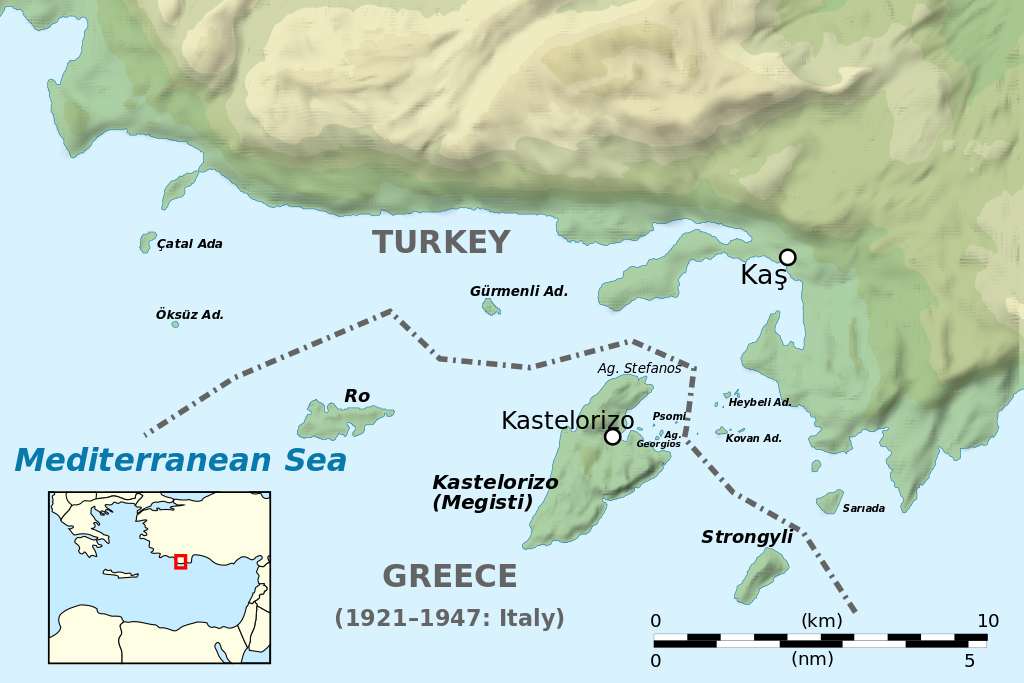
In Ankara’s eyes, Kastellorizo or Cyprus cannot be allowed to sever Turkey from the wider Mediterranean. Mavi Vatan is dynamic, revisionist, and assertive.
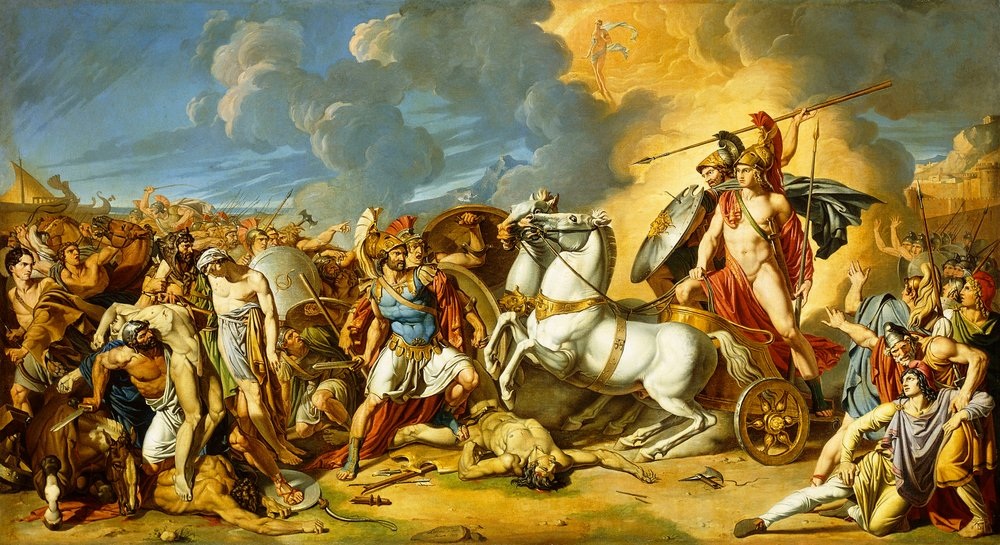
To the west, Athens refuses to be suffocated. Backed by billions of euros and forged through a historic €3.1 billion partnership with Israel, Greece has erected the Achilles Shield. This is the modern, digital reinterpretation of the ancient phalanx. It combines existing Greek Patriot batteries with cutting-edge Israeli technology, including David’s Sling, SPYDER, and Barak MX, all synchronised by an artificial intelligence-driven command network.
The Achilles Shield is a status quo doctrine. It does not seek new territory; it builds an invisible, layered wall of steel and electronic warfare to freeze the map exactly as it stands.
The Ghost war in the ether
This conflict is rarely fought with kinetic artillery. Instead, it rages 24/7 across the electromagnetic spectrum and the digital ether.
When a Turkish Bayraktar Akıncı drone lifts off from an airfield in Anatolia to patrol the boundaries of the Blue Homeland, its radar cross-section flashes instantly on tactical displays inside a subterranean bunker near Athens.
The AI of the Achilles Shield cross-references the telemetry. Long-range Israeli-made sensors lock onto the drone. Simultaneously, Cyprus and Greece share early-warning data, effectively turning every Greek island into a networked sensor hub.
Ankara’s response to this digital wall is not fear, but asymmetric saturation. Turkey’s military doctrine dictates that if Greece buys a multi-million-dollar missile interceptor, Turkey will build a swarm of one hundred cheap, domestic loitering munitions to overwhelm it.
It is a gruelling game of economic and technical attrition: the endless manufacturing capacity of the Turkish defence industry versus the qualitative, layered supremacy of the Greek-Israeli tech axis.
The ultimate prize: The gas falanx
Below the waves lies the true catalyst for this escalation. The Levant Basin holds some of the world's most lucrative untapped natural gas reserves. For a European Union starved of energy resources following its permanent rupture with Russian gas, these deep-water fields, such as Leviathan off Israel and Aphrodite near Cyprus, are a vital economic lifeline.
The architecture of Europe’s energy independence relies on projects like the Great Sea Interconnector, a massive subsea power cable linking the grids of Israel, Cyprus, and Greece to mainland Europe.
For Brussels, the Achilles Shield is fundamentally a "Gas Falanx." It provides the essential security umbrella required to convince international energy conglomerates to invest billions into offshore drilling platforms and pipelines. Without the shield, Europe's future energy infrastructure is defenceless against sabotage.
Turkey, however, views this European blueprint as a hostile encirclement. To break the siege, Ankara signed a controversial maritime delimitation treaty with Libya, drawing a diagonal line straight across the Mediterranean. Turkey’s position is uncompromising: no European pipeline or power cable crosses the seabed without Ankara’s permission.
When European research vessels attempt to map the seafloor for the interconnector cable, Turkish naval frigates intercept them, asserting physical sovereignty. Ankara demands that the Levant's wealth flow north through the Turkish mainland via the existing TANAP pipeline network, positioning Turkey as the ultimate energy gatekeeper to the West.
The NATO nightmare
While the EU looks south for energy survival, NATO headquarters in Brussels watches the region with absolute dread. The collision of Mavi Vatan and the Achilles Shield exposes the alliance’s most vulnerable fracture: the acute risk of fratricide between two of its own members.
The threat is exacerbated by secondary flashpoints utilised by both nations to score sovereign points:
The unforgiving equilibrium
As night falls over the Aegean, the physical waters look peaceful. But beneath the surface, within the glowing command screens, the clash is fully operational.
Washington remains trapped in a painful diplomatic bind, forced to back Greek and Cypriot energy integration via the Eastern Mediterranean Security and Energy Partnership, while desperately trying not to alienate Turkey, which possesses NATO’s second-largest standing army and commands the vital straits of the Bosporus.
The Eastern Mediterranean has become a chessboard where every pawn is a drilling rig, and every knight is a drone. Mavi Vatan continues to push outward, seeking the open space a rising regional power demands.
The Achilles Shield stands rigid, an unyielding digital fortress guarding the status quo. They remain locked in a tense, Cold War embrace, where the margin for error is razor-thin, and the fuel beneath the seabed waits to ignite Europe's southern border.