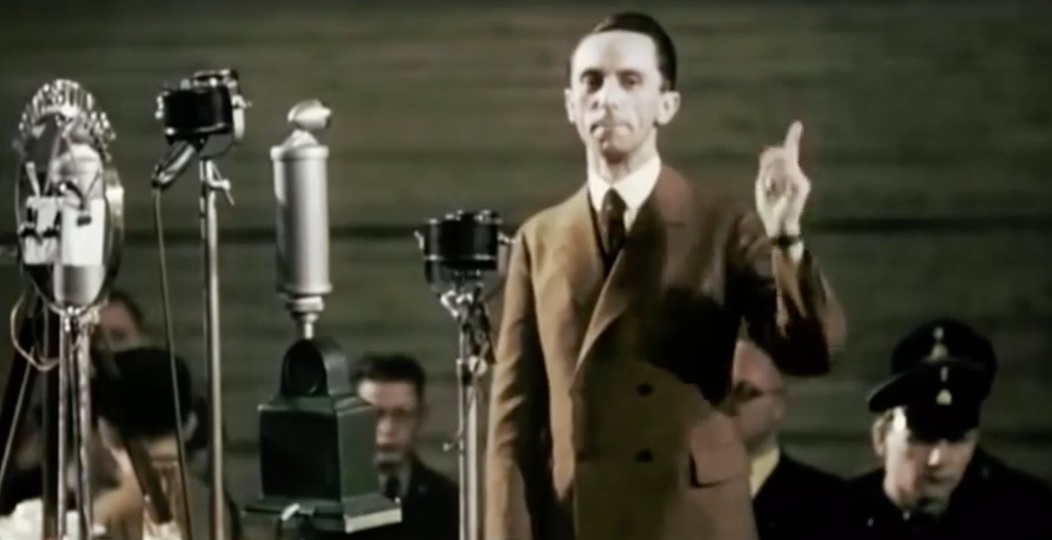
The most dangerous propaganda does not consist of lies. It consists of carefully selected truths. Anyone thinking of propaganda today still pictures the posters of the Soviet Union, the mass rallies of the Nazis, or the loudspeakers of North Korea. That image is reassuring. It suggests that propaganda is always recognisable, always originates from an authoritarian state, and always constitutes someone else's problem. But therein lies our greatest mistake.
By Oscar Hammerstein
The propaganda of the twenty-first century no longer wears a uniform. It does not shut down newspapers, take over radio stations, or burn books. It appears as journalism, academic research, human rights activism, and moral indignation.
It does not ask us to give up our values. On the contrary, it actually uses our deepest convictions, justice, compassion, and human rights, to present us with a carefully constructed reality.
That is why modern propaganda is more dangerous than its totalitarian predecessors. Not because it lies more, but because it has less to lie. It determines which images we see, which victims are given a face, which words are used and, at least as important, which facts remain out of sight. Reality is not falsified but edited. That is the great propaganda revolution of our time. The route that many of our newspapers and the newsrooms at public broadcasters are following.
George Orwell warned of a state that would suppress the truth. Aldous Huxley foresaw a society in which the truth would drown in amusement and distraction. Neil Postman subsequently saw how the media would slowly erase the boundary between information and entertainment. Perhaps all three were right.
For never before has man had access to so much information, while at the same time becoming so uncertain about what is true. Not because knowledge is lacking, but because attention has become scarce in our time. Whoever controls attention ultimately controls moral judgment as well.
That mechanism is nowhere more clearly visible than in the international debate on Israel since the Hamas attack of October 7, 2023. Within a few days, the global debate shifted from the largest mass murder of Jews since Auschwitz to the accusation that Israel, of all places, was guilty of genocide.
Even before the full extent of the massacre had become clear, the first statements appeared in which Israel became the prime suspect and Hamas virtually disappeared from the picture. The victims became suspects. The perpetrators faded into the background.
Anyone who explains this development solely in terms of social media or political polarisation sees only the surface. Behind this narrative lies an intellectual history that is decades older than the war in Gaza. That history does not begin in the Middle East, but in Rwanda.
In 1993, Hutu intellectuals accused the Rwandan Patriotic Front, linked to the Tutsis, of genocide. Open letters containing, just like now, greatly exaggerated casualty figures found their way to foreign governments, church leaders, and international organisations.
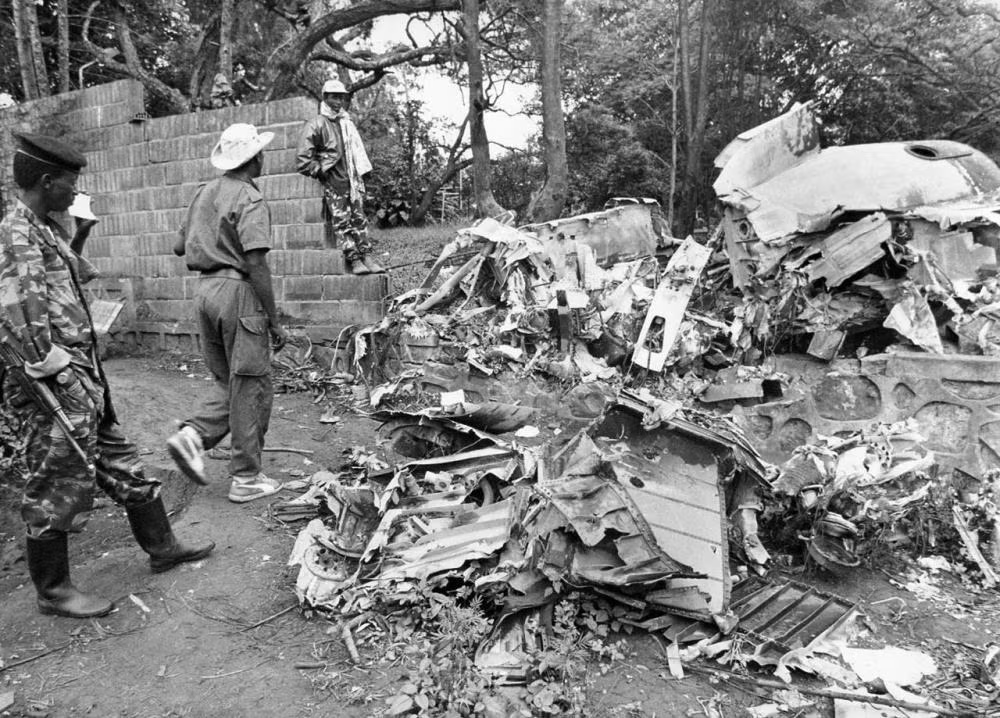
A year later, the same Hutu regime itself committed genocide against the Tutsis. After the genocide, Alison Des Forges of Human Rights Watch pointed out that precisely this reversal of the concept of genocide had been one of the key propaganda tools used to prepare the mass murder.
The Tutsis were not portrayed as victims, but as future perpetrators. Not as the threatened, but as a threat. The genocide, the propaganda stated, was not to be committed, but rather to be prevented.
With this, a mechanism became visible that has recurred ever since. Before a population group is attacked, it is first morally delegitimised, dehumanised, and then accused. Before violence against it is legitimised, it is presented as the real aggressor. The accusation becomes the weapon.
The parallel with the current debate is not that Rwanda and Israel are historically comparable. They are not. History cannot be copied, and every tragedy has its own context, its own perpetrators, and its own victims. The similarity lies in the mechanism by which a society learns who it is allowed to hate.
In Rwanda, the Tutsis were portrayed as foreign invaders who had no right to the land in which they had lived for generations. The colonial Hamitic hypothesis provided a seemingly scientific justification for this.
According to that theory, the Tutsis were not true Africans, but descendants of foreign oppressors who had usurped power. During the genocide, victims were driven into the Nyabarongo River to send them "back to the Nile supposedly. Violence was legitimised then, just as it is now, by a historical narrative. That is perhaps the most important lesson of Rwanda.
Genocides do not begin with weapons. They begin with words, definitions, and theories. With the moral delegitimisation of a population group, only then does the violence follow. Precisely for this reason, the way Israel and Jews are spoken about today deserves more attention than it receives.
Since the 1990s, an interpretive framework has developed within parts of the academic world in which Israel is no longer viewed as an ordinary nation-state, but as a ‘settler colonial state’: a colonial establishment society without historical legitimacy.
That premise changes everything.
When Israel is by definition a colonial state, every military operation is automatically read as colonial oppression. Self-defence becomes occupation. Security measures become apartheid. And war against a terrorist organisation ultimately turns into genocide. The conclusion then no longer follows from the facts. The facts follow from the conclusion.
That framework of thought did not originate exclusively in political movements. It was developed over decades within parts of the academic world.
Around the ‘Journal of Genocide Research’, an influential movement emerged advocating for a broader interpretation of the concept of genocide than Raphael Lemkin, the founder of the 1948 Genocide Convention and Holocaust survivor, ever envisioned.
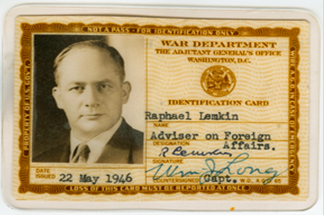
Lemkin chose his words with extreme precision. For him, genocide revolved around one central element: the demonstrable intention to destroy a national, ethnic, racial, or religious group, in whole or in part. It is precisely that intention that distinguishes genocide from war, however horrific war may be. Within the new academic paradigm, that distinction is blurring.
When a state is considered essentially colonial, virtually every use of military force is interpreted as an expression of the same system of oppression. In doing so, genocide shifts from an exceptional legal category to a political judgment regarding the nature of a society.
A fundamental change, not only of the concept of genocide, but of our entire moral vocabulary. For words are never merely words. They determine how we understand reality. Whoever masters the vocabulary ultimately masters the judgment as well.
That is why it is no coincidence that concepts such as ‘colonialism’, ‘apartheid’, ‘racism’, and ‘genocide’ possess such exceptional political power today. Once, they were precisely defined historical and legal concepts. Today, they function as moral endpoints. Once they have been uttered, further argumentation is hardly necessary.
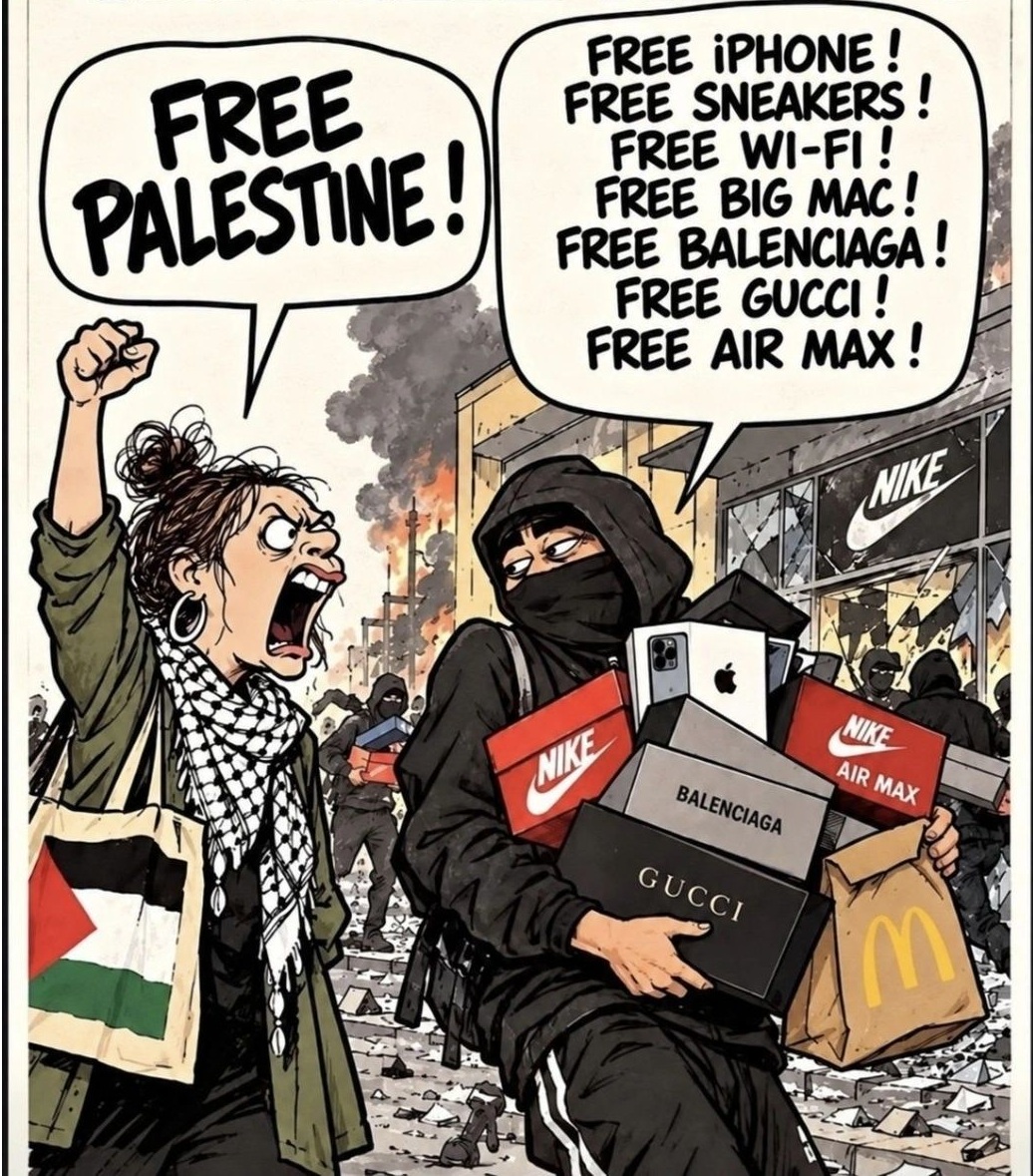
That is precisely the power of modern propaganda. It does not persuade by producing new facts but by changing the meaning of existing facts. No journalist needs to lie to achieve this consciously. No university needs to abandon its scientific integrity. No human rights organisation needs to renounce its ideals. It suffices for them to put on the same moral lens.
From that moment on, every new event seems merely to reaffirm what one already thought one knew. The narrative slowly turns into reality. And therein lies the greatest propagandistic innovation of our time.
It is too easy to attribute this development solely to social media. The internet did not invent propaganda. It has merely given it unprecedented speed and reach.
The classic propagandist wanted to tell people what to think. The modern propagandist primarily influences how they think. That difference is crucial.
For decades, states such as the Soviet Union, later Iran, and subsequently Qatar have invested vast sums in the development of a moral vocabulary that has deeply permeated universities, NGOs, international organisations, and journalism. Not by offering ready-made conclusions, but by providing a conceptual framework through which reality is subsequently interpreted almost automatically.
Once one looks through that lens, one hardly needs to be convinced anymore. The conclusions follow naturally. That explains why so many intelligent people sincerely believe that they are following only the facts. They do indeed do so, but only the facts that acquire meaning within the chosen narrative.
The others disappear silently from view. The ideology of Hamas disappears. The role of Iran disappears. The explicit calls for the destruction of Israel disappear. The thousands of rockets fired at Israeli cities for years are disappearing.
Not because anyone is banning these facts, but simply because they are no longer included in the dominant narrative. That is modern propaganda. Not the destruction of the truth, but its careful editing.
Therein also lies the explanation for why the accusation of genocide possesses such extraordinary political power today. Since the Holocaust, genocide has been regarded as the absolute moral nadir of human civilisation.
No other crime evokes comparable horror. Whoever succeeds in identifying their opponent with that concept hardly needs to analyse their actions anymore. After all, the moral condemnation has already been pronounced.
That is precisely why Raphael Lemkin formulated the Genocide Convention with such legal precision. He knew that a concept retains authority only as long as it remains exceptional. Not every war is genocide. Not every massacre is genocide. Not every war crime is genocide. That distinction does not protect the perpetrators. It protects the truth and, thereby, the victims.
When every large-scale military operation is labelled as genocide, the distinction between Auschwitz, Rwanda, Srebrenica, and every other armed confrontation eventually blurs. Then the heaviest concept in international law loses its special significance and becomes a political slur that ultimately helps no one. Not even the victims of real genocides.
That also explains why the Hamas attack on October 7 disappeared from international consciousness so remarkably quickly. Almost immediately, attention shifted from Hamas's intent to Israel's response. That is remarkable in itself.
Legal scholar Avraham Russell Shalev has argued that the Hamas attack, in particular, lies much closer to the legal definition of genocide than is generally acknowledged, not because of the scale of the attack, but because of the explicit intention to destroy a protected population group, the Jews, as such. The fact that this plan ultimately failed because the Israeli army managed to stop the attack, according to him, changes nothing regarding the legal intent.
That analysis received hardly any attention. That is telling. Not because it necessarily has the final word, but because it hardly became part of the public conversation. After all, narratives do not merely determine the answers. Above all, they determine which questions may still be asked.
With that, we return to Rwanda. There, too, the tragedy did not begin with the first murder. It began with a story. With a population portrayed as a foreign intruder. With intellectuals providing the moral justification. With media spreading the message. With a society slowly becoming accustomed to words that would have been unthinkable just a few years earlier. That is the constant in history. Not the events, but the mechanisms.
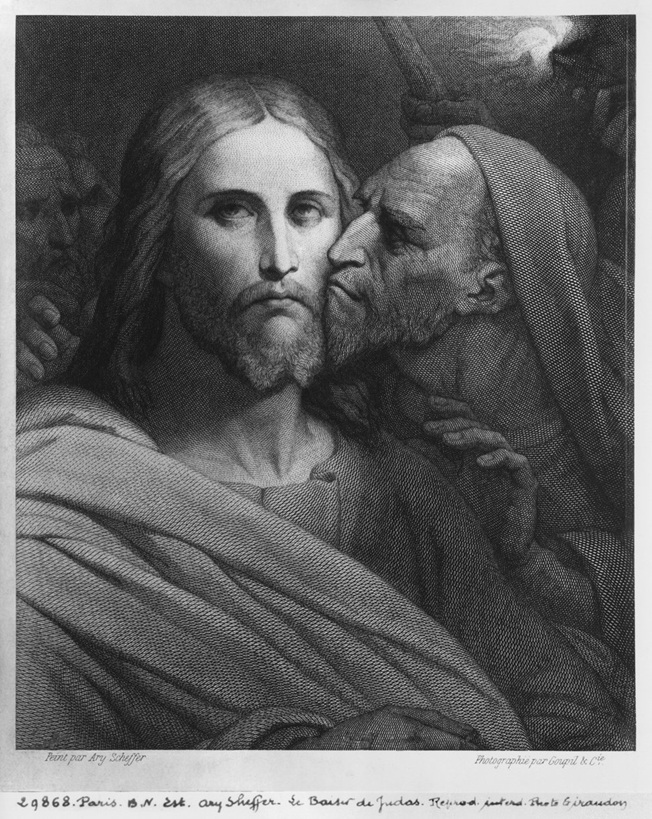
History rarely repeats itself literally; mechanisms, however, change remarkably little. Time and again, the road to collective violence begins with the same sequence of events. First, a population group is delegitimised. Next, its history is rewritten (Jesus was a Palestinian). Then, its existence is presented as a permanent threat. Finally, violence against that group is no longer seen as aggression, but as a form of necessary self-defence.
The perpetrator presents himself as a victim, just as Muslims have been continuously presenting themselves as victims since October 7. That is perhaps the oldest propaganda technique in history. And precisely for that reason, the current information war deserves more attention than it receives.
The real danger does not lie in one wrong article, one misleading tweet, or one one-sided television broadcast. The danger arises when thousands of journalists, scientists, activists, politicians, and opinion leaders, each guided by their own convictions, slowly begin to tell the same story because they have adopted the same conceptual framework.
Propaganda is rarely a conspiracy. Much more often, it is a culture. A shared way of looking at things. That is also what makes it so difficult to combat. Facts alone are insufficient. After all, a fact can only convince when it fits within the narrative that people tell about reality.
That is why corrections so often lose to emotions. That is why images triumph over analyses. That is why a photo of a crying child effortlessly displaces a two-hundred-page legal report. Not because people are irrational, but because people understand stories; not statistics, not legal definitions, not footnotes.
That is what ultimately makes propaganda so powerful. It does not provide information. It provides meaning. And meaning is always stronger than a collection of isolated facts. Perhaps that is the greatest lesson of the digital age.
We no longer live in an economy of information. We live in an economy of attention. And attention is not won by the most careful analysis. The most convincing story wins attention. That is why freedom of speech alone is not sufficient to protect a free society.
Freedom without discernment is vulnerable. A democracy can have thousands of independent media outlets, hundreds of universities, and countless civil society organisations at its disposal, and yet slowly lose its ability to distinguish reality from narrative.
Not because someone silences it, but because it hears the same words over and over again. Until they seem self-evident. That is the true power of propaganda. Not forcing people to believe something, but ensuring that alternative interpretations become increasingly inconceivable.
Societies collapse more often because they lose their own judgment than because their enemies are stronger. That was the lesson of the totalitarian ideologies of the twentieth century. And that threatens to become the lesson of the twenty-first century once again. Not because we are living in a world of state propaganda again. But because propaganda has adapted to the open society.
It has learned that free citizens can spread it far more credibly than any government can. This brings us back to the question with which this story began. The most dangerous propaganda does not consist of lies. Lies are ultimately recognisable. The most dangerous propaganda consists of carefully selected truths arranged so that they seem to allow only one conclusion.
That is precisely why the accusation of genocide has become such a powerful political instrument today. Not because every accusation is untrue. But because the accusation itself is increasingly taking the place of the evidence.
As soon as that happens, the debate ceases. Then the judgment no longer follows from the facts. The facts are selected based on the judgment. With that, the circle is complete. After all, the greatest victory of propaganda is not that people believe it. It is only that people stop recognising it as propaganda.
That is the challenge facing free democracy today. Not the battle between left and right. Not the battle between Israel and Hamas. Not even the battle between truth and falsehood. The decisive battle of our time is about something more fundamental.
Whether free people are still capable of distinguishing between analysis and activism. Between compassion and manipulation. Between justice and rhetoric. Between history and ideology. For a civilisation does not perish when it loses the truth. It perishes when it no longer notices that it has lost it.