Fascism and Nazism were the most dangerous ideologies at the beginning of the twentieth century, followed in the second half of the twentieth century by communism. Today, the most dangerous ideology is Islamism: a radical and (often) violent form of Islam.
By Paul Cliteur
Adolf Hitler’s victims are estimated to include approximately 11–12 million murdered civilians and prisoners of war. Experts estimate the number of victims of the “mass murderer” Mao Zedong at approximately 35–45 million, while the number of victims of Stalin’s policies far exceeds 6 million.
The scale of Nazism’s death toll and the horrors of the concentration camps were described in 1974 by Eugen Kogon in Der SS-Staat: Das System der deutschen Konzentrationslager.
Simon Leys exposed the horrors of communism under Mao in 1971 in Les habits neufs du président Mao. Between 1973 and 1975, the three volumes of The Gulag Archipelago appeared, written by the Russian author and former Gulag prisoner Aleksandr Solzhenitsyn (1918–2008).
They came as a profound shock to left-wing intellectuals who had, until then, remained under communism’s spell.
In more recent publications, such as Sword and Scimitar: Fourteen Centuries of War between Islam and the West (2020), Defenders of the West: The Christian Heroes Who Stood Against Islam (2024), and other publications, Raymond Ibrahim presents a typology of these three most dangerous ideologies.
Who has convincingly described the dangers of Islamism? And when? I would nominate Oriana Fallaci and her book La rabbia e l’orgoglio (2001), published in English as The Rage and the Pride.
Anyone rereading Fallaci’s short book today, more than twenty-five years later, will see how much of what she describes has happened. She describes the dangers of Islamism and the West’s weak response.
The late Italian author warned of infiltration by the Muslim Brotherhood. She points to the dangers of unchecked immigration, which floods European countries with people who do not share the core values of Western culture.
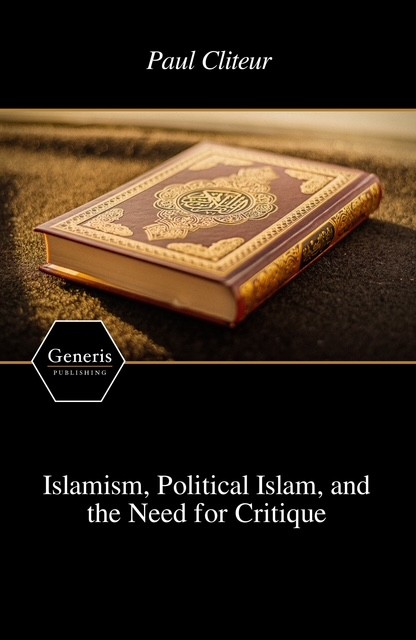
Fallaci’s book is one long, furious tirade against European politicians who shirk their responsibility to defend their way of life against barbarism advancing unopposed.
Anyone reflecting today on fascism (including Nazism), communism and Islamism will recognise that the dangers of these ideologies were not immediately apparent. Fascism and Nazism were the first to be recognised for what they were.
Once the Nazis had lost the Second World War, a clear understanding soon emerged that fascism and Nazism were abhorrent ideologies. It took much longer for the same understanding to emerge about communism, and, in a sense, the Western world has still not fully grasped it.
When Solzhenitsyn’s books appeared, they sent shock waves through French intellectual circles, where many had followed the communist line. The same was true of Maoism.
As Richard Wolin describes in The Wind from the East: French Intellectuals, the Cultural Revolution, and the Legacy of the 1960s (2010), Mao remained a cult figure among Parisian intellectuals for a very long time. They were reluctant to read Simon Leys’s sobering book.
Islamism
The same process is unfolding around Islamism. The objections raised against a clear and compelling book such as Oriana Fallaci’s seem endless. Is what she writes not offensive to Muslims? Surely one must not insult “Islam”? Is this not “Islamophobic”?
Why pick a fight with a world religion that sustains so many people? Is Islam not a minority religion, and why offend minorities?
The prevailing response, however, is to refuse to see the problem of Islamism. Europe is currently preoccupied with Nazism and fascism, with what is called the “far right”.
In other words, the principal ideological threat is presented as coming from the movement that ravaged Europe in the early twentieth century: fascism and Nazism. Islamism is consequently overlooked as a danger, just as Parisian intellectuals spent years failing to see the problems with Maoism.
Fallaci’s message is sinking in at an agonisingly slow pace. Recognition of the validity of Raymond Ibrahim’s typology is emerging just as slowly. Meanwhile, European countries are filling up with “refugees” whose ideas undermine the Western system of liberty, equality and fraternity. Fallaci describes this “takeover” with unerring accuracy.
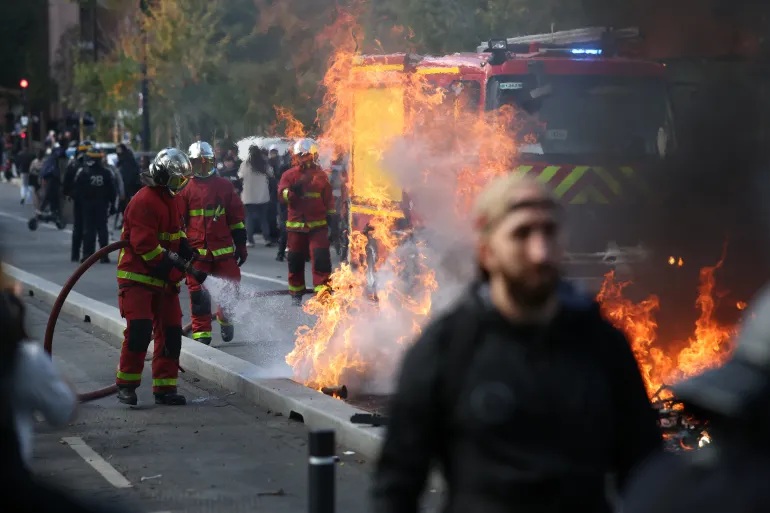
There are numerous recent examples to give in this regard. At this very moment, Paris is burning as a result of jihad on the streets. Yet our trusted mainstream media describe it as a “student protest”. It figures.
We still have a long way to go.