An election measures a nation's political mood at a particular moment. It cannot, by itself, measure the future that nation can create. Around a Knesset election, the immediate questions are unavoidable: security, leadership, economic pressure, military service, and the state's direction. These matters are not trivial. They concern the conditions under which a country survives. Yet survival, however essential, is not a complete national programme. The harder question is what it intends to make possible in the decades ahead.
By Rami Audi
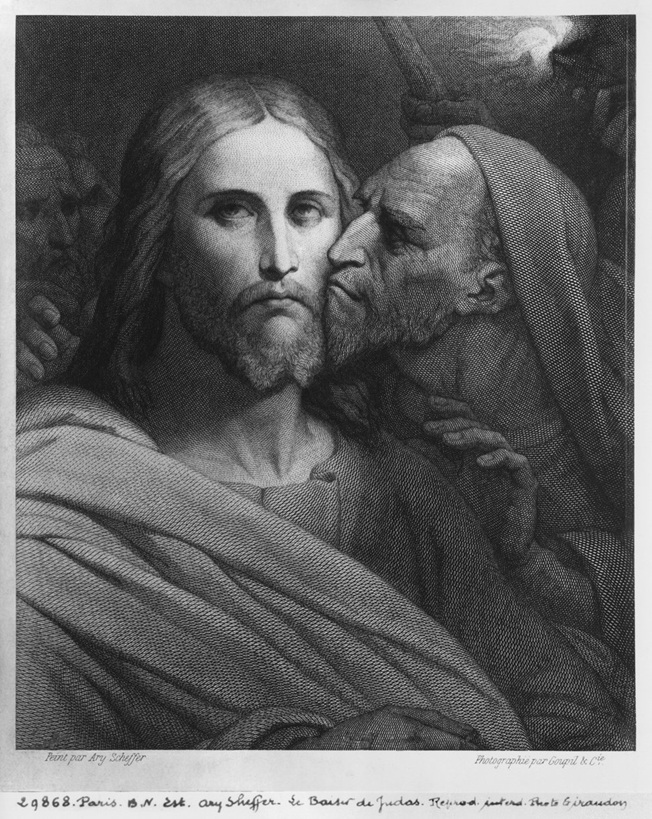
The name Knesset carries a historical resonance that reaches far beyond modern parliamentary politics. Israel's parliament takes its name from the *Anshei Knesset HaGedolah*, the Men of the Great Assembly, associated with the Jewish community in Jerusalem after the return from Babylonian exile.
The modern institution is not a continuation of that ancient body, but its name was deliberately chosen. The founders of the state reached into Jewish history to name a political institution responsible for governing a modern country.
That choice deserves more attention than it usually receives. A nation may inherit a name from its past without inheriting the imagination that gave the name its significance.
Israel's question today is not whether an ancient assembly and a modern parliament are the same institution. They plainly are not. It is whether the modern Knesset can think beyond the immediate demands of government and take responsibility for the country that will exist long after its members have left office.
The next century will not wait for Israeli politics to settle its arguments.
Democratic politics has an unavoidable rhythm. Governments must answer to voters, coalitions must negotiate, budgets must be approved, and leaders must respond to events that cannot always be anticipated.
In Israel, security demands are especially pressing. A country confronting persistent threats cannot treat defence as an abstract concern or postpone urgent decisions in the name of distant ambitions.
But the urgency of the present can gradually consume the ability to imagine anything beyond it. Political life becomes a succession of emergencies, each demanding attention before the previous one has been resolved. National success is then measured chiefly by the ability to withstand the next crisis.
This is understandable. It is also dangerous if it becomes permanent.
A country needs more than a capacity to react. It needs institutions capable of thinking in time horizons that exceed electoral cycles. Decisions about education, water, energy, scientific research, housing, infrastructure and demographic change may take years to produce visible results. Their consequences, however, can determine the opportunities available to generations not yet born.
The next Knesset will inherit problems created by previous governments. It will also make decisions whose full consequences will emerge under governments that do not yet exist. That is the ordinary condition of political responsibility, but it is rarely the most interesting subject of an election campaign.
The question is whether Israel can make long-term creation a central measure of political achievement rather than an aspiration postponed until circumstances become easier.
Israel has already demonstrated a substantial capacity to produce new ideas, enterprises and technologies. Its scientific and technological achievements offer a foundation for the next stage of national development. Yet innovation alone does not provide a vision of the future.
A country can produce successful companies while struggling to determine how the benefits of economic growth should reach its population. It can develop sophisticated technologies while facing housing shortages, pressure on public services, and unequal access to opportunity.
It can have extraordinary scientific talent without ensuring that its schools, universities, and institutions let that talent flourish across generations. The challenge is therefore not simply to invent more. It is to decide what invention should accomplish.
Consider water. In a region where water security has strategic consequences, desalination, wastewater recycling, precision agriculture and improved distribution are not merely technical achievements. They can shape community resilience, industrial development, and the possibilities for regional cooperation.
Energy systems, medical research and artificial intelligence raise comparable questions. Their value cannot be measured solely by patents, investment or international recognition. It must also be measured by the problems they solve and the human capacities they enlarge.
Israel's future could be shaped by its ability to connect scientific ambition with a coherent national purpose. That would require more than declarations about becoming a global leader. It would mean sustained investment in education, research, infrastructure, and the institutions that turn new knowledge into public benefit.
It would also mean accepting that not every worthwhile investment produces an immediate political return. The nation that thinks only in quarterly figures and election cycles will struggle to build the institutions that take a generation to mature.
Every election includes an invisible electorate: children too young to vote and future citizens who have not yet been born.
They cannot influence a party platform. They cannot reward a government for preserving a water supply, improving a school system or investing in scientific research whose benefits may become evident only decades later. Nevertheless, they will live with the consequences of those decisions.
This creates a problem at the heart of democratic government. Political leaders are accountable to present citizens, yet their responsibilities extend beyond the present. The future generation has no direct representation in today's parliament, but almost every major decision about debt, infrastructure, education, natural resources, and the environment affects its interests.
Israel should take this problem seriously. Long-term national planning need not mean rule by unelected experts or the imposition of a single official vision. It means creating mechanisms that require governments to explain the future consequences of their choices, set measurable long-term goals, and preserve essential projects when political leadership changes.
Such a framework would let competing parties disagree over the means while remaining accountable for the country's long-term capacities. The point is not to remove politics from national life. It is to demand more of politics.
Judge a government not only by the crises it manages but also by the possibilities it leaves open. Did it educate people who can think independently? Did it build infrastructure that will serve citizens twenty years from now? Did it strengthen the country's scientific base? Did it make the economy more resilient, or merely shift costs into the future?
These are not questions for a distant philosophical seminar. They belong in the present political conversation.
Israel's security will remain indispensable to its future. No serious discussion of long-term national ambition can pretend otherwise. But a state's strength has several dimensions, and they do not always advance together.
Military capability can protect a country against immediate threats. Economic resilience can help it withstand prolonged pressure. Scientific excellence can create new industries and capabilities. Education can prepare citizens for work that does not yet exist. Strong institutions can preserve public confidence through political disagreement.
The challenge is to develop these capacities together.
The future will also bring pressures that no election campaign can fully anticipate: technological disruption, changes in global trade, competition for talent, demographic shifts and the consequences of increasingly sophisticated artificial intelligence. Israel cannot control these developments, but it can decide whether to meet them with prepared institutions or improvised responses.
Nor should technological progress be confused with national destiny. A society may become richer and more technologically advanced without becoming more cohesive, more educated or more capable of sustaining a common public life. Progress requires choices about what to develop, who should benefit, and which responsibilities must accompany new powers.
This is where political imagination becomes practical. The question is not whether Israel can predict the next hundred years. No country can. It is whether Israel can build a society flexible enough to adapt without surrendering the ability to set its own priorities.
A serious national vision would therefore be neither a rigid blueprint nor a collection of slogans. It would establish durable objectives while leaving future generations the freedom to pursue them in ways their predecessors cannot foresee.
The historical significance of the Great Assembly should not be turned into a convenient analogy. Ancient Jewish institutions and the modern democratic state emerged under profoundly different circumstances. Their responsibilities, sources of authority and political environments cannot simply be equated.
The connection is more modest, but also more useful. Both names remind us that political life involves organising a community across time. The modern Knesset belongs to a sovereign state whose citizens must decide how to govern themselves. Its task is not to imitate an ancient institution. It must meet responsibilities the ancient world could not have imagined.
The next century will demand decisions about technologies that can transform work and warfare, medical advances that may alter the length and quality of life, and environmental pressures that will affect the region's resources. It will demand an educational system that prepares citizens for uncertainty, an economy that sustains opportunity, and public institutions that retain legitimacy through disagreement.
None of this can be achieved by one party, one coalition or one electoral victory. It requires continuity in essential national capacities alongside the freedom to change policies and replace leaders. It requires governments to recognise that a predecessor's successful investment may become a successor's achievement, and that the benefits of sound policy often arrive without remembering who initiated it.
That is a difficult lesson in a political culture where credit is contested as fiercely as power. But the future is rarely built by those who insist that every achievement must bear their personal signature.
The next Knesset will eventually become part of the country's political history. Its members will be remembered for laws passed, decisions made and crises confronted. Yet its deeper significance may lie in less dramatic achievements: the quality of the schools it helps sustain, the scientific capabilities it enables, the infrastructure it leaves behind and the opportunities available to citizens who have never known its members personally.
Those achievements will not make elections less important. They will give elections a larger purpose.
Israel does not need to know exactly what the next century will bring. It needs to ensure that the people who inhabit it inherit more than the present's unresolved emergencies. They should inherit the means to discover, build, adapt and decide for themselves.
The Great Assembly belongs to Jewish tradition. The Knesset belongs to modern Israel's political life. Between them lies no simple institutional continuity, but a question that every generation must answer anew: what will it leave for those who come after it?
Jewish tradition expresses this responsibility through the idea of *dor l'dor*—from generation to generation. The phrase is not a policy programme, but it captures a duty that electoral cycles can easily obscure.
The ballot decides who exercises political authority for the coming term. It cannot decide what the next century will become. That remains the work of a nation willing to think beyond the next election and build for a future it will never entirely control.
Israel's next great achievement should not be measured only by what it withstands. It should also be measured by what it enables its own future generations, and, through their discoveries and creations, the wider world, to accomplish.