France has never been merely a country. It has been an idea about what a country could become, from the Revolution of 1789 to the grand avenues of Paris, from the universal claims of French philosophy to the schoolroom where generations learned what citizenship meant. France presented itself as something larger than a population sharing territory: individuals of different origins could become citizens of one republic, united by law, language, institutions and a common national destiny. That proposition is now under pressure.
By Rami Audi
Recurring confrontations between protesters and public authorities, anger over public services and economic insecurity, and the increasingly bitter struggle over national identity reveal a problem deeper than any single government or demonstration. France is wrestling with the relationship between the state that governs its citizens and the nation that gives their political life meaning.
The question is not simply whether the French Republic can maintain public order. It must. The more difficult question is whether it can recover the common purpose that makes order legitimate in the first place.
The Revolution of 1789 challenged inherited privilege and proclaimed liberty, equality and fraternity as principles of political life. Citizenship no longer depended entirely on birth into a privileged estate. The nation could be understood as a community of citizens whose standing before the law did not depend upon their social origins.
This was an extraordinary achievement, but its history was never as simple as its slogans suggested. Revolution brought terror, war and dictatorship; Napoleon spread aspects of its settlement while establishing an empire. The republic emerged from prolonged conflict over who could govern and what obligations bound citizens together.
The French experience therefore reveals a truth that modern politics often forgets: a constitution can establish a state, but it cannot manufacture a nation by decree.
A state can register citizens, issue documents, collect taxes and enforce laws. These functions are indispensable, yet none automatically produces solidarity. A nation exists politically when its members recognise that they inhabit a common world, share responsibility for its institutions and possess a stake in its future.
They may disagree profoundly about religion, economic policy, immigration or the meaning of history. What matters is whether their disagreements take place within a framework they still regard as their own.
This is the distinction between a population and a political community. The former can be counted and administered. The latter must be sustained across generations.
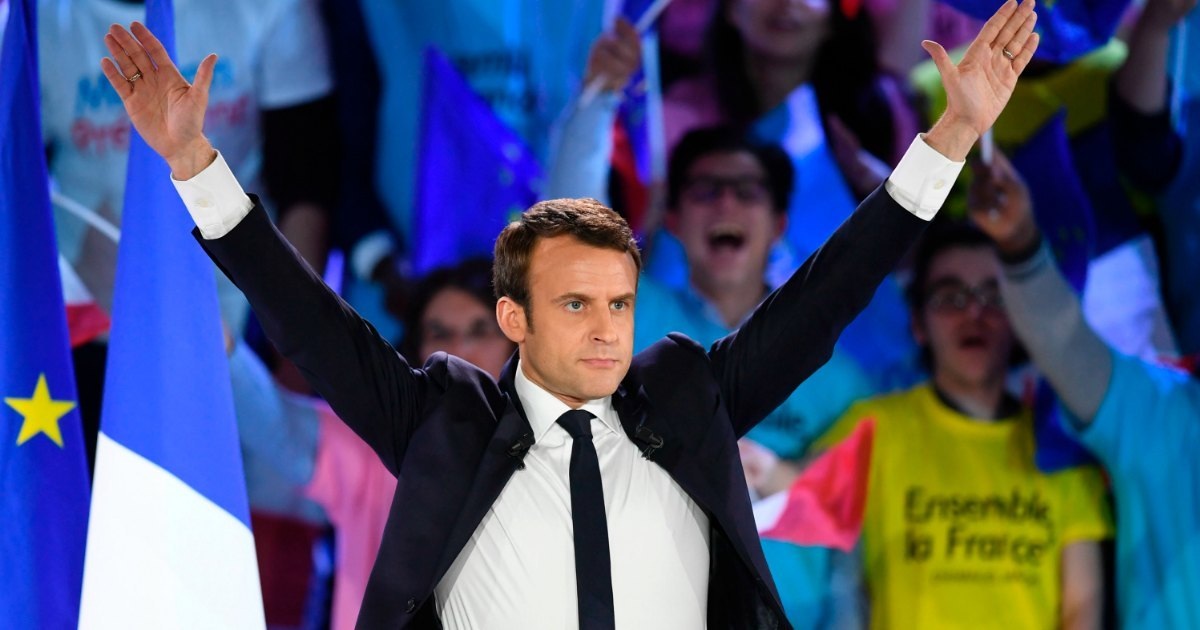
France's contemporary difficulties cannot be reduced to one president's failures. Emmanuel Macron's decision to dissolve the National Assembly in 2024 contributed to a fragmented parliament and complicated the formation of durable governing majorities.
His presidency also exposed the limits of a political project that promised to transcend the traditional division between left and right through managerial competence, economic modernisation and European integration. Technical expertise can help administer a country, but it cannot substitute for a convincing account of what the country is trying to become.
The wider problem predates Macron and will outlast his presidency. Political institutions throughout France face the challenge of reconciling economic pressures, public expectations and declining confidence in established parties. Citizens who feel that their concerns receive little attention may come to regard government as a distant apparatus rather than an instrument of their collective will.
When that happens, even necessary decisions become harder to defend because the public no longer trusts the authority making them.
Economic grievances deserve serious consideration. Living costs, employment, education and public services shape citizens’ place in society. When opportunities narrow, or household expenses rise, promises of equality and national prosperity can seem remote from everyday life.
Yet hardship alone does not explain political breakdown. Societies have endured severe economic difficulties without abandoning their civic obligations. The decisive question is whether citizens believe their difficulties can be addressed through a common political order, or whether they conclude that the order itself has become indifferent to them.
Governments must explain resource limits, distribute burdens fairly and show that sacrifice serves a credible purpose. Citizens deserve competent administration and accountability, not endless appeals to necessity. Fiscal discipline without social confidence becomes politically brittle; public generosity without economic realism becomes unsustainable.
A republic must therefore recover the connection between responsibility and solidarity. Citizens have legitimate claims upon their institutions, but citizenship also entails obligations: respect for the law, participation in public life and recognition that other citizens possess equal standing. Rights remain secure when a society accepts that its common institutions cannot function if every individual or group recognises only its own demands.
This principle becomes especially important when public anger spills into violence. Peaceful protest is a legitimate feature of a free republic. Demonstrations can expose neglected problems, challenge complacent officials and force public debate. But the destruction of public buildings, intimidation and attacks upon ordinary people cannot acquire democratic legitimacy merely because perpetrators invoke social injustice.
A town hall, a school or a public institution belongs to the community, not to the government temporarily occupying its offices. Its destruction harms citizens who may have had no part in the dispute and who may depend upon that institution for essential services. Political violence does not necessarily express the will of the people; often it silences the people whose interests it claims to defend.
The state must respond firmly to violence, but its authority is not unlimited. The law must be enforced consistently, and credible allegations of police misconduct must be investigated. A republic cannot demand respect for legal authority while exempting its own representatives from legal accountability. Public order and civil liberty are not opposing principles. They depend upon one another.
France faces an equally difficult challenge in balancing universal citizenship and national identity. The French republican tradition aspires to a common civic status that transcends ancestry and religious affiliation. That aspiration remains essential. No citizen should possess inferior legal standing because of ethnic origin or private belief.
But equality before the law does not require a nation to become indifferent to its history, language or cultural inheritance. Universal principles do not exist in a vacuum. Schools teach them, institutions express them, public memory preserves them, and habits of civic life sustain them. A political community cannot transmit an inheritance that it is unwilling to acknowledge.
Schools, for example, do more than prepare young people for employment. They introduce successive generations to a shared intellectual and historical world. They teach language, literature, scientific reasoning and the history of the institutions through which citizens govern themselves.
When education becomes detached from that broader purpose, it risks reducing citizenship to an administrative category rather than cultivating an understanding of common responsibility.
National history must be taught honestly, including its failures, injustices and contradictions. Patriotism does not require historical amnesia. On the contrary, a mature attachment to one's country allows its past to be examined without treating every criticism as an act of hostility. But honest criticism differs from the assumption that national inheritance is merely an embarrassment to be discarded.
France has been shaped by migration, internal diversity, religious conflict and successive transformations of its national life. Its history cannot be reduced to an unchanging identity. Nevertheless, integration requires a society that can explain what newcomers are being invited to join. A common citizenship needs a recognisable public culture, a shared language of civic responsibility and confidence in the institutions that embody the nation's continuity.
The alternative is fragmentation, not genuine pluralism. When the state negotiates separately with competing identities, the common framework weakens. Diversity can enrich a nation, but resolving disagreements requires shared rules and recognition that the wider community’s interests sometimes take precedence over factional demands.
France's tradition of *laïcité*, or secularism, illustrates the challenge. Properly understood, secularism protects the independence of public institutions and the equal standing of citizens regardless of religion. It prevents religious authority from becoming the final arbiter of public law. But secularism loses its purpose if it becomes a substitute for integration or a means of treating entire communities as permanently suspect. Religious freedom, in turn, cannot mean that the common law becomes optional.
The approaching presidential succession will intensify the competition to define France's difficulties. The right emphasises security, authority and national cohesion. The left stresses economic inequality, social exclusion and deficiencies in public provision.
Other political forces challenge the existing constitutional arrangements or seek to redefine France's relationship with Europe. These disagreements reflect real differences in political philosophy, and they should be debated openly.
France needs more than a change of government. It needs to renew the relationship between citizens and the republic.
That renewal must begin with practical matters: dependable schools, functioning public services, economic opportunity, competent administration and equal enforcement of the law. It must also reach beyond administration. Citizens need reasons to believe that their work contributes to something lasting, that their sacrifices are not being dismissed, and that the country they pass to their children will remain recognisably connected to the one they inherited.
This is where the French crisis acquires significance beyond France. Across the West, governments confront economic anxiety, political fragmentation and disputes over the historical inheritance that binds societies together. Institutions designed to manage political disagreement are increasingly expected to solve a more fundamental problem: the erosion of agreement about what citizens owe one another.
These are the tasks of political renewal. They require leaders who can explain difficult choices, citizens willing to accept common obligations and institutions that demonstrate their worth through consistent performance. They also require rejecting two destructive illusions: that authority can survive without accountability, and that freedom can flourish without order.
The French Republic was built upon the proposition that a nation could be more than a territory and citizenship more than a document. Its survival depends upon whether that proposition can once again become a lived experience. The republic must remain open to citizens of different backgrounds while retaining the confidence to defend its history, public culture and common law. It must acknowledge legitimate grievances without allowing grievance to become the sole foundation of political identity.
The decisive question is who owns the republic. No president, party, protest movement or ideological faction can claim it exclusively. It belongs to the citizens who sustain its laws, preserve its institutions, contest its decisions peacefully and pass its inheritance to the next generation.
France once helped persuade the modern world that a nation could be founded upon citizenship rather than inherited privilege. Its present challenge is to demonstrate that citizenship can remain a living bond rather than a legal formula. If the republic cannot renew that bond, its monuments will continue to testify to a greatness that its politics can no longer reproduce.
A nation does not disappear when its institutions fall silent. It begins to disappear when its citizens can no longer explain why those institutions belong to them.
France must recover that answer—not merely to restore order, but to make the republic a nation again.