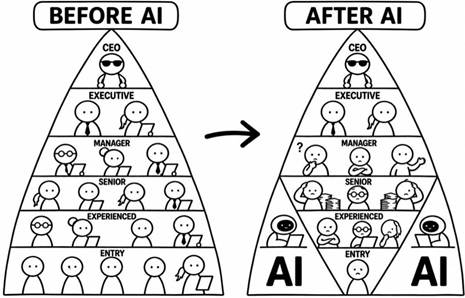
For a century, organisations have looked like pyramids. A CEO at the top, a few executives, layers of managers and senior specialists, and a broad base of entry-level staff doing the repetitive work that keeps the business running. That base was never just labour. It was the training ground where analysts became engineers, engineers became project managers, and project managers became leaders.
Artificial intelligence (AI) is changing that shape. The pyramid is becoming a diamond.
AI now drafts reports, reconciles data, prepares the first version of the proposal, and answers routine queries. The entry level is shrinking. Experienced staff are fewer and under pressure, and senior professionals are buried in paperwork that now reaches them first, with nobody below to filter it.
Managers stand in the middle, unsure whom to develop and how.
The productivity case is real. In a field experiment led by Harvard Business School with Boston Consulting Group, consultants using AI on suitable tasks completed 12.2% more tasks on average, and completed tasks 25.1% more quickly, with markedly better quality.
But the same study gave a warning that every leader should take to heart.
On a task chosen to be beyond the AI’s capability, consultants using AI were 19% less likely to produce correct answers.
The researchers call this the “jagged technological frontier”. AI is brilliant at some tasks and quietly wrong at others that look just as difficult. Telling which is which takes judgement, and judgement is exactly what the entry level used to build.

Three lessons stand out for leaders reshaping their organisations:
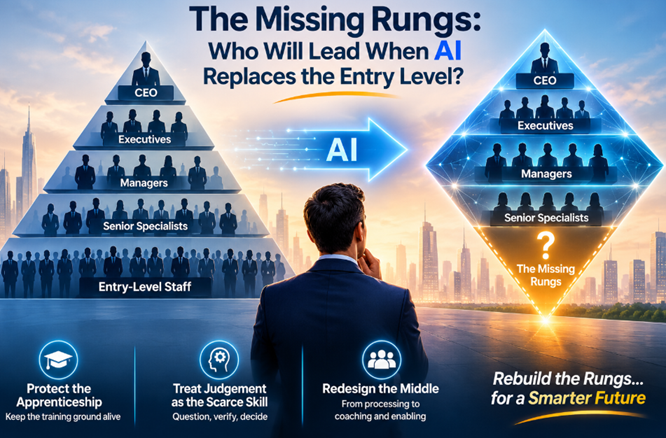
AI will not decide the shape of our organisations; leaders will.
The diamond can be fragile, top-heavy and starved of new talent. Or it can be a smarter structure, where machines take on routine work and people are freed to learn faster, think deeper, and lead sooner.
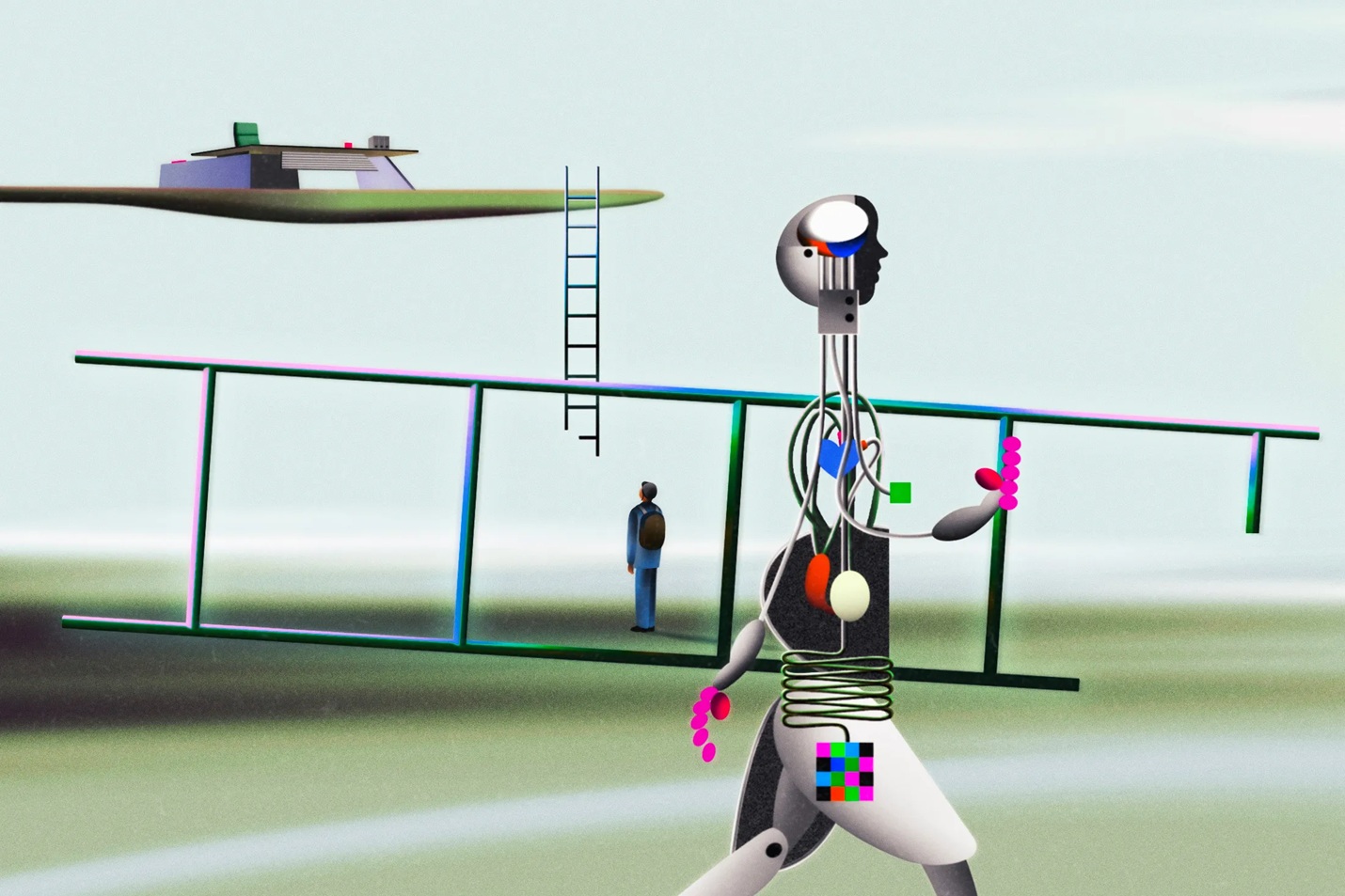
The companies that win the next decade will not be those that use AI to remove the bottom of the ladder. They will be those that rebuild the rungs, so the next generation can still climb.
The question for every leader today is simple: when you look at your organisation in five years, who will be standing at the base, ready to rise?