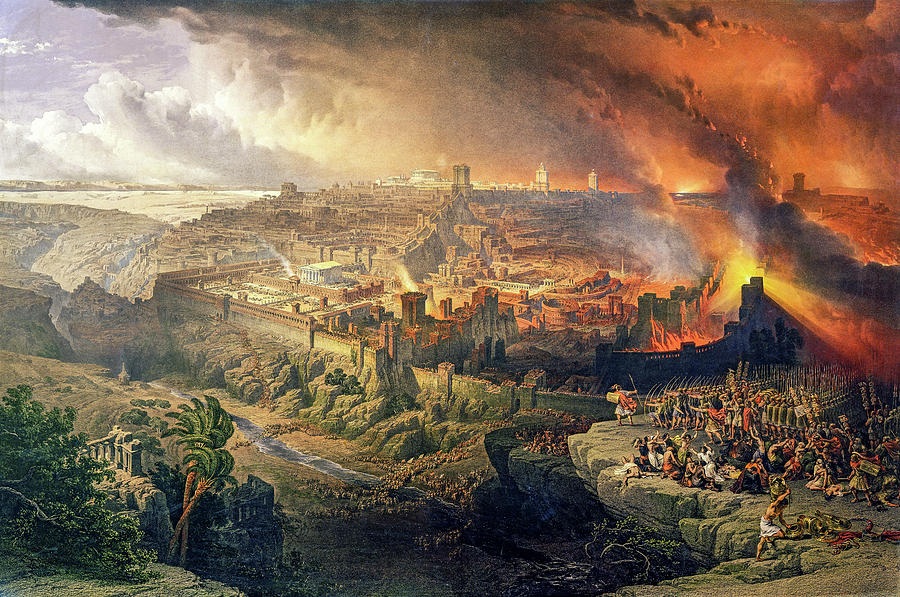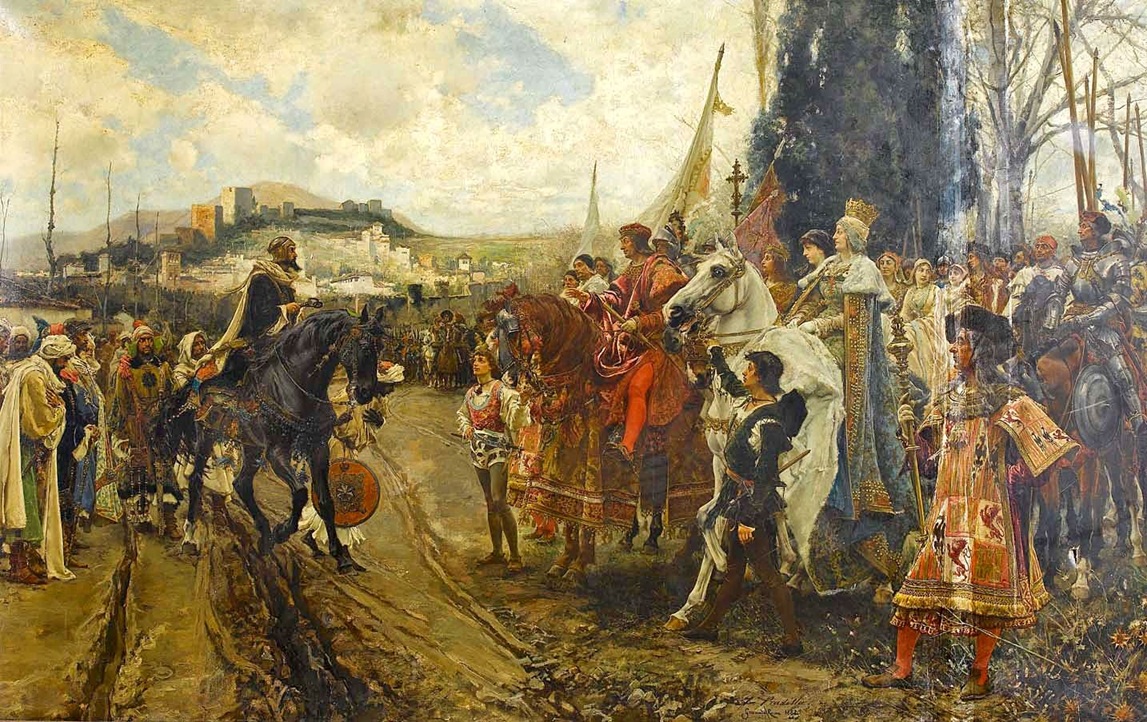
In 711, an army crossed the Strait of Gibraltar and entered Iberia. Within a generation, much of it had passed under Muslim rule. In 1492, Granada, the last Muslim kingdom in Iberia, surrendered to the Catholic monarchs. Nearly eight centuries separated those events, filled with dynasties, wars, alliances, intellectual achievements, rivalries and transformations. History rarely moves in a straight line. Yet Andalusia's fate leaves Europe with a question it has never answered: how does a civilisation preserve the authority to determine its own future?
By Rami Audi
The question matters because Europe has become remarkably comfortable discussing the preservation of almost everything except the civilisation that made its institutions possible. It protects buildings, restores paintings, celebrates historical anniversaries and fills museums with the achievements of previous generations.
Monuments cannot defend themselves. A society may inherit the architecture of greatness while gradually losing the convictions, political confidence and institutional authority that gave those buildings their meaning.
Andalusia is not a simple historical parable. Muslim rule in Iberia was never a single, unchanging political order. It passed through competing emirates, caliphates, dynasties and kingdoms, marked by periods of extraordinary cultural production as well as conflict, instability and repression.
Christian kingdoms also fought one another, formed alliances, and pursued their own ambitions. Jewish communities experienced periods of remarkable intellectual flourishing under certain Muslim rulers, but also persecution, discrimination and forced displacement under others.
The important lesson is not that history offers a ready-made comparison with contemporary Europe. It is that political authority is never permanent. Fragmentation, rival loyalties, and institutions' inability to maintain a common political order can transform the destiny of an entire region.
The year 1492 also carried another European tragedy. On 31 March, Ferdinand and Isabella issued the Alhambra Decree, ordering Jews throughout their kingdoms to leave unless they accepted conversion to Christianity. They were given until the end of July to depart.
An ancient Jewish presence in Iberia, stretching back many centuries, was shattered. Some converted, others fled, and many carried their traditions, learning and commercial networks across the Mediterranean.
The Sephardic diaspora became one of the defining dispersals in Jewish history.
The two events of 1492 must not be confused: the surrender of Granada ended Muslim political sovereignty in Iberia, while the Alhambra Decree expelled Jews who refused conversion. Yet together they marked a profound transformation of the peninsula.
The monarchy that celebrated the conquest of Granada also chose religious uniformity over keeping its Jewish population. A civilisation cannot claim strength merely because one political authority replaces another. It must also be judged by what it preserves, whom it protects and what it allows to flourish.
Europe's history is therefore not a story of uninterrupted moral superiority. It is a record of extraordinary achievements, terrible failures and the capacity, sometimes painfully acquired, to correct them.
The Jewish experience belongs within that history. Jewish communities helped shape European commerce, philosophy, science and public life, even as European rulers repeatedly persecuted and expelled them. Yet the story of Sepharad did not end with expulsion. It travelled.
In the late sixteenth century, descendants of Spanish and Portuguese Jews began establishing themselves in Amsterdam. Many had been forced to convert to Christianity and had subsequently faced the Portuguese Inquisition.
In the Dutch Republic, they gradually returned to openly practising Judaism. Their community grew, and in 1675 the magnificent Portuguese Synagogue was inaugurated. The name Sephardim, derived from Sepharad, the Hebrew name for Spain, carried the memory of the homeland from which their ancestors had been driven.
This is one of the most remarkable connections between Andalusia and Amsterdam. A community expelled from Iberia helped build a new centre of Jewish life in a northern European city.
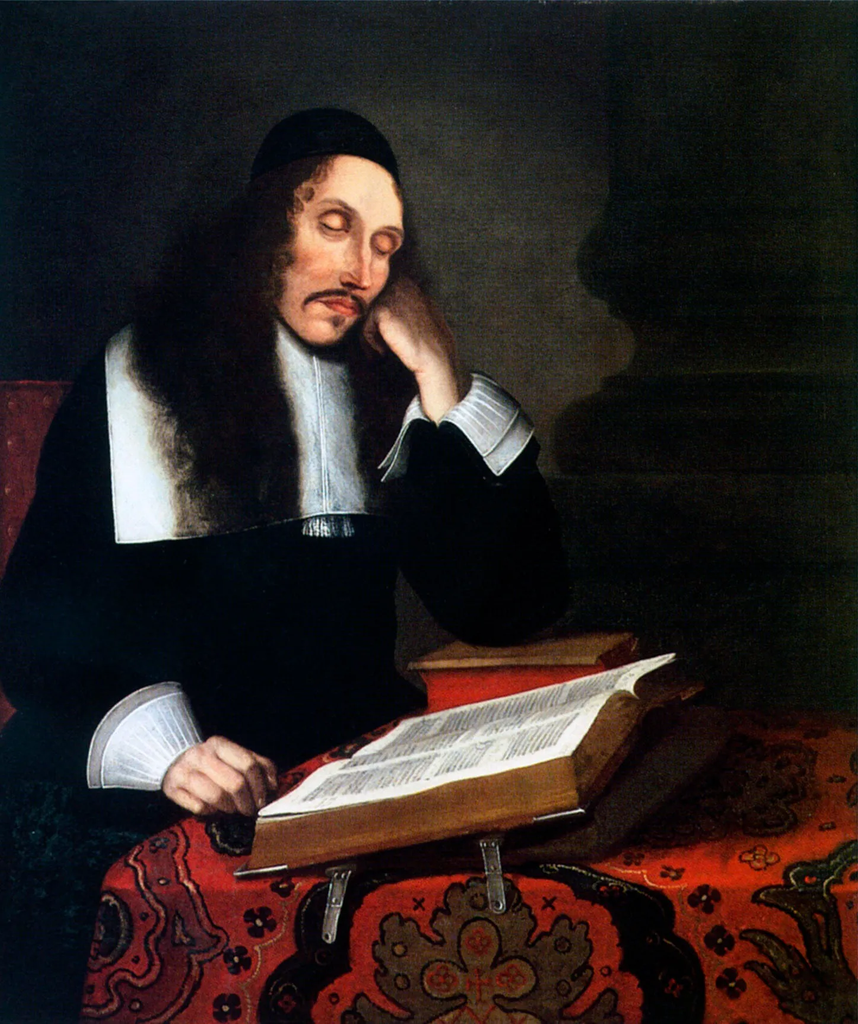
Amsterdam became a place where Sephardic Jews could regain a public religious life, establish institutions, and contribute to international commerce and intellectual life. The city did not offer unlimited equality, and its tolerance had boundaries. Nevertheless, it provided opportunities that had been denied to generations of Iberian Jews.
In the seventeenth century, Amsterdam represented something remarkable. It was a centre of commerce, publishing, artistic achievement and intellectual exchange. Rembrandt painted a world of human depth and moral complexity.
Spinoza challenged inherited assumptions about religion and political authority. The Jewish community became part of the city's identity, alongside the merchants, artists, publishers and thinkers who helped make Amsterdam one of Europe's great urban centres.
That is what makes Amsterdam more than a beautiful European city. It represents the possibility of a particular civilisation: one in which commerce can prosper, religious differences can exist, art can challenge convention, and individuals can question authority without fearing that disagreement will cost them their lives.
But monuments do not guarantee continuity.
On 2 November 2004, Dutch filmmaker Theo van Gogh was murdered in Amsterdam by Mohammed Bouyeri, an Islamist extremist, after collaborating with Ayaan Hirsi Ali on Submission, a film critical of the treatment of women under Islamic religious authority. Van Gogh was shot and stabbed in broad daylight.
A threatening letter was attached to his body. It also threatened Hirsi Ali, who had already faced intimidation for her criticism of religious extremism.
The murder was not simply an attack on an individual. It was an attempt to establish, through violence, that certain ideas could not be expressed and certain religious claims could not be challenged. A democratic society that permits criticism only when nobody feels offended has already begun surrendering one of its most essential freedoms.
The danger is not that every Muslim immigrant shares the ideology of an Islamist extremist. Millions of Muslims live peacefully within European societies, participate in their institutions and reject political violence.
The distinction between ordinary religious life and an ideological movement seeking to subordinate democratic law to religious authority is essential. Europe must defend the freedom of its Muslim citizens while refusing to grant political legitimacy to movements that would deny that same freedom to others.
This is where the European debate becomes urgent. Immigration policy, integration, citizenship and religious freedom are legitimate subjects of democratic discussion. They cannot be treated as forbidden questions simply because they are politically uncomfortable.
A state has the right and responsibility to decide who enters its territory, enforce its laws, protect its citizens and insist that everyone living within its borders respects the constitutional order. That is not hostility towards foreigners. It is the basic responsibility of sovereignty.
The warning signs are visible across the continent. Antisemitism has returned to European streets with an intensity that should alarm societies whose history includes the Holocaust.
In the Netherlands, police registered 867 antisemitic incidents in 2025, according to the country's National Coordinator for Combating Antisemitism. Jewish schools, synagogues and community institutions require protection. Jewish citizens must not have to conceal their identity to feel safe in European cities.
Amsterdam itself has confronted this problem. The city's own assessment of antisemitism describes Jewish residents experiencing intimidation, discrimination and a diminished sense of security.
The question is particularly troubling in a city whose Jewish community helped shape its cultural and intellectual history. What does it mean when the descendants of a people who once found refuge in Amsterdam no longer feel entirely secure displaying their identity there?
Islamist extremism exploits weaknesses in democratic societies, while political movements on the opposite side exploit public frustration and turn it against entire populations. Both developments threaten the same civic order.
A democracy cannot survive if it abandons its principles whenever they become difficult to defend. Nor can it survive if fear and collective suspicion replace equal citizenship before the law.
France has provided a warning about what happens when a republic struggles to maintain a common civic culture across an increasingly fragmented society. The Netherlands should not assume that its history of commercial openness, religious accommodation and political pragmatism makes it immune.
Amsterdam, in particular, deserves a serious conversation about the future of the culture it represents. Its Sephardic inheritance, artistic achievements, and tradition of intellectual independence are not decorative attractions for tourists. They are part of the substance of European civilisation.
The responsibility belongs first to political leadership. Governments must enforce the law consistently, confront antisemitism and Islamist extremism, protect freedom of expression and refuse to tolerate competing claims to political authority. Schools must teach European history without either glorifying it or apologising for its existence.
Integration must mean more than physical residence and economic participation. It must include an understanding that citizenship carries obligations: respect for democratic institutions, equality before the law and the freedom of others to think, speak and believe differently.
Europe also needs to recover a confidence that has become strangely difficult to express. A civilisation does not have to despise another civilisation to value its own. It does not have to deny outsiders' contributions to defend its inheritance. But neither must it pretend that every cultural or political project fits its foundations. Pluralism requires boundaries, and freedom requires the courage to defend it.
Andalusia reminds us that political arrangements can change over centuries. The Sephardic journey from Iberia to Amsterdam reminds us that a people can lose its homeland without losing its identity.
Amsterdam reminds us what Europe can build when intellectual freedom, economic vitality and cultural ambition reinforce one another. The question is whether Europeans understand that these achievements require active protection.
Amsterdam's future will not be decided by the number of visitors who admire its canals or the number of museums that preserve its paintings. It will be decided by whether its citizens and institutions remain confident enough to defend the freedoms that made those paintings possible, and whether its Jewish community can live openly in the city whose history it helped shape.
A city that remembers Rembrandt but forgets the freedom that allowed him to paint preserves only the decoration of its civilisation. A city that displays the Portuguese Synagogue but cannot guarantee the security and dignity of Jewish life risks turning its own history into an empty exhibition.
History's lesson is not that Europe must fear every newcomer. It is that Europe must never surrender responsibility for its own political and cultural future. It should welcome those who wish to contribute to its common life, protect those whose freedoms are threatened and confront those who seek to replace democratic authority with intimidation or ideological control.
Andalusia belongs to history. Amsterdam still belongs to the future. Whether it remains a living expression of European civilisation or gradually becomes a monument to a confidence that disappeared is a decision Europeans must make themselves.