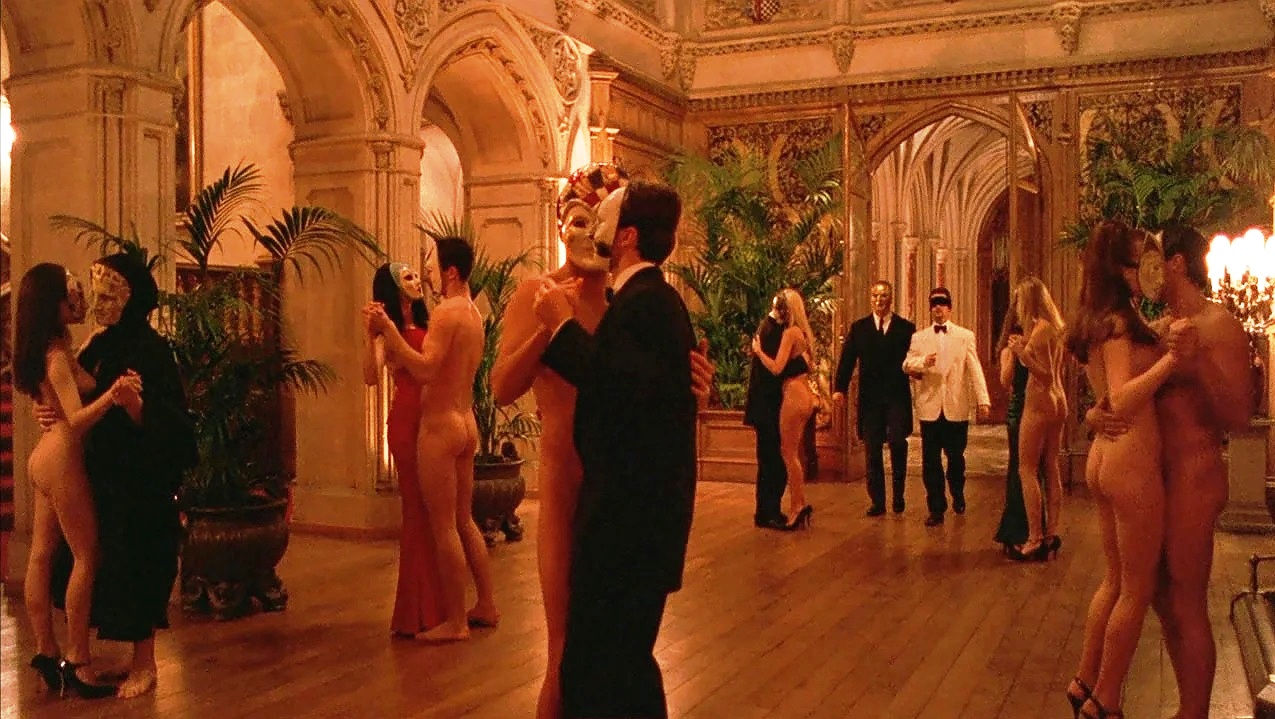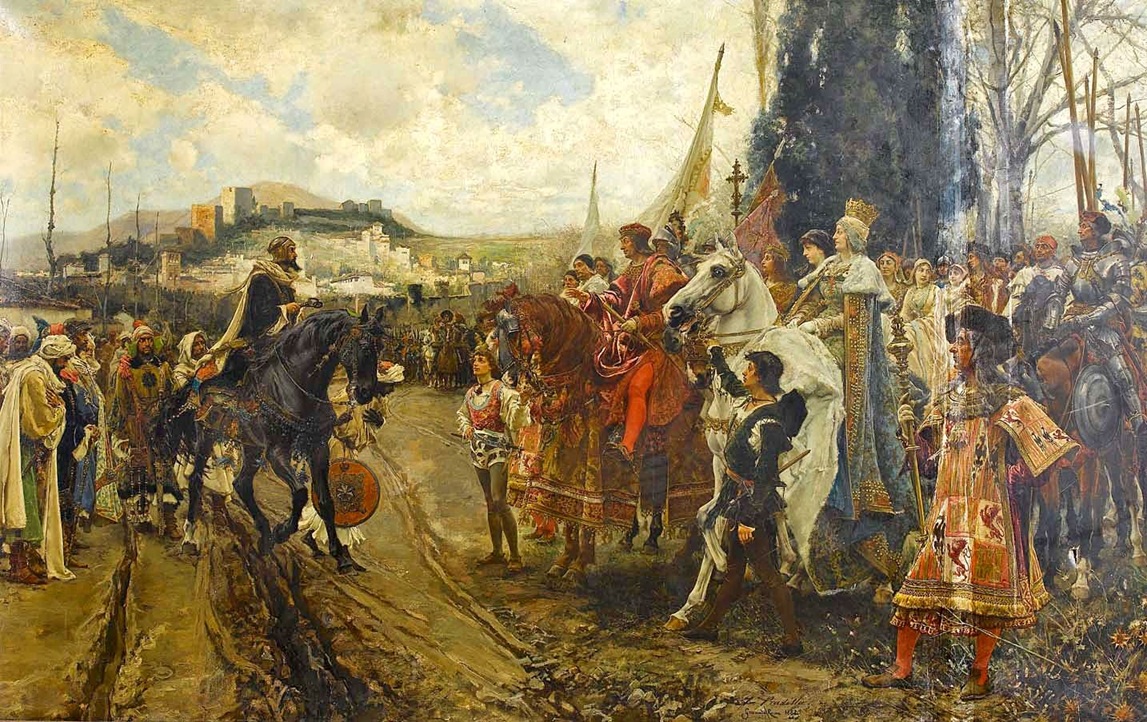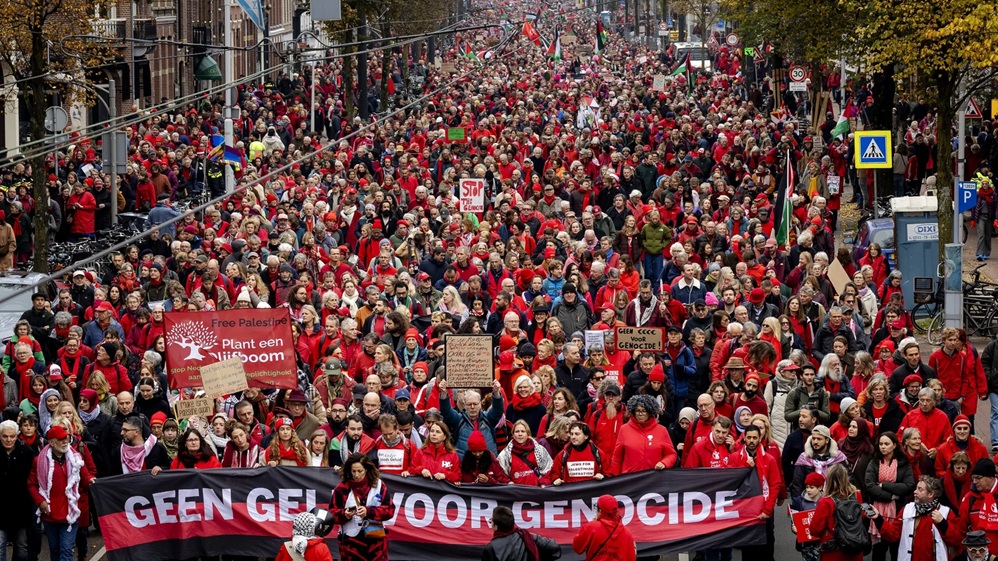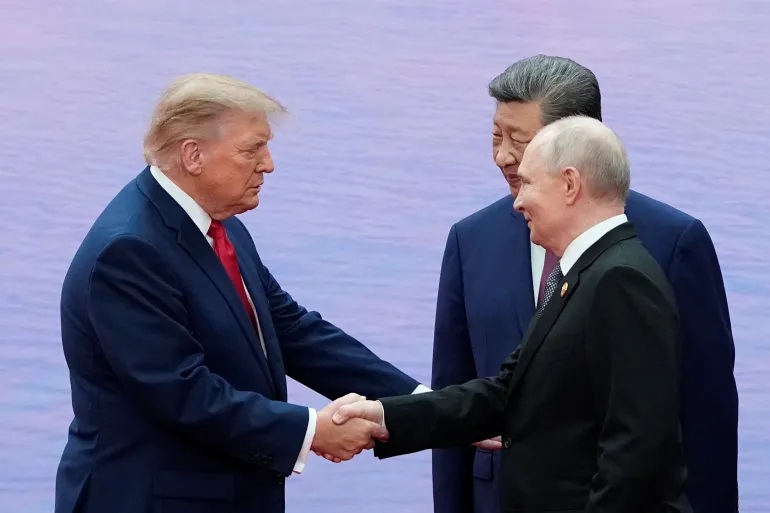
Something indecently theatrical about three men arriving at a table to discuss the future of the world while an entire continent wonders how much of that future will be decided without it. Vladimir Putin, Donald Trump and Xi Jinping met in Shenzhen on November 19, 2026, for the first-ever trilateral meeting of the leaders of Russia, the United States and China. Three political traditions, three enormous national ambitions, three nuclear powers. Europe, meanwhile, was making sure nobody mistook its absence from the principal photograph for consent.
By Rami Audi
One could almost forgive history for laughing. The eighteenth century appears to have returned, only with nuclear weapons, satellite surveillance and considerably more expensive security arrangements. The costumes have changed. The appetite for influence has not.
Meet the Tsar, the King and the Communist Aristocrat.
Putin brings the historical imagination of the Russian Empire into modern diplomacy. The Tsar has no crown, of course. He has a presidency, a security establishment and a political vocabulary saturated with Russian historical continuity, territorial destiny and national restoration. His ambition is not simply to have Russia recognised as a country with legitimate interests. It is to restore its standing as a power entitled to shape the political geography around it. The imperial furniture has been modernised, but the historical house remains recognisable.
Trump represents a different monarchy. The King is an American metaphor, not a constitutional description, although the distinction occasionally struggles to survive the theatrical demands of his politics. His diplomacy revolves around personal encounters, bargaining, loyalty and the spectacle of decisive leadership. For him, the person occupying the opposite chair can matter almost as much as the country behind him. The King does not necessarily wish to administer every corner of the kingdom. He prefers everyone to know who has arrived.
Then comes Xi Jinping, the Communist Aristocrat, perhaps the most entertaining contradiction at the table. The Chinese Communist Party emerged from a revolutionary tradition promising to overthrow inherited privilege and class hierarchy.
Yet the contemporary party-state has developed an elaborate political hierarchy and a privileged ruling elite. The aristocracy has disappeared from the official vocabulary, but political privilege has proved remarkably resistant to ideological extinction. The revolution abolished the old court and built a new one. History occasionally jokes at the expense of revolutions.
These three systems are profoundly different. Their interests do not automatically coincide, and their encounter should not be mistaken for an ideological alliance. But they share an understanding that Europe increasingly seems reluctant to express with comparable confidence: power requires strategic ambition, national purpose and the capacity to act.
The Shenzhen summit made that reality visible. Its joint declaration addressed reform of international institutions, energy supplies, the International Criminal Court's jurisdiction, and nuclear risks. Ukraine was discussed, but did not appear in the declaration. The historic photograph accompanied an agreement that left the most consequential questions unresolved. History had been invited; apparently, the detailed agenda had not.
And this is where Europe enters the picture, rather less majestically.
On the same day, European leaders gathered in Berlin with Ukraine and its supporters to insist that the continent must have a voice in any settlement affecting its security. The memory of Yalta remains particularly uncomfortable for countries whose futures were previously negotiated by powers at a table from which they were excluded. Consultation and participation are not diplomatic synonyms; the distinction can determine a nation's fate.
The contrast between Shenzhen and Berlin was striking. Three leaders occupied the international stage together. European leaders assembled to defend their right to participate in the conversation. Both meetings mattered, but their symbolism was unequal. One displayed the concentration of great-power attention; the other displayed Europe's determination not to become an object of great-power diplomacy.
This is not the first time Europe has confronted such a predicament. The continent once produced the political machinery of empires, dynasties and revolutionary movements. Its monarchs negotiated borders, its fleets controlled maritime routes, and its diplomats assembled agreements that could rearrange entire populations.
The Congress of Vienna was not a gathering of international social workers. It was an exercise in restoring continental order through the calculations of powerful states. The partitions of Poland offered an uglier demonstration of what happened when powerful neighbours treated another nation's sovereignty as an inconvenience.
Europe's answer after 1945 was extraordinary. After devastating itself twice within a generation, Europe attempted to subordinate historical rivalries to institutions, economic integration and common legal frameworks. Former enemies became partners. The European project demonstrated that political restraint could be an achievement rather than a surrender.
But an achievement can gradually become an intellectual comfort zone.
Europe learned to regulate power, institutionalise cooperation and distrust the old vocabulary of imperial ambition. The mistake was assuming the rest of the world would eventually adopt the same philosophical settlement because Europe found it attractive.
While Brussels refined its procedures, Moscow kept thinking in terms of strategic depth, Beijing cultivated long-term national ambitions, and Washington remained capable of rediscovering the pleasures of personal power politics.
The world did not collectively sign Europe's philosophical settlement. It continued conducting business.
There is something almost comic about a continent that once exported empires, dynasties and revolutionary ideologies now becoming uncomfortable whenever someone mentions historical ambition. Europe has committees, regulations, summits, declarations and strategic documents.
It has sophisticated markets, military resources and diplomatic experience. What it struggles to demonstrate consistently is the ability to translate those assets into a coherent political will.
One might suggest that Europe establish a committee to investigate whether it can develop such a will. It could appoint a special representative, produce a framework, commission a study and reconvene after the next summit. By then, the three gentlemen in Shenzhen might have already held another meeting.
The problem is not that institutions are useless. It is that institutions cannot substitute for political purpose. A continent of nations does not become a geopolitical actor merely by repeating that it represents a common civilisation. It must decide what that civilisation is prepared to defend, what interests it intends to pursue and what responsibilities it is willing to assume.
Perhaps this is why the ghost of Napoleon is so inconveniently relevant.
Napoleon was hardly a model of democratic restraint. He concentrated authority, conquered territories, crowned himself emperor and left Europe with a devastating catalogue of wars. Yet his historical significance extends beyond the imperial crown. He transformed a fragmented political landscape, reorganised the French state, consolidated legal and administrative institutions and demonstrated how strategic vision could alter the continental balance.
Europe once feared the extraordinary political energy Napoleon represented. Today, it might almost envy the capacity for strategic action that his career symbolises. What a peculiar historical reversal: a continent that fought to remove an emperor now struggles to produce a political imagination that matches the ambitions of contemporary powers.
The metaphor is not a demand for another emperor. Europe does not need a man in a bicorne hat distributing crowns to his relatives. It needs the capacity to turn fragmented national interests into strategic decisions.
It needs leadership that can think beyond the next electoral cycle, institutional compromise, and communiqué. Napoleon's relevance lies not in his absolutism but in the historical demonstration that political fragmentation is not an eternal condition.
Europe has its own historical repertoire. Richelieu understood the relationship between national interest and continental balance. Bismarck understood the architecture of power and the dangers of diplomatic miscalculation. Churchill understood that political survival sometimes requires a language more demanding than administrative reassurance.
Neither offers a ready-made model for twenty-first-century Europe. European political thought once possessed an extraordinary range of strategic imagination. It should be capable of producing something original rather than searching its museums for an emperor.
Strategic autonomy does not require territorial expansion. Strong leadership does not require personal absolutism. National sovereignty does not require abandoning cooperation. Europe can recover political ambition without reproducing the disasters of its imperial past. But it must stop confusing rejecting imperialism with rejecting power itself.
The temptation to organise weaker states through external pressure, strategic dependency and great-power bargaining has not disappeared. Ukraine is an immediate reminder that sovereignty becomes vulnerable when powerful governments discuss security arrangements without the meaningful participation of those whose security is at stake. Smaller nations are not decorative pieces on a geopolitical chessboard, no matter how enthusiastically the players enjoy the game.
The three protagonists in Shenzhen do not share a blueprint for the world. Their competing interests may prove more consequential than their declarations of cooperation. But their meeting demonstrates that major powers still understand the importance of strategic positioning, personal diplomacy and national ambition. Europe should recognise the lesson without copying their political systems or methods.
The Tsar reminds Europe that historical memory remains politically powerful. The King shows that personal leadership and negotiation still shape international relations. The Communist Aristocrat offers a delightful reminder that revolutionary language can survive comfortably alongside the privileges of an established ruling class.
And the missing Napoleon leaves Europe with the most difficult question of all: can a civilisation that once shaped the world's political imagination still shape its own destiny?
Europe does not need another continental war to rediscover political ambition. Nor does it need an emperor to remind it that history is not a regulatory exercise. It needs leaders capable of combining national interests, military responsibility, economic strength and civilisational confidence into a coherent political project.
Europe must decide whether it intends to shape the negotiation of power or remain an increasingly sophisticated spectator, issuing carefully worded objections from the corridor.
There is something almost tragic about a civilisation that taught the world so much about political power becoming uncertain about whether it is still entitled to exercise any. The Tsar, the King and the Communist Aristocrat have arrived at the table. Napoleon is missing. And Europe, one suspects, is still discussing the agenda.
History, meanwhile, has rather rudely declined to wait for the meeting to adjourn.