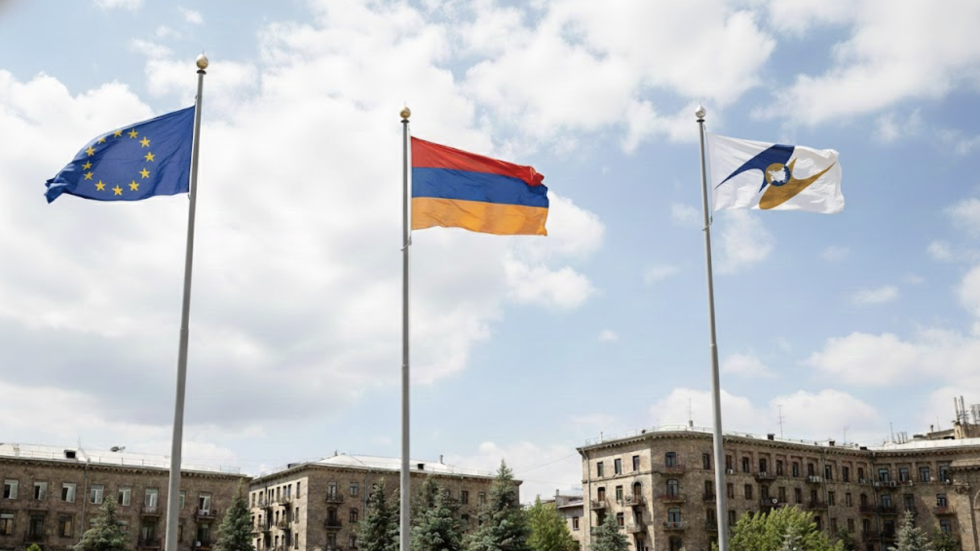
The South Caucasian state of Armenia is undergoing a significant shift in foreign policy under Prime Minister Nikol Pashinyan. After signing the Washington Agreement with archrival Azerbaijan, dissapointment in old friend Russia, Armenia is now tilting towards the European Union by implementing the EU integration Act, thereby launching the EU accession process. A dramatic course shift.
By Ahsan Ali
For any EU prospects, Armenia has reset itself in the South Caucasus with the Armenia-Azerbaijan peace agreement. The agreement enhances integration in the South Caucasus and strengthens Armenia’s position in advancing its EU accession application.
The precedents include Armenia's distancing from the Russian sphere of influence following the 2020 conflict. Yerevan is de-integrating from the Russian-led Collective Security Treaty Organisation (CSTO). Armenia’s lack of participation in the CSTO budget payments, activities, or decision-making has frozen its membership.
The decoupling from Russia is not that simple. The Armenian economy is deeply intertwined with Russia and dependent on it. Armenia imports 87% of the Russian gas and 35% of its foreign trade with Russia. Armenia faces strategic vulnerability due to Russia's significant economic leverage over it.
Armenia has to act rationally, as Russia and international sanctions have prevented Armenian gas imports from Iran. Henceforth, Armenia can now turn to Azerbaijan for energy diversification. Energy diversification can also be a step toward reintegration, with EU endorsement, as Azerbaijan is among the many gas providers to the EU.
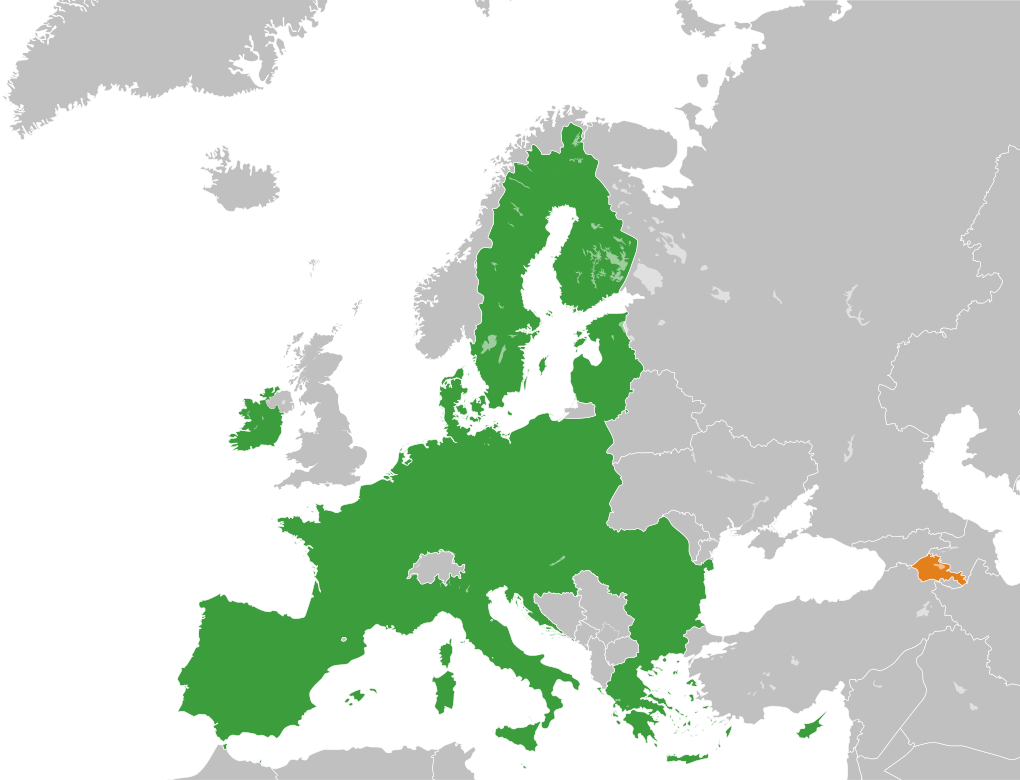
In the post-2020 conflict scenario, Armenia has revised its foreign policy, adopting a new doctrine of complementarity. In the decisive pivot, it is no longer relying on a single patron but actively courting and engaging with the US, EU, and India. This pivot marks a shift away from the Moscow-led alliance, balancing geopolitical position and enhancing strategic autonomy.
For Armenia, the strategic pivot is not merely symbolic; it is an alternative political, legal, and economic discourse. With its reintegration into the South Caucasus, Armenia is inextricably linked to the European family. The goal is to transcend its geographic isolation through political, economic, and legal integration with the EU.
The integration project re-envisiones European integration to secure sovereignty, modernise the state, and promote economic diversification. It's an anchor of sovereignty within a rules-based order, seeking security not from a single patron, but instead from a community of values.
Armenia's approach to the EU is backed by France, which holds significant influence within the EU. The French state has become one of Armenia’s prominent EU supporters, a key security partner, and a promoter of the EU as a strategic partner. The influential Armenian diaspora has further swayed France to forge closer ties with Armenia.
The EU’s implicit loss of Georgia is evident in its distancing from the EU. The EU's widely supported democracy in the South Caucasus is now uncertain. Georgia's prospects for joining have declined amid democratic backsliding and a move toward autocracy.
Any successful accession of Armenia to the EU under a democratic framework could have ripple effects on the challenging Georgian political trajectory. It will be a powerful catalyst in the region, not only for Tbilisi's population but also for the EU border areas at the doorstep of theocratic Iran.
Theocratic Iran may become cautious toward Armenia if it joins the EU, posing a strategic challenge. It can jeopardise the crucial economic and strategic partnership between Tehran and Yerevan by recalibrating its pragmatic alliance with Armenia. This can lead to the potential loss of a neutral buffer state.
The EU’s turn towards Armenia is in response to Georgia's retreat from the EU's sphere of influence. Moreover, the EU wants to experiment with a model of governance, democracy, rule of law, and human rights. This makes Armenian institutions a crossroads for reform and transformation in line with EU standards.
The South Caucasus has been turned into an involuntary laboratory by the EU to make a normative model that can provide security and prosperity in the Russian backyard. Armenian European identity is a fragile process, and any reversal in conservative politics can reshape its trajectory, as in Georgia.
Armenian success or failure in this critical test case may have profound implications for the EU’s credibility as a geopolitical actor. The result will set a precedent for EU enlargement in the contested region, whether symbolic or viable.
Yerevan’s pivot toward the EU is a rational decision, but it will entail political and economic complexities for both Moscow and Tehran. The strategic anchoring in the EU will allow Armenia to provide the political and economic ballast. It will break the spheres of influence that long dictated its fate.