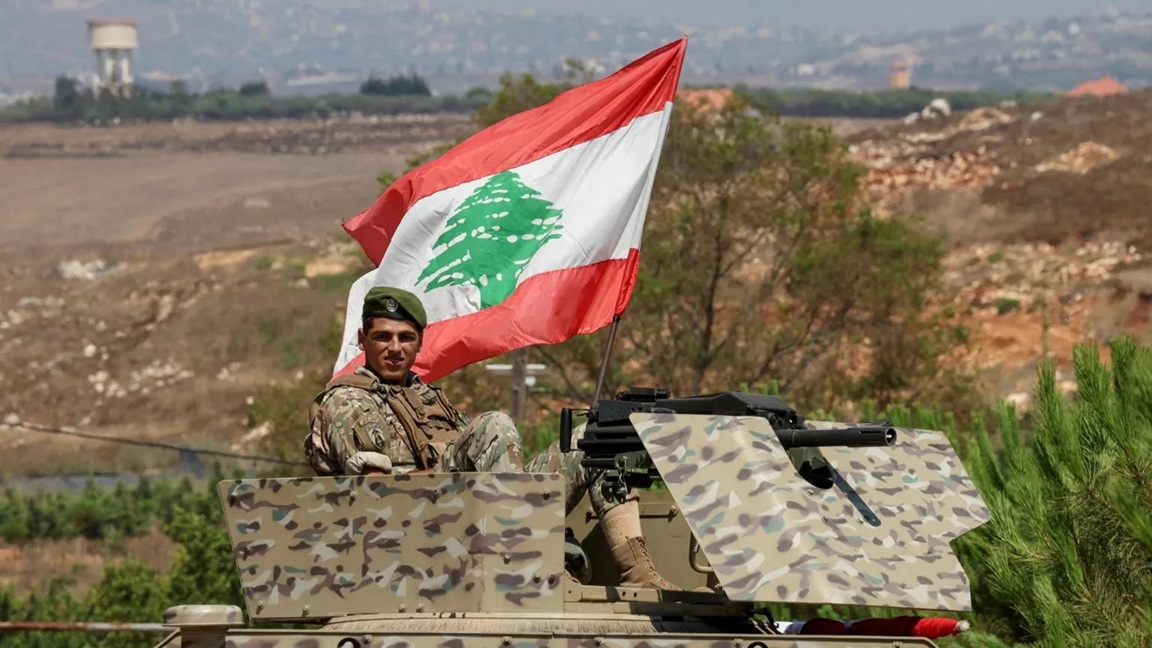
History has a habit of surviving agreements. Documents can be signed, cameras can flash, and diplomats can speak of new beginnings, yet memory often proves stronger than ink. Few places understand this better than the border separating Lebanon and Israel, a narrow strip of land that for generations carried artillery instead of commerce, military communiqués instead of political dialogue and fear instead of predictability.
By Nadia Ahmad
That is why the framework agreement signed this week feels larger than the document itself. Not because it is peace and certainly not because decades of hostility suddenly disappeared with a signature. It is a framework agreement rather than a peace treaty, an opening rather than an arrival, and perhaps that is precisely why it matters.
In a region where diplomacy often arrives late and leaves early, even the opening of a door can feel revolutionary.
For decades, the northern border was treated less as a political problem to be solved than as a geographical reality to be managed. Entire generations in southern Lebanon and northern Israel grew up believing that hostility was permanent and that calm merely represented the pause between one crisis and another.
Children learned to distinguish drones from aircraft and surveillance flights from attack missions. Farmers learned to follow military developments with the same attention once reserved for rainfall and harvest seasons.
No society can live indefinitely in the shadow of uncertainty without eventually paying a psychological price, and perhaps that is why even the possibility of a different future carries such emotional and political weight.
The Middle East itself has changed dramatically in recent years. Old alliances have weakened, political assumptions have collapsed, and strategic calculations that once appeared permanent suddenly look far less solid than they did only a few years ago.
Governments increasingly speak the language of trade routes, investments, reconstruction and economic corridors rather than the language of endless mobilisation and permanent confrontation. Wars are expensive, instability is expensive and eventually even ideology encounters budgets and balance sheets.
Countries that once measured influence in missiles and militias increasingly find themselves measuring it in ports, pipelines, investment funds and technological partnerships.
For Lebanon, the attraction of a stable southern border is obvious. The country has endured economic collapse, political paralysis and repeated security crises that exhausted both the state and society.
Lebanon needs more than financial recovery. It needs predictability. Investors prefer certainty, tourists prefer open airports and safe roads, and businesses prefer opportunities over emergency plans. Even the possibility of stability changes calculations and opens doors that years of confrontation kept firmly shut.
Southern villages that have lived through repeated rounds of violence need schools, businesses and infrastructure more than they need another generation of military communiqués.
For Israel, stability on the northern front has always represented a strategic objective. A quiet border means fewer military risks, fewer surprises and more room for political and economic planning.
Security establishments everywhere prefer certainty to ambiguity, even when certainty arrives through negotiation rather than deterrence. Perhaps the greatest beneficiaries of any lasting understanding, however, would not be governments at all but ordinary citizens.
Children going to school without listening for sirens, families planning holidays instead of evacuation routes, and farmers discussing markets instead of military developments may seem like ordinary things. Still, in the Middle East, ordinary life is sometimes the greatest political achievement of all.
Yet history rarely moves without resistance from those who believe it is moving in the wrong direction. The demonstrations organised in Beirut following the announcement of the framework agreement were more than simple protests against a diplomatic initiative. They reflected a competing vision of Lebanon's future and of the country's place in a changing Middle East.
For Hezbollah and its supporters, the agreement raises fears of normalisation, strategic retreat and political pressure disguised as diplomacy. The angry slogans and rallies in the capital were reminders that while agreements may be signed abroad, their legitimacy is always debated at home.
This may prove to be the real political battle that follows the signature, not the debate between Beirut and Jerusalem but the debate within Lebanon itself. What kind of country does Lebanon wish to become in the emerging Middle East? A frontline state permanently defined by conflict or a state prepared to explore opportunities that previous generations considered politically impossible? These are uncomfortable questions, and there are no easy answers.
The Middle East possesses many veterans of war and comparatively few veterans of peace. Conflict creates habits and peace demands different instincts. War rewards certainty and slogans while peace requires patience and compromise.
Hovering quietly over the current debate is another memory that many Lebanese know well: the collapse of the 17 May Agreement of 1983. That agreement was also presented as the beginning of a new chapter between Lebanon and Israel before collapsing under the weight of domestic opposition, regional rivalries and shifting balances of power.
The ghost of that experience lingers in every discussion of the current framework. Many Lebanese inevitably ask the same question: is history preparing to repeat itself?
The question is not unreasonable. Hezbollah remains one of the most influential political and military actors in the country and still possesses significant political, social and organisational leverage. Its opposition cannot simply be dismissed as noise surrounding an otherwise inevitable process.
Any agreement between Lebanon and Israel ultimately succeeds or fails not only on negotiating tables abroad but in the streets, institutions and political realities of Lebanon itself.
At the same time, history never repeats itself perfectly. The Middle East of 2026 is not the Middle East of 1983. The regional environment has changed; alliances have shifted, and societies, exhausted by economic hardship and repeated conflicts, increasingly speak the language of stability rather than perpetual mobilisation.
The generation that remembers civil war is disappearing, while younger generations ask different questions from those asked by their parents and grandparents. They speak less about ideology and more about jobs, opportunities and emigration. They are less interested in historical slogans and more interested in whether they can build a future at home.
This does not mean that peace is inevitable or that diplomacy will automatically triumph over politics, memory and mistrust. The region has disappointed optimists before, and there are good reasons for caution.
Progress in the Middle East rarely follows a straight line and moments of hope are frequently tested by events beyond anyone's control. The road between a framework agreement and a stable peace is long, and history is littered with agreements that looked stronger on paper than they proved in practice.
Yet history also teaches another lesson. Former enemies have become trading partners elsewhere in the world, borders that once divided armies later welcomed tourists, and political realities are rarely carved in stone forever.
Sometimes they wait for leaders willing to challenge them. The impossible has a curious tendency to become ordinary once societies become accustomed to it.
That is perhaps the true significance of this framework agreement. Not that peace has arrived, and not that history has ended, but that two neighbouring countries have decided, however cautiously and however imperfectly, that the future deserves at least an opportunity to be different from the past.
The agreement signed this week exists somewhere between Hezbollah and Shalom, between resistance and reconciliation, between memory and possibility. It may be an uncomfortable place to stand, but it is often in uncomfortable places that history changes direction.
For now, the northern border remains suspended between two futures. One is familiar and has dominated the region for generations. The other remains uncertain and fragile. One promises the continuation of a story everyone already knows by heart. The other offers no guarantees but at least leaves room for imagination.
Perhaps that is the real meaning of this signature against history. Not the promise that conflict has ended, but the suggestion that conflict no longer possesses a monopoly over the future. In a region where war has often appeared more permanent than geography itself, that alone is a remarkable development.
History, after all, rarely announces its arrival with certainty. Sometimes it begins with nothing larger than a signature, an argument, a possibility and an idea that seemed impossible until the day it happened.
Is it premature to say, Shalom? Perhaps. But history has often moved forward because societies dared to pronounce words that once seemed impossible.